What is SWOT Analysis : Identify Your Strengths, Weaknesses, Opportunities & Threats Using a Personal SWOT Analysis Template
Making informed decisions requires more than intuition, experience, or ambition. Whether individuals are planning their careers, entrepreneurs are evaluating business opportunities, or organizations are developing long-term strategies, success often depends on understanding both internal capabilities and external conditions before taking action.
Effective planning begins with a structured assessment of the current situation. By taking a comprehensive view of available resources, market conditions, competitive factors, and future possibilities, decision-makers can identify opportunities for growth while preparing for potential challenges. This structured thinking helps reduce uncertainty and improves the quality of strategic decisions.
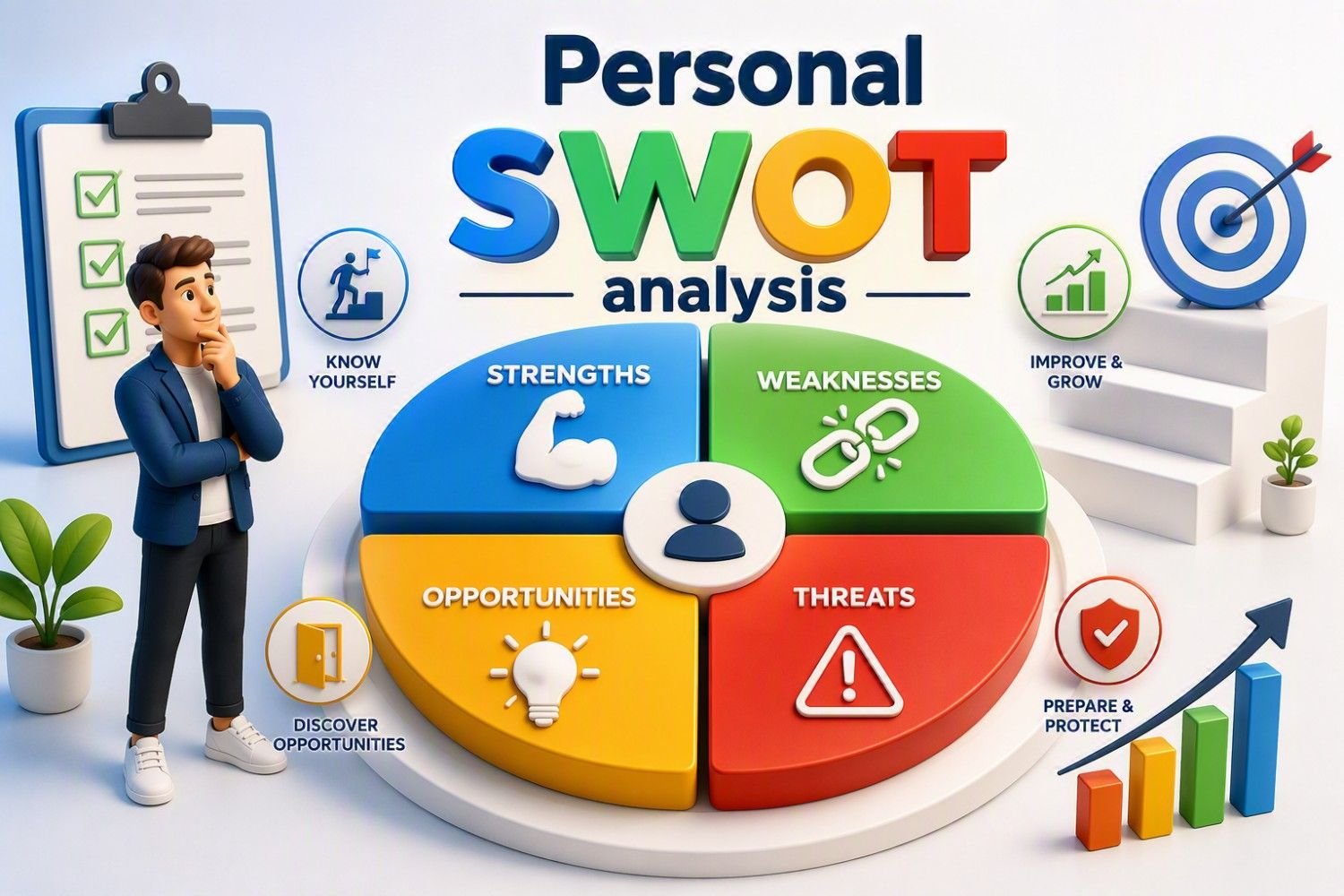
One of the most widely used strategic planning tools for this purpose is SWOT Analysis. It provides a simple yet powerful framework for organizing information, evaluating different perspectives, and supporting more objective decision-making. Because of its flexibility, SWOT Analysis is used across business strategy, project planning, career development, education, marketing, product development, and personal growth initiatives.
Why every Good Decision starts with Clarity
Whether you’re choosing a career, preparing for a promotion, starting a business, or setting personal goals, every successful decision begins with one essential ingredient: clarity. Before deciding where you want to go, you need an honest understanding of where you are today.
Over the years, I’ve learned that the biggest mistakes rarely come from making the wrong decision—they come from making decisions without fully understanding the situation. Whether you’re planning a career move, preparing for a promotion, starting a business, or setting personal goals, clarity always comes first.
One of the simplest ways to gain that clarity is through a SWOT Analysis. Instead of relying on assumptions or emotions, it encourages you to step back and honestly evaluate your strengths, weaknesses, opportunities, and threats. This balanced view helps you recognize what is working, what needs improvement, where opportunities exist, and what challenges could stand in your way.
What is SWOT Analysis ?
SWOT Analysis is a simple yet powerful strategic planning tool used to evaluate Strengths, Weaknesses, Opportunities, and Threats related to an individual, team, project, product, or organization. It helps decision-makers understand their current position, identify areas for improvement, and develop strategies that increase the likelihood of success. Over the years, I’ve found that the best decisions rarely come from guesswork—they come from understanding the situation clearly. That’s exactly what SWOT Analysis helps you do.
Although SWOT Analysis was originally developed for business strategy, I’ve seen it work just as well for career planning, personal development, project management, and everyday decision-making. Its biggest strength is its simplicity. Instead of feeling overwhelmed by a complex problem, you break it down into four questions that are easy to answer and act on.
SWOT FULL Form
SWOT is an acronym which simple stands for Strengths, Weaknesses, Opportunities, and Threats.
One concept that makes SWOT Analysis so effective is the distinction between internal and external factors. Your strengths and weaknesses are internal—they’re within your influence. Opportunities and threats come from the outside environment, and while you may not control them, you can prepare for or respond to them.
Whether you’re aiming for a promotion, changing careers, launching a business, or planning your next project, SWOT Analysis helps you replace assumptions with facts. Once you understand where you stand today, making the right decision for tomorrow becomes much easier.
🎓 Top-Rated Courses & Certifications
Try changing your filters or searching for another course.
Understanding Internal Factors: Strengths and Weaknesses
In every SWOT Analysis I’ve conducted, the most valuable insights almost always come from looking inward first. Before focusing on market trends or external challenges, I find it far more useful to understand what I can control—my strengths and weaknesses. These are known as internal factors because they come from within you, your team, or your organization. Your skills, knowledge, experience, resources, habits, and mindset all influence how effectively you achieve your goals. Being honest at this stage is essential. Overestimating your strengths can lead to poor decisions, while ignoring your weaknesses can hold you back from opportunities you’re otherwise capable of achieving. A balanced assessment gives you a realistic starting point and helps you build strategies based on facts rather than assumptions.
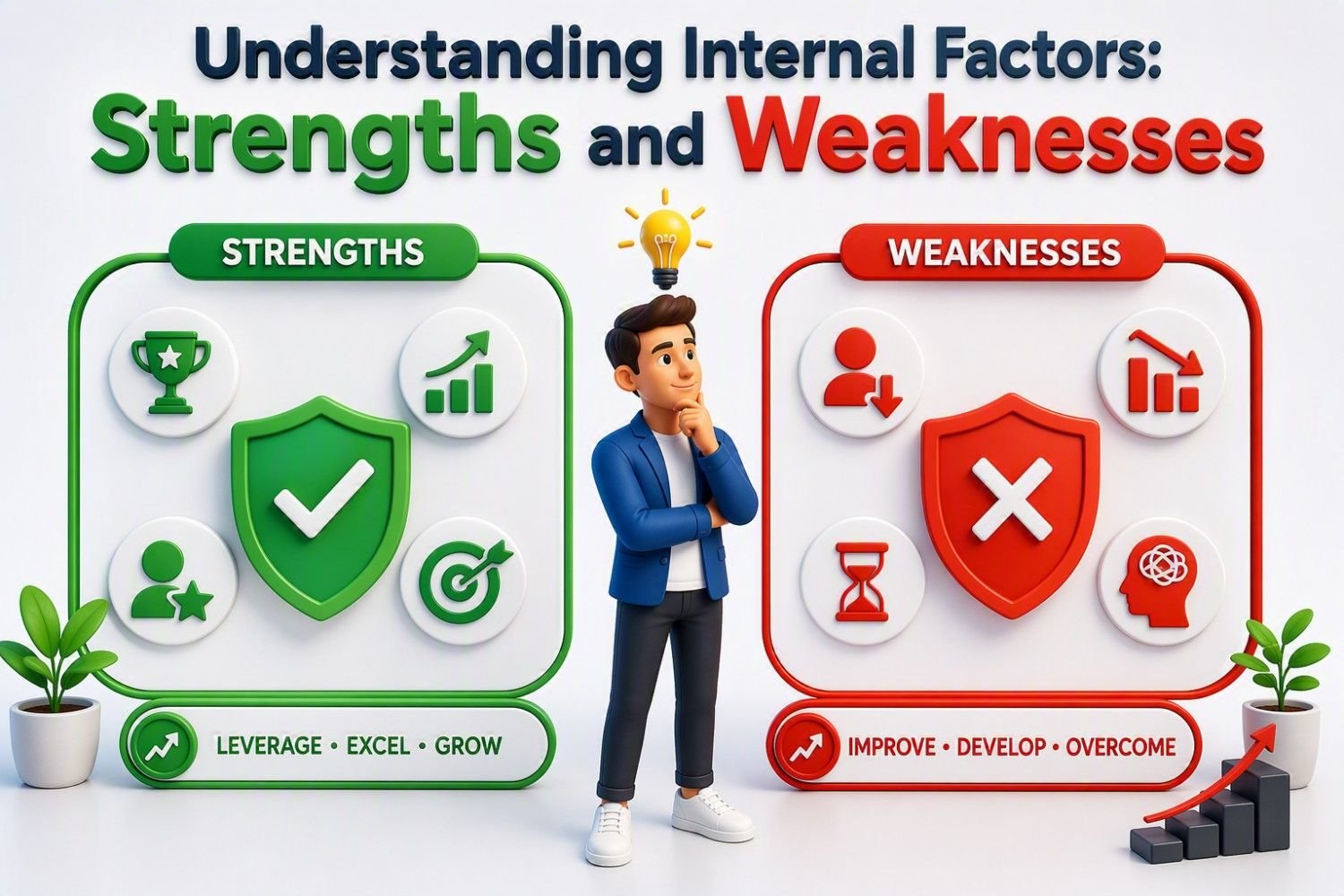
In the next two sections, we’ll explore how to identify your strengths and weaknesses, along with practical questions and real-world examples to help you evaluate them with confidence.
Strengths
Strengths are the things you do exceptionally well. They are the skills, knowledge, resources, and qualities that give you a real advantage and make it difficult for others to compete with you.
Whenever I conduct a SWOT Analysis, I don’t simply list what I’m good at. Instead, I ask, “What do I consistently do better than others?” and “Why would someone choose me over someone else?” The answers usually reveal strengths that truly matter.
For a business, these strengths often become its Unique Selling Proposition (USP)—the reason customers choose one company over another. For an individual, they are the abilities and experiences that create opportunities and support long-term success.
Questions to Identify Your Weaknesses: Ask yourself:
- What do I do exceptionally well?
- Which skills or expertise make me stand out?
- What advantages do I have that others don’t?
- What do people consistently appreciate or rely on me for?
- Which achievements am I most proud of?
- What resources or experience give me a competitive advantage?
Common Examples of Strengths
- Strong brand recognition
- Cost advantage
- High product or service quality
- Loyal customers
- Skilled and committed workforce
- Technical expertise
- Leadership and communication skills
- Innovation and creativity
- Financial strength
- Patents, trademarks, or proprietary technology
Weakness
Weaknesses are the internal factors that limit your ability to perform at your best. They could be missing skills, limited resources, inefficient processes, or habits that prevent you from achieving your goals. Unlike external threats, weaknesses are within your control, which means they can be improved over time.
When I conduct a SWOT Analysis, I find that identifying weaknesses is often the hardest part because it requires complete honesty. Rather than asking, “What am I bad at?”, I ask, “What’s stopping me from getting better results?” That simple question usually reveals the areas that deserve the most attention.
For businesses, weaknesses are the internal limitations that reduce competitiveness or slow growth. Recognizing them early helps you take corrective action before they become costly problems.
Questions to Identify Your Weaknesses: Ask yourself:
Ask yourself:
- What are we doing less effectively than our competitors?
- Which skills or expertise are missing?
- What feedback or complaints do we receive repeatedly?
- Which processes are inefficient or outdated?
- What causes us to lose customers or opportunities?
- What resources or capabilities do we need to improve?
Common Examples of Weaknesses
- Weak brand recognition
- High operating costs
- Limited financial resources
- Outdated technology
- Lack of innovation
- Poor customer service
- Inefficient processes
- Skills gaps within the workforce
- Dependence on a few customers or suppliers
- Limited market presence
Understanding External Factors: Opportunities and Threats
After evaluating your strengths and weaknesses, the next step is to look beyond what you can control. Opportunities and threats are external factors—they come from your surroundings, not from within you or your organization.
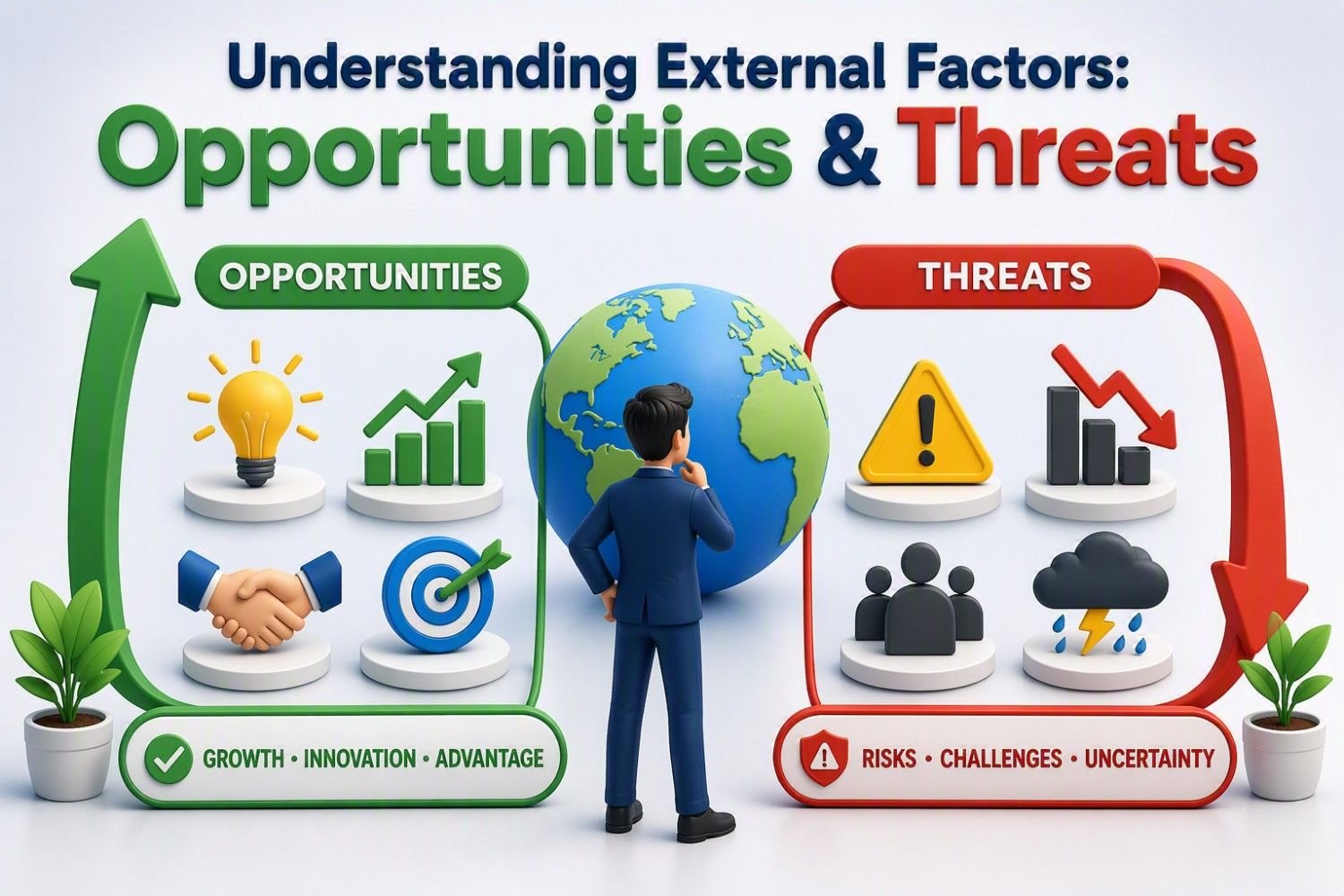
One lesson I’ve learned is that success isn’t determined only by what you’re good at. It also depends on how well you recognize changes happening around you. New technologies, shifting customer needs, market trends, regulations, and competitor actions can either create new opportunities or introduce unexpected challenges.
You can’t control these external factors, but you can control how you respond to them. Spotting an opportunity early can give you a competitive edge, while identifying a potential threat in advance allows you to prepare before it becomes a problem.
In the next sections, we’ll explore Opportunities and Threats in detail, along with practical questions and real-world examples to help you identify them and make better strategic decisions.
Opportunities
Opportunities are external factors that can help you grow, improve, or gain a competitive advantage. Unlike strengths, opportunities don’t come from within—they arise from changes in the market, technology, customer needs, industry trends, or the economy.
From my experience, the biggest opportunities are often the ones others overlook. That’s why I regularly ask myself, “What’s changing around me, and how can I use it to my advantage?” This simple habit has helped me spot growth opportunities before they became obvious.
For businesses, opportunities might include an emerging market, new technology, changing customer preferences, or favorable government policies. For individuals, they could be a promotion, a new certification, networking opportunities, or learning an in-demand skill.
Questions to Identify opportunities: Ask yourself:
Ask yourself:
- What market or industry trends can we take advantage of?
- What new technologies could improve our performance?
- Which customer needs are currently underserved?
- Are there new markets, products, or services we can explore?
- What partnerships or collaborations could create growth?
- What skills or certifications could open new career opportunities?
Common Examples of Opportunities
- Growing market demand
- Emerging technologies
- Expansion into new markets
- New customer segments
- Strategic partnerships
- Government incentives or grants
- Industry growth
- Digital transformation
- Changing customer preferences
- New learning and certification opportunities
Threat
Threats are external factors that could slow your growth, reduce your competitive advantage, or make it harder to achieve your goals. Unlike weaknesses, threats are usually outside your direct control, but identifying them early gives you time to prepare and reduce their impact.
From my experience, one of the biggest mistakes people and businesses make is reacting to threats only after they become problems. I prefer asking, “What could prevent me from succeeding in the future?” That question often reveals risks that are easy to overlook but important to plan for.
Threats can come from many sources, including new competitors, changing customer expectations, economic downturns, technological disruption, or new regulations. While you may not be able to stop these changes, you can build strategies to adapt and stay competitive.
Questions to Identify Threats Ask yourself:
- Who are our biggest competitors, and what are they doing better?
- What market or industry changes could affect us?
- Are new technologies making our products or skills obsolete?
- Are customer preferences changing?
- Could economic conditions or regulations impact our business?
- What external risks could prevent us from achieving our goals?
Common Examples of Threats
- Intense competition
- Economic recession
- Changing customer preferences
- Rapid technological change
- New government regulations
- Rising operating costs
- Supply chain disruptions
- Cybersecurity risks
- Skilled talent shortages
- New market entrants
📚 Recommended Books for Professionals
Try removing one or more filters.
How to Conduct a SWOT Analysis Correctly ?
Many people create a SWOT Analysis by simply filling in four boxes labeled Strengths, Weaknesses, Opportunities, and Threats. While this approach is a good starting point, the real value of SWOT comes from conducting the analysis systematically and honestly. The goal isn't to fill four boxes. The goal is to understand your current position and make better decisions based on facts rather than assumptions.
Step 1: Define Your Objective
Before you start, be clear about why you're conducting the SWOT Analysis. A clear objective keeps your analysis focused and makes the results far more useful.
For example, you might want to:
- Change careers
- Launch a new product
- Grow your business
- Improve team performance
- Enter a new market
Step 2: Identify Your Strengths
List the internal advantages that set you apart.
Ask yourself:
- What do I do better than others?
- What unique skills or resources do I have?
- Why do customers or employers choose me?
- What gives me a competitive advantage?
Step 3: Identify Your Weaknesses
Be honest about what's holding you back. The purpose isn't self-criticism—it's improvement.
Ask yourself:
- Which skills do I need to improve?
- What resources am I missing?
- What feedback do I receive repeatedly?
- Where do competitors outperform me?
Step 4: Identify Opportunities
Look for external factors that could help you achieve your objective.
Examples include:
- Emerging technologies
- Growing market demand
- New customer needs
- Industry trends
- Strategic partnerships
- Learning and certification opportunities
Step 5: Identify Threats
Now consider the external risks that could affect your success.
Ask yourself:
- What challenges could prevent me from achieving my goal?
- Are competitors gaining an advantage?
- Are customer needs changing?
- Could economic conditions or new regulations affect my plans?
Step 6: Prioritize Your Findings
One lesson I've learned is that not every item on your SWOT Analysis deserves equal attention. Focus on the few factors that will have the greatest impact instead of creating a long list that never gets used.
Step 7: Turn Insights into Action.
This is where a SWOT Analysis delivers real value. Use your findings to answer four simple questions:
- How can I use my strengths to take advantage of opportunities?
- Which weaknesses should I improve first?
- How can my strengths help reduce potential threats?
- What action can I start today?
Every strength, weakness, opportunity, and threat should lead to a practical action with a clear priority and timeline.
Step 8: Review and Update Regularly
A SWOT Analysis isn't something you complete once and forget. Markets change, technology evolves, and priorities shift. Reviewing your SWOT regularly keeps your strategy relevant and helps you stay ahead of new opportunities and potential risks.
Convert Your SWOT Analysis into a Personal Development Plan
The first time I completed a Personal SWOT Analysis, I felt like I had all the answers. I had listed my strengths, weaknesses, opportunities, and threats on a single page. But a few weeks later, nothing had changed. The paper was complete, yet my goals were exactly where they had been before.
That's when I realized something important.
A SWOT Analysis doesn't change your life—your actions do.
Instead of creating another SWOT matrix, I picked one item from each section and turned it into a simple action.
I used one strength to take on more challenging work. I chose one weakness to improve through learning. I grabbed one opportunity that aligned with my career goals and created a plan to prepare for one threat before it became a problem.
The changes weren't dramatic overnight, but they were consistent. A few months later, I could clearly see the difference. What started as a simple self-assessment had become a practical roadmap for growth.
That's exactly what a Personal Development Plan (PDP) is. It transforms your SWOT Analysis into clear, measurable actions.
- Build on your strengths by using them more often.
- Improve your weaknesses one step at a time.
- Take advantage of opportunities before they disappear.
- Prepare for threats instead of reacting to them later.
- Set SMART goals with clear deadlines.
- Review your progress regularly and update your plan as you grow.
Real-World SWOT Analysis Examples Across Different Industries
One of the best ways to understand a SWOT Analysis is to see how it applies in the real world. While the framework is simple, its real value comes from using it to evaluate actual businesses and make better strategic decisions. Let look at the SWOT analysis of Google, Microsoft and Amazon.
Google SWOT Analysis / SWOT analysis of Google
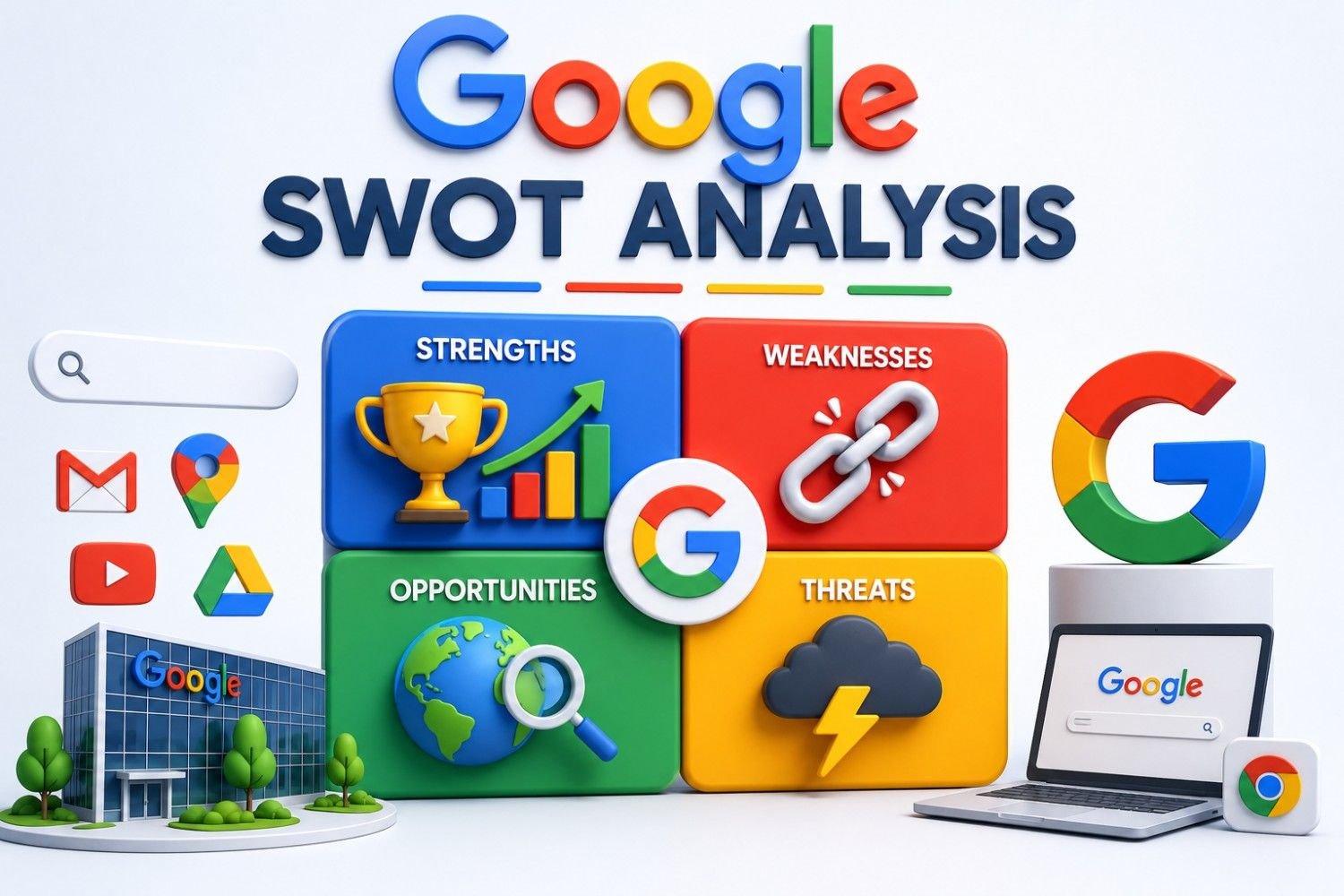
Strengths:
- Market Dominance: Google is the most widely used search engine globally, with a massive market share, making it the go-to platform for accessing information on the internet.
- Strong Advertising Platform: Google's advertising platform, Google Ads (formerly AdWords), generates a significant portion of the company's revenue, benefiting from its extensive user data and targeting capabilities.
- Diverse Product Portfolio: Apart from search, Google offers a wide array of products and services, including Gmail, YouTube, Google Maps, Google Drive, Android OS, and more, contributing to its brand recognition and diversified revenue streams.
- Innovation and R&D: Google invests heavily in research and development, continuously introducing new technologies, products, and services, and staying at the forefront of technological advancements.
- Global Reach and User Base: Google's services are used by billions of people worldwide, giving it an extensive global user base.
Weaknesses:
- Overdependence on Ad Revenue: The majority of Google's revenue comes from advertising, making the company vulnerable to fluctuations in the advertising market and potential ad-blocking technologies.
- Privacy Concerns: Google has faced scrutiny over its data collection practices, leading to concerns regarding user privacy and regulatory challenges.
- Monopoly Allegations: Google has faced allegations of anti-competitive practices in certain markets, leading to regulatory investigations and potential legal challenges.
Opportunities:
- Cloud Computing Growth: Google Cloud Platform (GCP) is witnessing significant growth as more businesses adopt cloud-based services, presenting opportunities for Google to compete with established cloud providers like Amazon Web Services and Microsoft Azure.
- Artificial Intelligence and Machine Learning: Google's expertise in AI and machine learning offers opportunities for innovation across its products and services, as well as potential applications in various industries.
- Expansion of Internet Access: Google's initiatives, such as Project Loon and Google Station, aim to expand internet access to underserved regions, tapping into new markets and user segments.
- Smart Home and IoT: The rise of smart home devices and the Internet of Things (IoT) presents opportunities for Google to expand its presence through products like Google Nest and Google Assistant.
Threats:
- Intense Competition: Google faces fierce competition from other tech giants, such as Microsoft, Amazon, Apple, and Facebook, across multiple areas, including search, cloud services, and advertising.
- Data Security and Privacy Regulations: Increasing concerns over data security and privacy could lead to stricter regulations that impact Google's data-driven business model.
- Ad-Blocking and Ad-Fatigue: The rise of ad-blocking software and user ad-fatigue may reduce the effectiveness of Google's advertising platform and impact its revenue stream.
- Changing Search Behavior: Evolving user search behavior and the rise of voice search may alter the dynamics of the search engine market.
Google's SWOT analysis highlights its dominant market position, diverse product portfolio, and continuous innovation as significant strengths. However, the company must address privacy concerns, diversify revenue sources beyond advertising, and navigate intense competition and regulatory challenges. Leveraging opportunities in cloud computing, AI, IoT, and expanding internet access can further solidify Google's position as a leading technology company while mitigating potential threats.
Microsoft SWOT Analysis / SWOT analysis of Microsoft
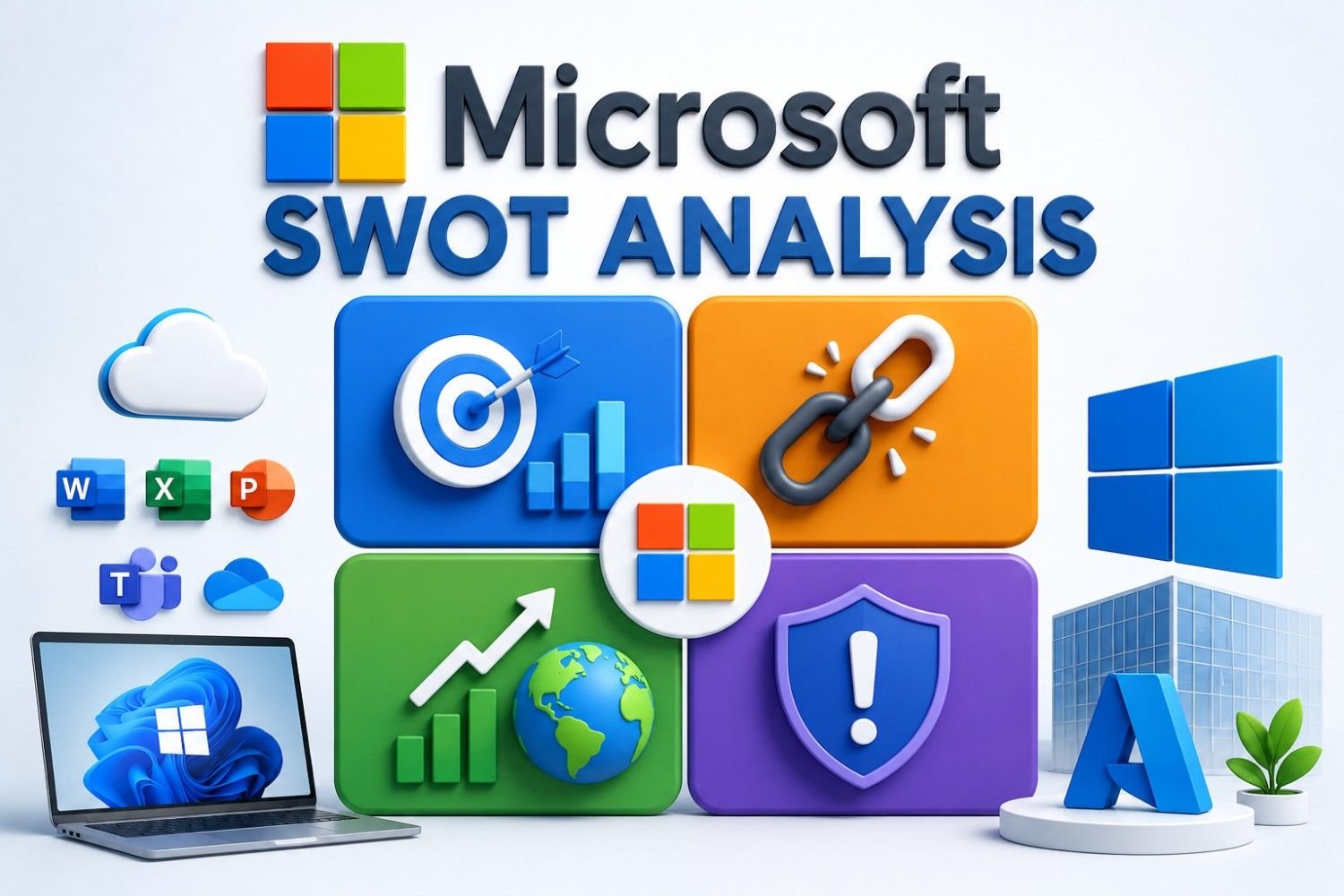
Strengths:
- Strong Brand Reputation: Microsoft is one of the most recognized and respected brands in the technology industry, known for its reliable and innovative products.
- Diverse Product Portfolio: Microsoft offers a wide range of products and services, including Windows OS, Office Suite, Azure cloud services, Xbox gaming consoles, Surface devices, and more, providing diversification and revenue streams.
- Dominance in Operating Systems: Windows OS is widely used across the globe, making Microsoft a dominant player in the operating system market.
- Extensive Developer Network: Microsoft has a vast network of developers and partners who contribute to the growth and success of its platforms and products.
- Strong Financial Position: The company has consistently reported strong financial performance, providing the resources for investments in research and development and strategic acquisitions.
Weaknesses:
- Market Saturation in Some Areas: Microsoft faces intense competition in certain markets, such as mobile operating systems, where it lags behind competitors like Android and iOS.
- Legacy Software Dependency: While Microsoft has been successful in transitioning to cloud-based services, it still relies on revenues from traditional software products, which may face declining demand over time.
- Complex Product Integration: Integration and compatibility issues between various Microsoft products can sometimes lead to user frustrations.
Opportunities:
- Cloud Services Growth: Microsoft's Azure cloud platform presents significant growth opportunities as businesses increasingly adopt cloud-based solutions for their operations.
- AI and Machine Learning: The integration of artificial intelligence and machine learning into Microsoft's products opens new avenues for innovation and improved customer experiences.
- Expansion in Emerging Markets: Microsoft can further penetrate emerging markets, where there is a growing demand for technology products and services.
- Gaming Industry Expansion: With the success of Xbox consoles and gaming services, Microsoft can continue to capitalize on the expanding gaming industry.
Threats:
- Intense Competition: Microsoft faces fierce competition from tech giants like Google, Apple, Amazon, and others across various product lines.
- Data Security Concerns: The increasing focus on data privacy and security poses challenges for Microsoft, especially with its cloud services handling vast amounts of sensitive data.
- Rapid Technological Changes: Technology evolves quickly, and Microsoft must keep up with trends and advancements to remain relevant and competitive.
- Legal and Regulatory Challenges: The company operates globally and faces various legal and regulatory issues that may impact its operations.
Microsoft's SWOT analysis reveals a company with strong brand recognition, diverse product offerings, and a solid financial position. However, it must address challenges such as market saturation, intense competition, and technological advancements. By leveraging its strengths and capitalizing on opportunities in cloud services, AI, and emerging markets, Microsoft can maintain its position as a leading technology player while navigating potential threats and weaknesses.
Amazon SWOT Analysis / SWOT analysis of Amazon
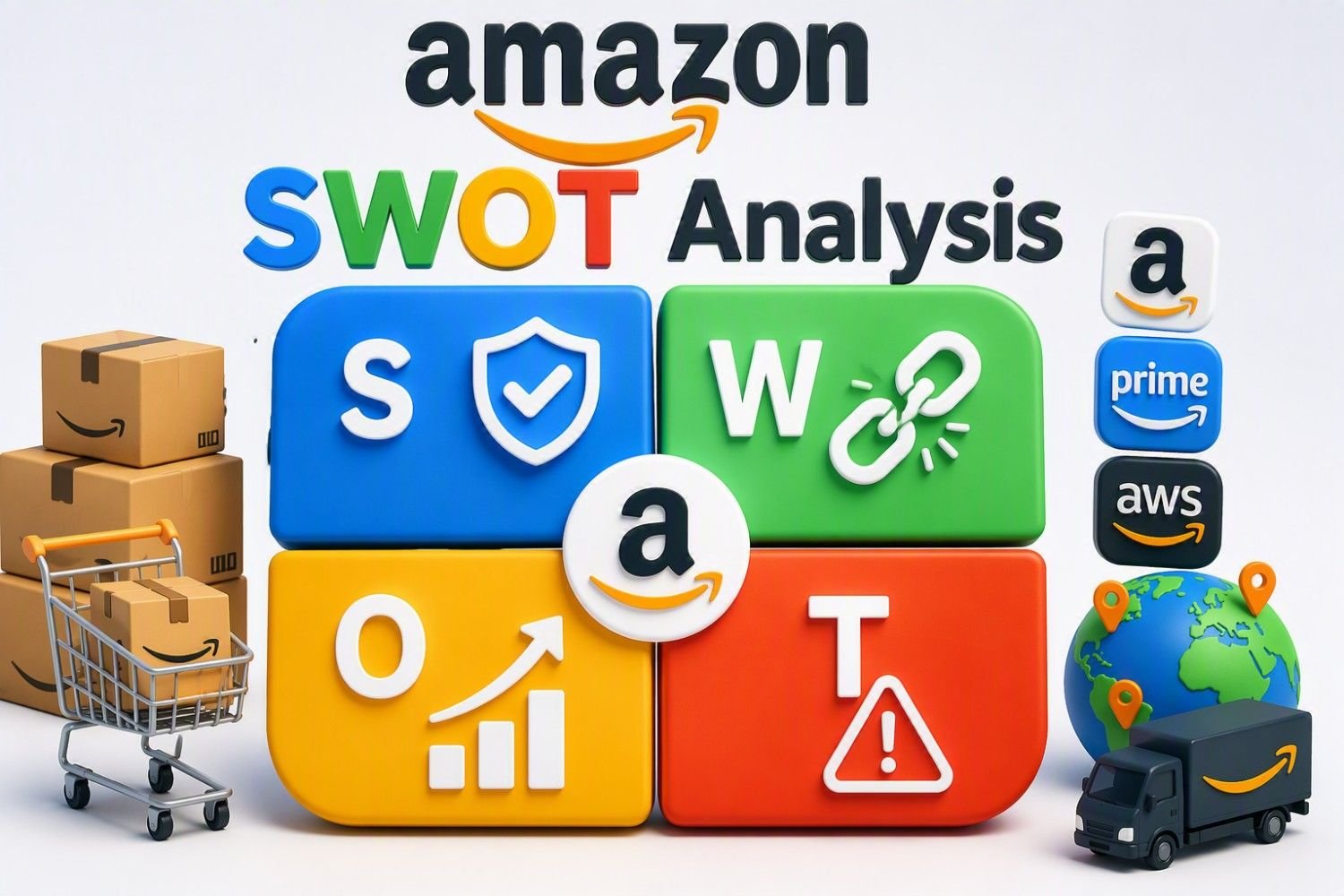
Strengths:
- E-commerce Dominance: Amazon is a leader in the e-commerce industry, operating in multiple countries and offering a vast range of products, making it a one-stop destination for consumers.
- Strong Brand Recognition: Amazon's brand is widely recognized and associated with reliability, convenience, and fast delivery, building customer trust and loyalty.
- Diverse Product and Service Offerings: In addition to its e-commerce platform, Amazon has expanded into various sectors, including cloud computing (Amazon Web Services - AWS), digital content (Kindle), smart devices (Amazon Echo), and entertainment (Amazon Prime Video).
- Customer-Centric Approach: Amazon's focus on customer satisfaction, seamless user experience, and personalized recommendations contributes to its competitive advantage.
- Advanced Technology and Innovation: Amazon invests significantly in technology and innovation, driving advancements in logistics, robotics, artificial intelligence, and data analytics to enhance efficiency and customer experience.
Weaknesses:
- Reliance on Online Sales: While Amazon's e-commerce dominance is a strength, it also poses a risk, as the company is heavily dependent on online sales, making it susceptible to disruptions and changes in consumer behavior.
- Low Profit Margins in Some Segments: Amazon operates on thin profit margins in certain sectors, relying on volume sales and long-term customer value.
- Counterfeit and Pirated Products: The vast marketplace exposes Amazon to counterfeit and pirated products, leading to challenges in maintaining product quality and brand integrity.
Opportunities:
- Cloud Computing Growth: Amazon Web Services (AWS) has become a leading cloud services provider, and the increasing adoption of cloud technology presents opportunities for further growth and market expansion.
- Global Expansion: Amazon can continue expanding its presence in emerging markets, tapping into new customer bases and diversifying revenue streams.
- Acquisitions and Partnerships: Strategic acquisitions and partnerships can help Amazon enter new markets, enhance its offerings, and consolidate its position in the industry.
- Subscription Services: The success of Amazon Prime has shown the potential for subscription-based services, encouraging the company to explore new offerings in entertainment, education, and other sectors.
Threats:
- Intense Competition: Amazon faces fierce competition from various e-commerce players, as well as from traditional brick-and-mortar retailers expanding into the online space.
- Regulatory Challenges: As a large and influential company, Amazon faces increased regulatory scrutiny concerning antitrust, data privacy, and labor practices, which could impact its operations and reputation.
- Supply Chain Disruptions: Reliance on complex supply chains and international logistics exposes Amazon to potential disruptions due to natural disasters, geopolitical tensions, or other unforeseen events.
- Cybersecurity Risks: The company must remain vigilant against cyber threats and data breaches, as any security compromise could lead to reputational damage and loss of customer trust.
Amazon's SWOT analysis reveals a company with strong market dominance, diverse product offerings, and continuous innovation. However, it also faces challenges in terms of thin profit margins, competition, and regulatory pressures. By leveraging opportunities in cloud computing, global expansion, strategic partnerships, and subscription services, Amazon can continue its growth trajectory while addressing potential threats and weaknesses. Maintaining a customer-centric approach and investing in advanced technology will be crucial to sustain its position as a leading player in the e-commerce and technology industry.
Personal SWOT Analysis Template (Free Download)
📥 Download the free Personal SWOT Analysis Template to identify your strengths, weaknesses, opportunities, and threats in a structured way. This practical toolkit includes a SWOT matrix, self-assessment prompts, prioritization scorecard, SMART goal builder, personal development plan, 30-60-90 day action plan, and a filled example to help you turn self-awareness into real action

Lean Six Sigma • Six Sigma • Statistics • Project Management • Artificial Intelligence (AI) • Operations Management • Quality Management
Frequently Asked Questions (FAQs)
What is SWOT analysis?
A SWOT analysis is a tool used to evaluate strengths, weaknesses, opportunities, and threats of a situation or business.
What does SWOT stand for?
SWOT stands for Strengths, Weaknesses, Opportunities, and Threats
What are strengths in SWOT?
Strengths are internal advantages that help you perform better than others.
What are weaknesses in SWOT?
Weaknesses are internal limitations that reduce efficiency or competitiveness.
What are opportunities in SWOT?
Opportunities are external factors that can help you grow or improve.
What are threats in SWOT?
Threats are external risks that could negatively impact your success.
Is SWOT analysis internal or external?
It includes both internal factors (strengths, weaknesses) and external factors (opportunities, threats)
Why is SWOT analysis important?
It helps in better decision-making by providing a clear view of your current situation.
Who uses SWOT analysis?
Businesses, professionals, and even individuals use SWOT for planning and strategy.
When should you use SWOT analysis?
It should be used before making important decisions like starting a project or changing strategy.
Conclusion
Whether you're planning your career, growing a business, managing a project, or working on personal goals, the SWOT framework provides the clarity needed to move forward with confidence. More importantly, it reminds us that identifying opportunities isn't enough—success comes from taking action.
If there's one lesson I've learned, it's this: don't aim for a perfect SWOT Analysis. Aim for an honest one. Even a simple SWOT exercise can uncover valuable insights and help you make smarter, more informed decisions.
Use the free SWOT Analysis template, review your findings regularly, and turn every insight into a practical action. Small, consistent improvements today can lead to meaningful personal and professional growth tomorrow.
Continue Your Learning Journey
Learning is a continuous process. Explore related topics, practical guides, tools, calculators, templates, and learning resources to expand your knowledge and develop new skills.
Choose a category below to explore practical tutorials, tools, calculators, templates, case studies, and learning resources.
Recommended Learning Resources
Expert-led courses to build practical skills, earn credentials, and advance your career.
Recommended professional books, certification guides, and practical study resources.
Ready-to-use templates, checklists, guides, and workbooks for practical applications.
Interactive calculators for statistics, quality, engineering, analysis, and decision-making.
Interactive Z, t, Chi-Square, and F tables with critical values and distribution curves.
Discover practical tutorials, case studies, and professional resources across Quality, Lean Six Sigma, Project Management, Statistics, AI, and Data Analytics.
Published: January 13, 2021
Last Updated: September 18, 2026