What is Kaizen? The Continuous Improvement Philosophy Behind World-Class Performance
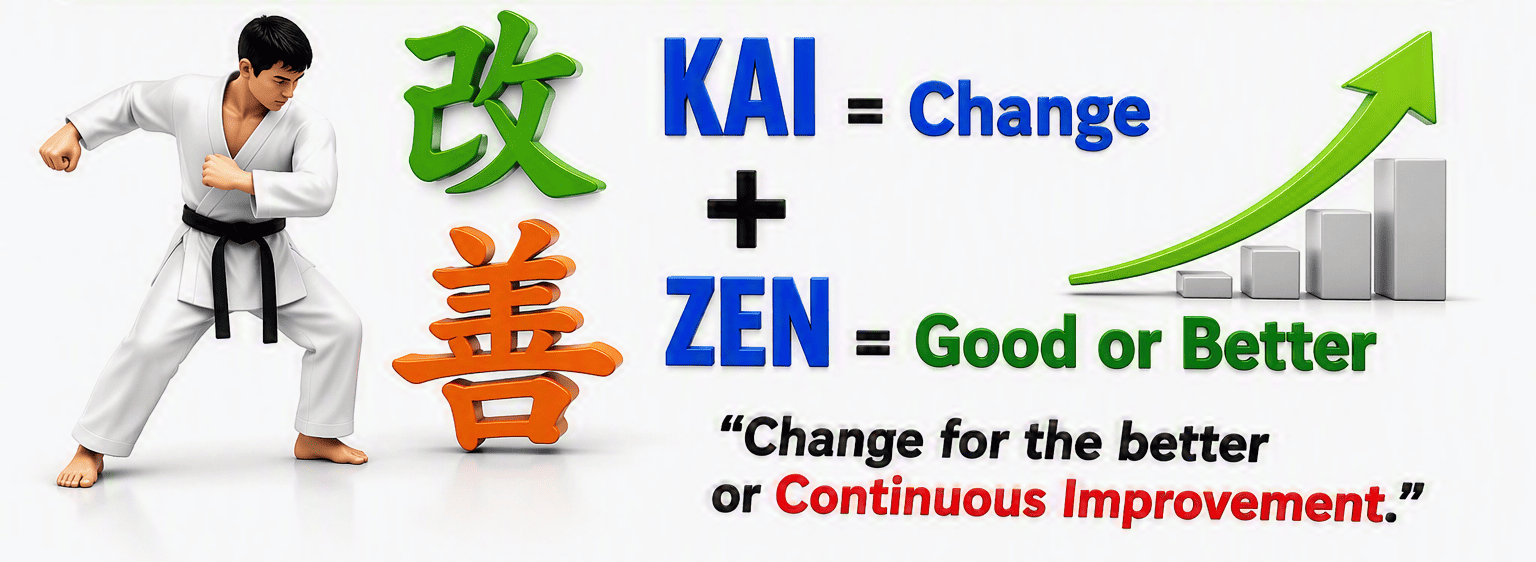
Many organizations achieve world-class results not through massive breakthroughs, but through small improvements made consistently over time. Kaizen, which means “change for the better,” is a philosophy that encourages everyone to look for opportunities to improve processes, eliminate waste, and make work easier, safer, and more effective.
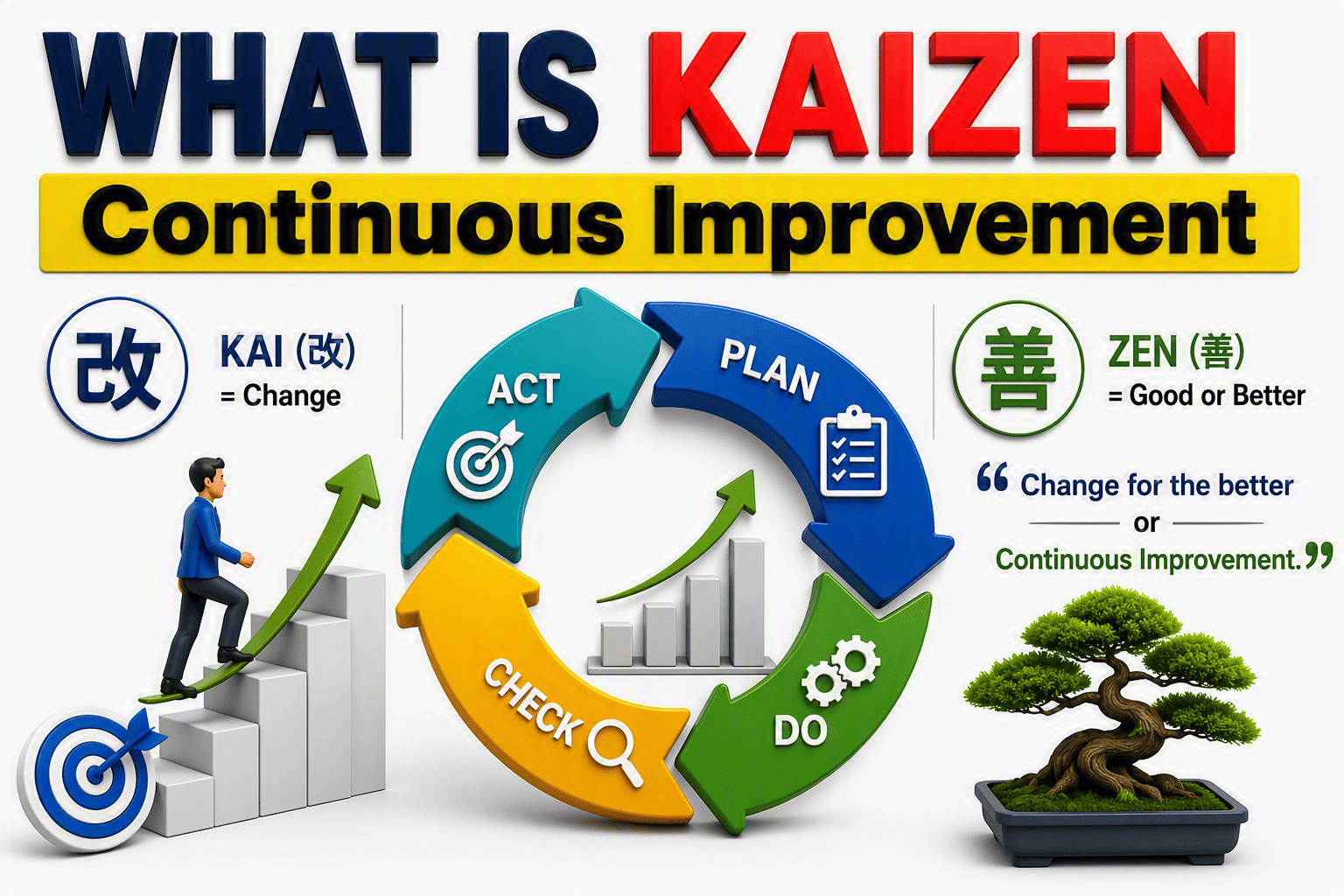
What makes Kaizen powerful is its belief that continuous improvement is not a one-time project, but a daily habit that drives long-term success.
What is Kaizen?
Have you ever wondered why some organizations keep getting better year after year while others struggle with the same problems? In my experience as a Quality Engineer working on New Product Introduction (NPI) projects, the biggest improvements rarely come from expensive technology or one-time transformation programs. More often, they begin with someone asking a simple question: “Can we do this better?” That simple mindset is the foundation of Kaizen.
What I appreciate most about Kaizen is its simplicity. Throughout my career, I’ve seen teams spend weeks discussing complex solutions while overlooking small process improvements that could have solved the problem immediately. Something as simple as improving a checklist, standardizing a document, clarifying a work instruction, or removing an unnecessary approval step can save countless hours and prevent recurring mistakes. Individually these improvements seem minor, but together they make a measurable difference.
Kaizen (改善) is a Japanese term that combines two words:
Another reason Kaizen stands out is that it encourages everyone to contribute. Improvement is not limited to managers or Lean specialists—it belongs to the people who perform the work every day. When employees feel comfortable sharing ideas instead of accepting inefficient processes as “the way we’ve always done it,” continuous improvement becomes a habit rather than a project.
Although Kaizen is best known through the Toyota Production System and Lean Manufacturing, its principles apply far beyond the factory floor. Today, organizations in healthcare, software development, education, finance, logistics, and many other industries use Kaizen to eliminate waste, improve quality, solve problems, and strengthen operational performance.
For me, Kaizen is more than a Lean methodology—it’s a practical way of thinking. It reminds us that operational excellence is rarely achieved through one big change. It is built through hundreds of thoughtful improvements, applied consistently over time.
The real power of Kaizen isn’t changing everything overnight—it is making work a little better today than it was yesterday.
History and Evolution of Kaizen
To understand why Kaizen has stood the test of time, it helps to look at where it began. The philosophy emerged in Japan after World War II, when businesses faced the challenge of rebuilding with limited resources. Instead of relying on expensive investments or radical changes, many organizations discovered that small, consistent improvements made every day could produce remarkable long-term results. This practical way of thinking gradually evolved into what we now know as Kaizen, meaning “change for the better.”
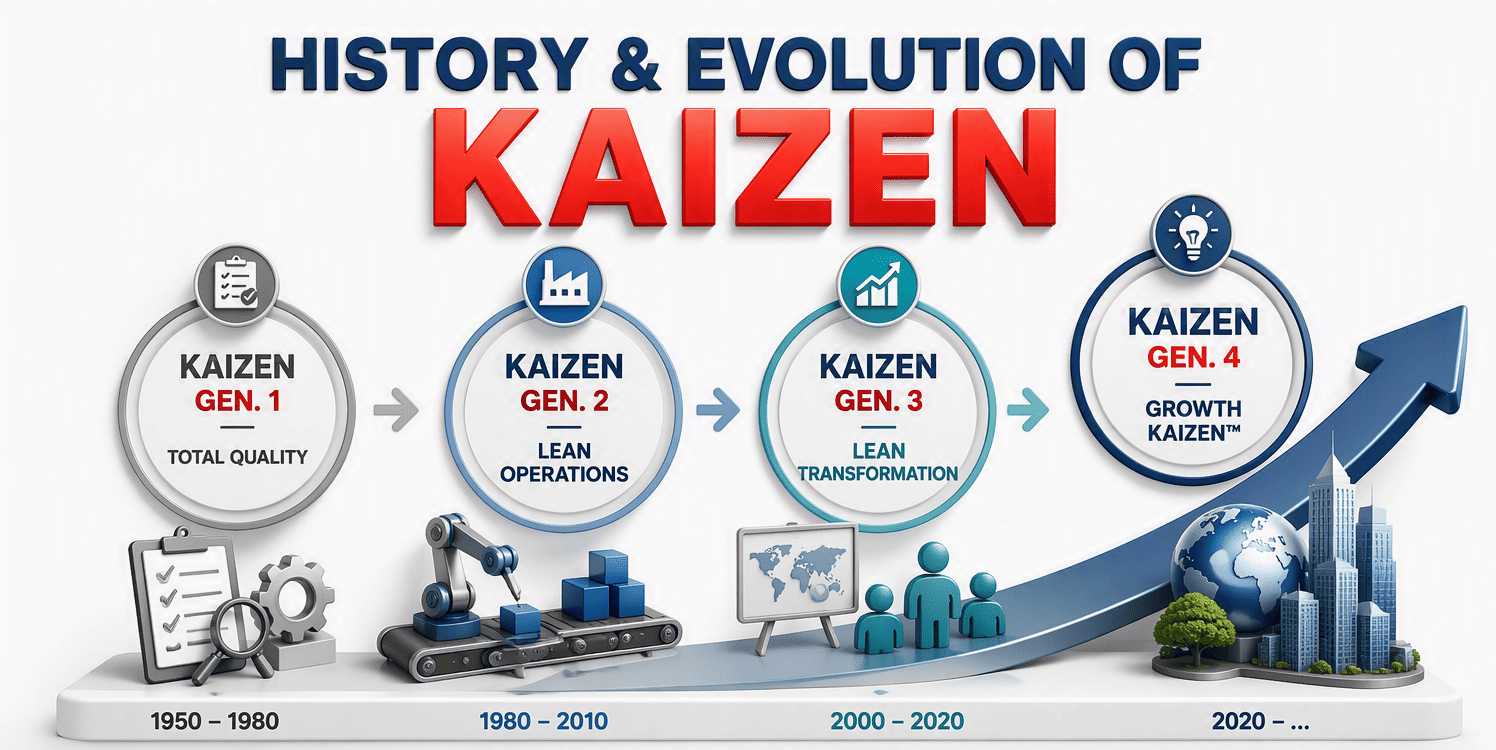
The philosophy gained global recognition through the Toyota Production System (TPS), where continuous improvement became part of everyday work rather than an occasional initiative. Toyota encouraged employees at every level to identify problems, eliminate waste, and suggest better ways of working. Over time, this culture of continuous improvement became one of the key reasons behind Toyota’s reputation for quality, efficiency, and operational excellence.
What resonates with me most is that the original idea behind Kaizen has remained unchanged, even though workplaces have transformed dramatically. Throughout my experience in quality engineering and new product development, I’ve learned that lasting improvements rarely begin with a large budget or a major transformation project. More often, they start with someone questioning an inefficient process, simplifying a workflow, or preventing a recurring issue before it becomes a bigger problem. Those small improvements may seem insignificant individually, but their cumulative impact is often far greater than expected.
Today, Kaizen is practiced far beyond manufacturing. Organizations in healthcare, software development, logistics, education, finance, and many other industries apply the same principles to improve quality, reduce waste, and deliver better customer value. While technologies such as artificial intelligence, automation, and data analytics continue to evolve, the foundation of Kaizen remains the same: never stop looking for a better way to work.
The Science Behind Kaizen (Neuroscience of Continuous Improvement)
One of the reasons I believe Kaizen has remained relevant for decades is that it works with human behavior instead of against it. Most people don’t resist improvement—they resist being overwhelmed. When change feels too big, it’s easy to lose confidence or fall back into familiar habits. Kaizen takes a different approach by encouraging small, achievable improvements that are easier to accept, test, and sustain. That’s why organizations often find it easier to build momentum through many small wins than through one large transformation.
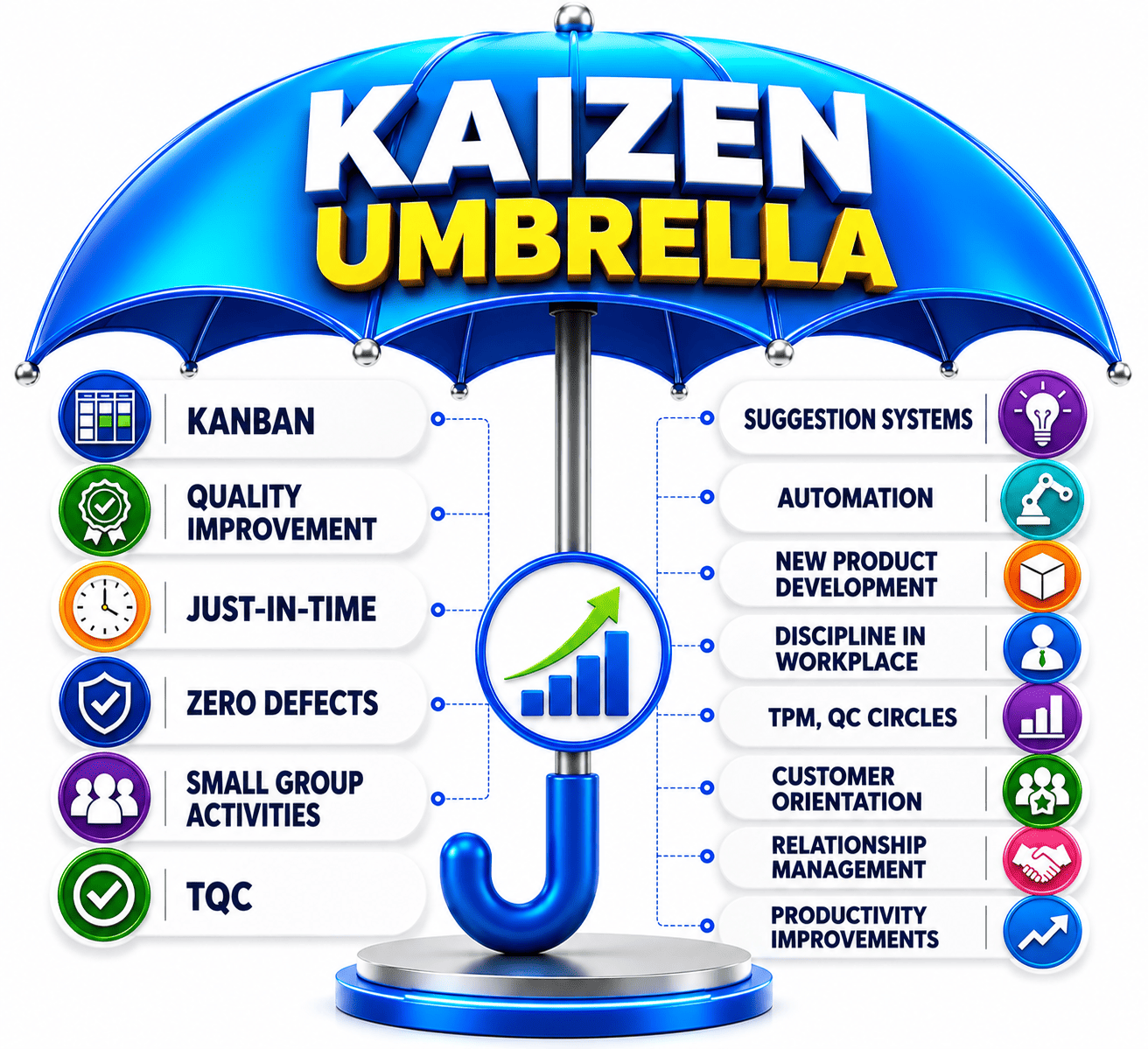
I’ve experienced this firsthand while working on quality engineering and new product development projects. Whenever a team tried to redesign an entire process at once, progress usually slowed because everyone was trying to absorb too many changes simultaneously. However, when we focused on solving one specific issue—such as simplifying a review process, improving a checklist, or removing an unnecessary approval—the improvement was adopted much faster. Once people saw the benefit, they naturally became more willing to improve the next process. Those early successes created confidence, and confidence became the driving force behind continuous improvement.
There’s also a simple scientific explanation for why this works. The human brain learns through repetition. When a better way of working is practiced consistently, it gradually becomes a habit rather than a conscious effort. Over time, those habits shape the way individuals, teams, and eventually entire organizations operate. In my experience, this is where Kaizen delivers its greatest value. It doesn’t ask people to become perfect overnight; it encourages them to become slightly better every day.
Another important aspect of Kaizen is that it changes the questions people ask. Instead of accepting recurring problems as “normal,” teams begin asking, “Why does this happen?”, “Can we simplify this process?”, or “What small improvement can we make today?” I’ve found that these simple questions often uncover opportunities that were hidden in plain sight. Once people start thinking this way, continuous improvement becomes less of a project and more of a habit.
Today’s organizations invest heavily in artificial intelligence, automation, and digital transformation, but technology alone cannot create a culture of improvement. The real advantage comes from people who continue to observe, question, learn, and refine the way work is done. That is the science behind Kaizen. Sustainable improvement is not driven by occasional bursts of motivation—it is built through small, repeated actions that gradually become part of an organization’s culture.
🎓 Top-Rated Courses & Certifications
Try changing your filters or searching for another course.
The PDCA Cycle: The Engine Behind Kaizen
If Kaizen is the mindset of continuous improvement, PDCA (Plan-Do-Check-Act) is the process that keeps it moving. From my experience working on quality engineering and new product development projects, I’ve learned that good ideas alone rarely create lasting improvements. The real challenge is implementing them in a structured way, measuring the results, and refining them until they become part of everyday work. That’s exactly where PDCA makes the difference.
I’ve seen teams invest significant time solving a problem, only to discover later that the solution created another issue because it was never properly evaluated. On the other hand, when improvements were planned carefully, tested on a small scale, reviewed using real data, and then standardized, the results were far more sustainable. That simple cycle of planning, testing, reviewing, and improving prevented us from making decisions based on assumptions and helped build confidence in every change we introduced.
What I appreciate most about PDCA is that it removes the pressure of finding the perfect solution on the first attempt. Instead, it encourages teams to learn with every cycle. If an idea works, it becomes the new standard. If it doesn’t, the lesson becomes the starting point for the next improvement. In my experience, this mindset creates a culture where people are more willing to experiment, learn from mistakes, and continuously improve rather than waiting for the “perfect” answer.
At its core, PDCA is more than a problem-solving tool—it’s a learning cycle. It transforms improvement from a one-time project into an ongoing habit, making continuous improvement practical, measurable, and sustainable.
Kaizen provides the mindset to improve, but PDCA provides the discipline to improve the right way. Together, they create the foundation for long-term operational excellence.
The 5 Core Principles of Kaizen
Many people associate Kaizen with tools like 5S, PDCA, Gemba Walks, or Value Stream Mapping. While these tools are valuable, they don’t make continuous improvement successful on their own. In my experience, lasting improvement begins with the right mindset. I’ve seen organizations invest in sophisticated systems and still struggle because people continued following the same habits. On the other hand, I’ve also seen teams achieve remarkable results with simple ideas because they consistently applied a few fundamental principles.
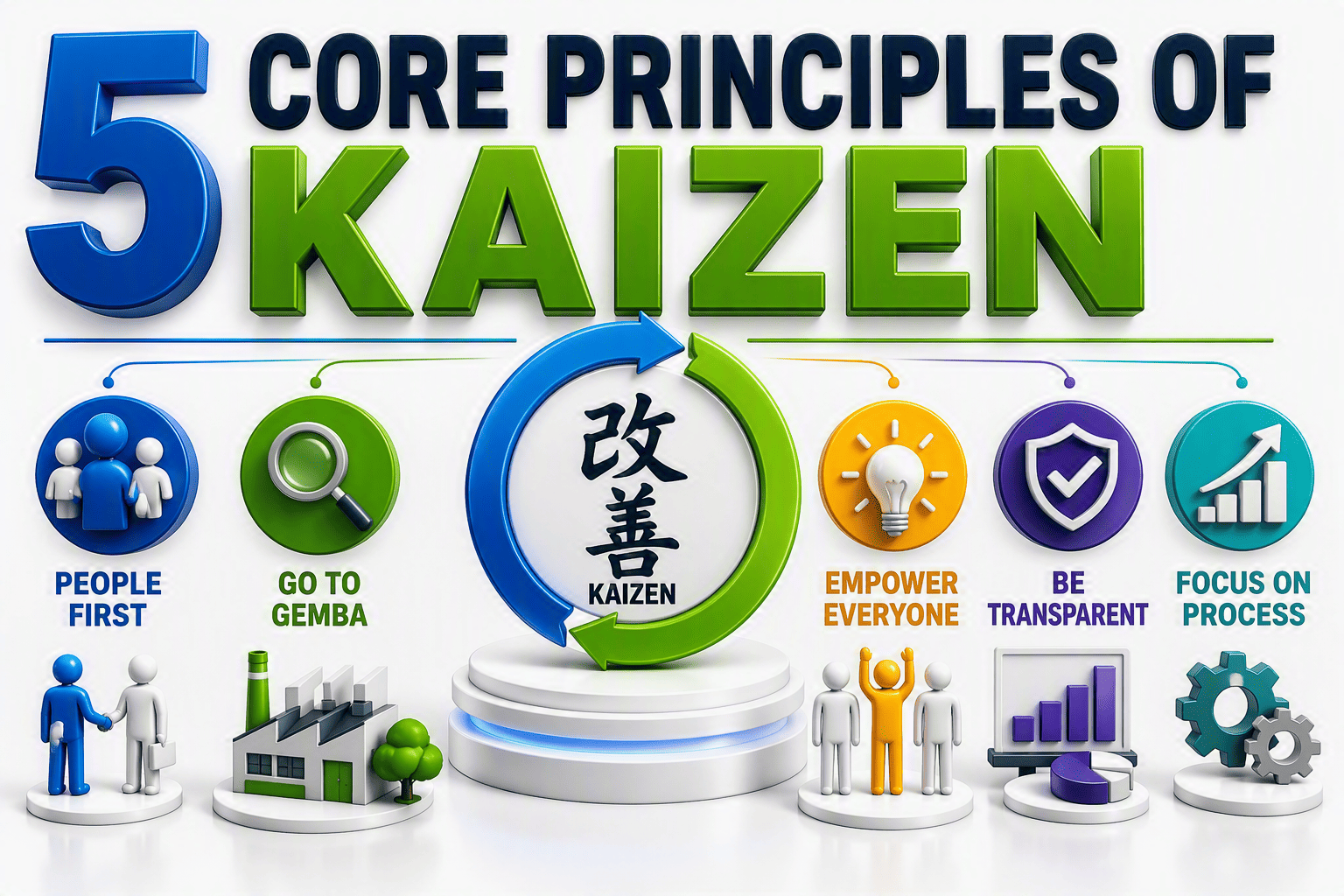
These principles shape how people identify problems, make decisions, collaborate, and improve processes every day. When they become part of an organization’s culture, continuous improvement is no longer an occasional initiative—it becomes a natural way of working. The five principles below form the foundation of Kaizen and explain why some organizations improve continuously while others improve only when problems become too big to ignore.
Know Your Customer
Every improvement should begin with one simple question: Does this create value for the customer? In Kaizen, customer value drives every improvement decision. If an activity doesn’t improve quality, reduce delays, enhance safety, or make the customer’s experience better, it’s worth asking whether that activity is really necessary.
One lesson I’ve learned while working on quality and engineering projects is that many improvement opportunities become obvious when we look at a process from the perspective of the next person receiving the output. Whether it’s an external customer, a manufacturing team, or a colleague in another department, understanding their needs often reveals waste that was previously overlooked.
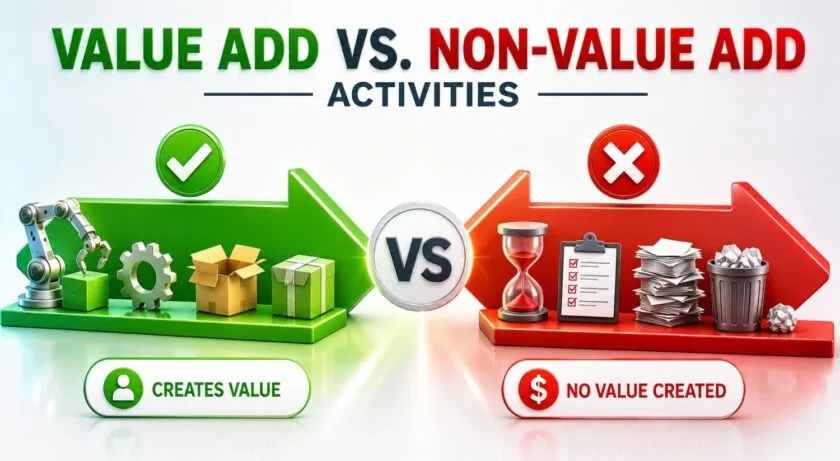
Ask yourself: Does this step create value, or does it simply consume time and effort?
Let It Flow
Kaizen aims to create smooth, uninterrupted workflows. Waiting, unnecessary approvals, repeated handoffs, searching for information, and rework all interrupt the flow of work and reduce productivity.
I’ve noticed that project delays are rarely caused by one major issue. More often, they’re the result of many small interruptions that accumulate over time. Removing these obstacles may seem like a minor improvement, but together they can significantly reduce lead time and improve efficiency.
Ask yourself: What is preventing this process from flowing smoothly?
Go to Gemba
Gemba means “the actual place where work happens.” Instead of relying on reports or assumptions, Kaizen encourages leaders and teams to observe the real process before proposing solutions.
Some of the most valuable insights in my career came from watching how work was actually performed rather than discussing it in meetings. Processes that looked efficient on paper often revealed unnecessary complexity when observed firsthand. Seeing the work directly almost always leads to better decisions.
Ask yourself: Have I observed the actual process, or am I making assumptions?
Empower People
One of Kaizen’s greatest strengths is recognizing that the people closest to the work often have the best improvement ideas. Continuous improvement becomes sustainable when everyone is encouraged to identify problems, share suggestions, and participate in finding solutions.
Throughout my experience, many practical improvements have come from team members who interact with the process every day. Giving people the confidence to speak up often uncovers opportunities that management alone would never identify.
Ask yourself: Are we listening to the people who know the process best?
Be Transparent
Problems can’t be solved if they’re hidden. Kaizen promotes transparency by making goals, performance, standards, and issues visible through visual management, standard work, and open communication. I’ve seen small issues become major risks simply because they weren’t identified early enough. When teams openly discuss problems instead of hiding them, they can take corrective action sooner, reduce rework, and continuously improve.
Ask yourself: Can everyone clearly see where the problems and opportunities are?
Over the years, one lesson has stayed with me: Kaizen is not built on complex tools—it is built on consistent habits. Organizations that focus on customer value, improve workflow, observe work firsthand, involve their people, and make problems visible create a culture where continuous improvement becomes part of everyday work rather than another management initiative.
How Kaizen Drives Continuous Improvement and Operational Excellence
If someone asked me to describe the real value of Kaizen in one sentence, I would say this: Kaizen makes improvement part of everyday work instead of an occasional project. That’s the reason it has remained relevant across industries for decades.
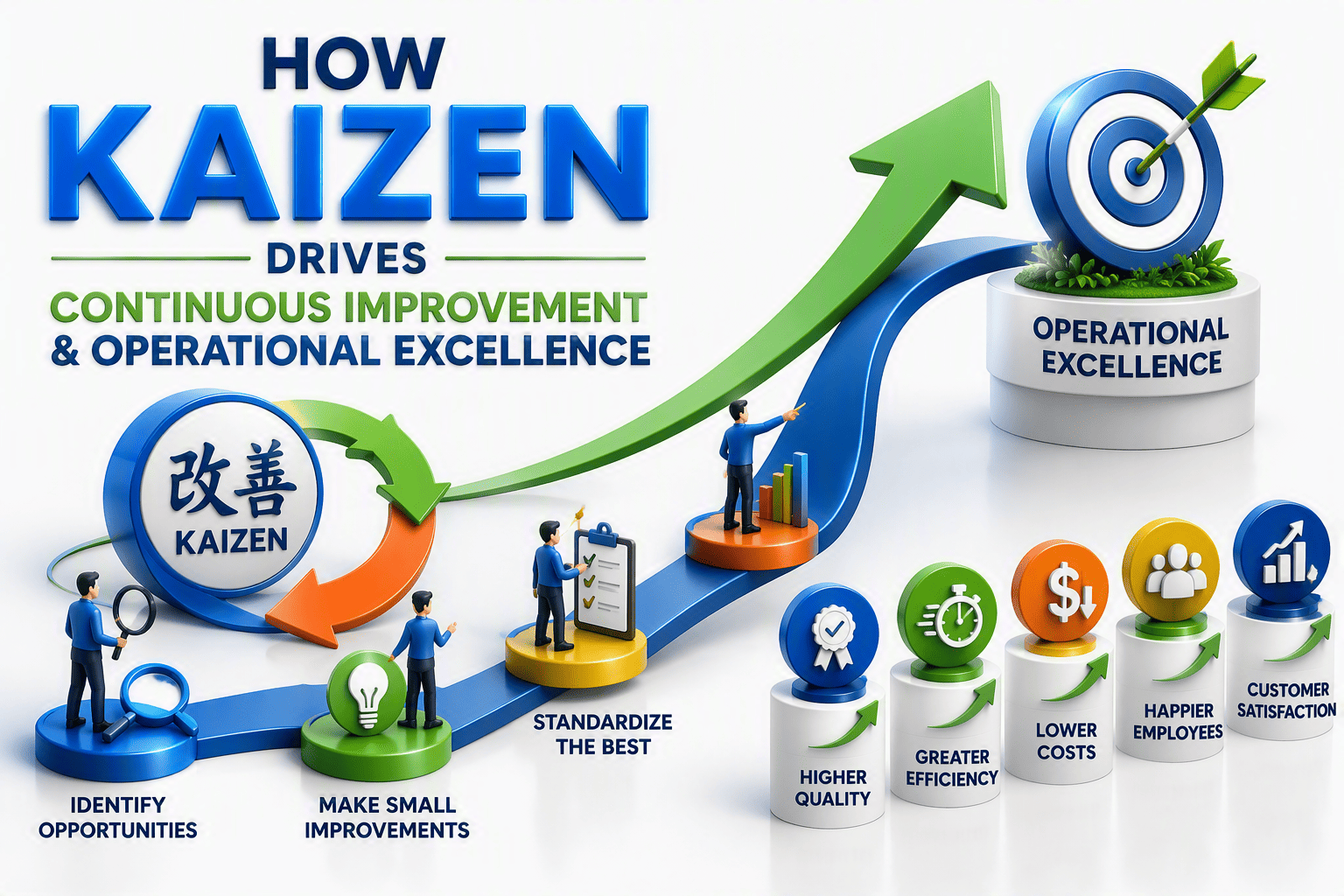
Throughout my career in quality engineering and new product development, I’ve noticed that the most meaningful improvements rarely came from large transformation programs. More often, they started with someone questioning an inefficient process, simplifying a workflow, improving communication between teams, or preventing a recurring problem. Each improvement seemed small on its own, but together they significantly improved quality, productivity, and project execution. That experience taught me that operational excellence is usually built through consistency, not dramatic breakthroughs.
What makes Kaizen different is its focus on improving the process rather than chasing results alone. Better quality, lower costs, faster delivery, and higher customer satisfaction are usually the outcome of well-designed processes. By continuously eliminating waste, reducing unnecessary variation, and standardizing better ways of working, organizations naturally improve performance without relying solely on expensive technology or large-scale change initiatives.
Another aspect I appreciate about Kaizen is how it changes the culture around problem-solving. Instead of asking, “Who made the mistake?”, teams begin asking, “What allowed this problem to happen?” That shift encourages learning instead of blame. People become more willing to share ideas, discuss challenges openly, and solve issues before they grow into larger problems. In my experience, those conversations often lead to the most practical and sustainable improvements.
Kaizen also recognizes that the best improvement ideas often come from the people closest to the work. When employees are encouraged to observe, question, and improve their daily processes, continuous improvement becomes a shared responsibility rather than a management initiative. Over time, this creates an organization that learns faster, adapts more easily, and consistently delivers better results.
Operational excellence isn’t achieved by making one extraordinary improvement. It’s achieved by making small improvements every day until excellence becomes the standard.
Kaizen vs Lean vs Six Sigma: Key Differences and When to Use Each
Kaizen, Lean, and Six Sigma are often mentioned together, but they are not the same. One question I’ve been asked many times is, “Which one is better?” My answer is always the same: it depends on the problem you’re trying to solve. In practice, I’ve rarely seen organizations use just one approach. The most successful teams combine them because each has a different purpose.
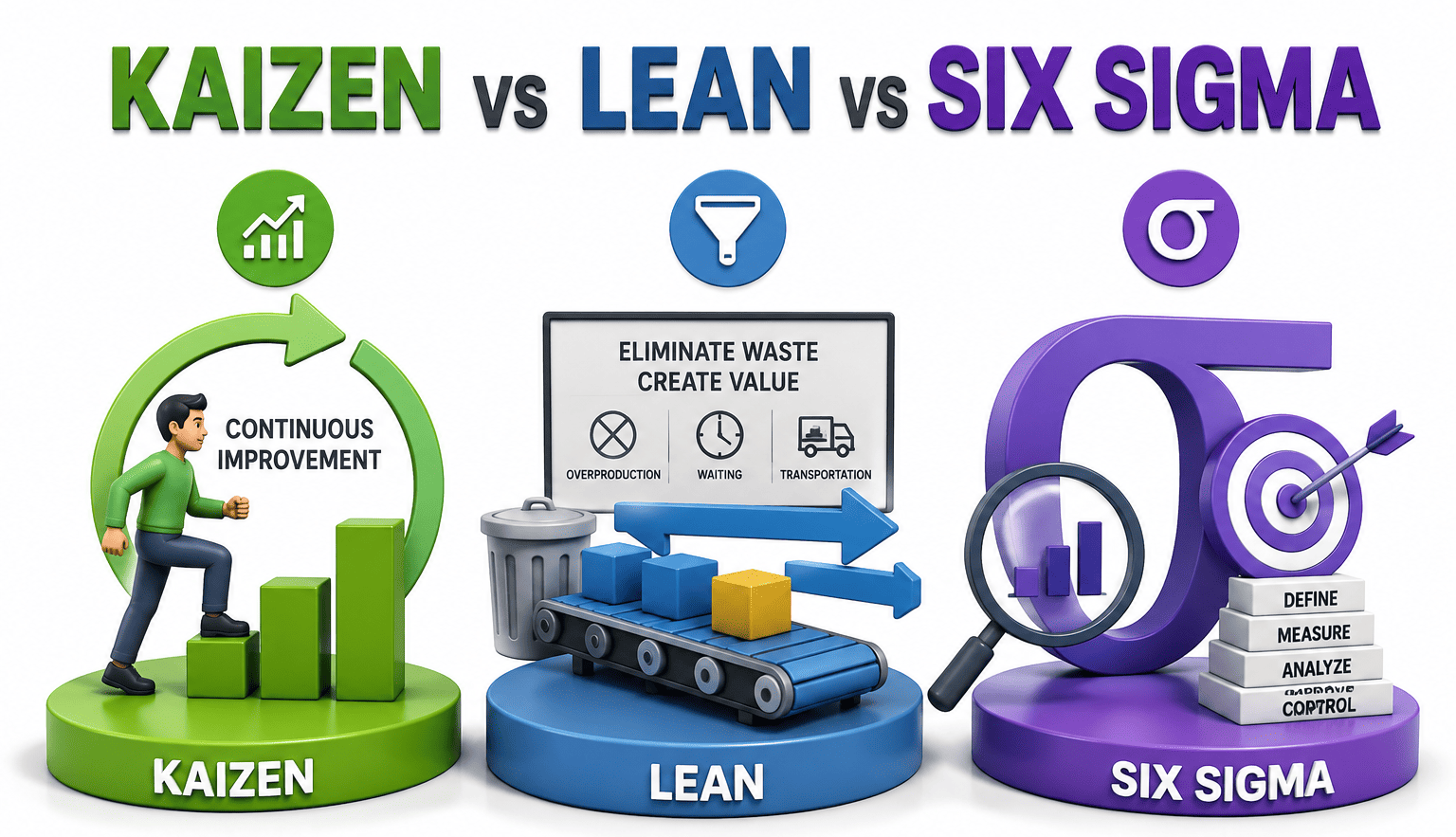
Kaizen is about building a culture of continuous improvement through small, consistent changes. Lean focuses on eliminating activities that don’t add value, while Six Sigma reduces process variation and defects using a structured, data-driven approach. Rather than competing with each other, these methodologies complement one another.
🌱 Kaizen vs Lean vs Six Sigma
From my experience in quality engineering, these approaches deliver the best results when they work together. For example, a team may use Lean to remove unnecessary process steps, apply Six Sigma to reduce defects and variation, and rely on Kaizen to ensure improvement continues long after the project is complete. That’s why many world-class organizations don’t choose one methodology over another—they integrate all three into their continuous improvement strategy.
A simple way to remember the difference is this:
- Kaizen asks, “How can we make this process a little better today?”
- Lean asks, “Which steps don’t create value?”
- Six Sigma asks, “Why is this process producing inconsistent results?”
Each methodology solves a different challenge, but together they help organizations improve quality, efficiency, customer satisfaction, and long-term operational performance. Although all three methodologies are valuable, I often recommend starting with Kaizen.
Why?
Because tools alone cannot sustain improvement. A culture that encourages learning, problem-solving, collaboration, and employee involvement creates the foundation required for Lean and Six Sigma initiatives to succeed. Organizations with strong Kaizen cultures tend to adopt Lean and Six Sigma more effectively because employees are already accustomed to questioning processes, identifying waste, and supporting change. In many ways, Kaizen provides the mindset, Lean provides the efficiency focus, and Six Sigma provides the analytical rigor.
📚 Recommended Books for Professionals
Try removing one or more filters.
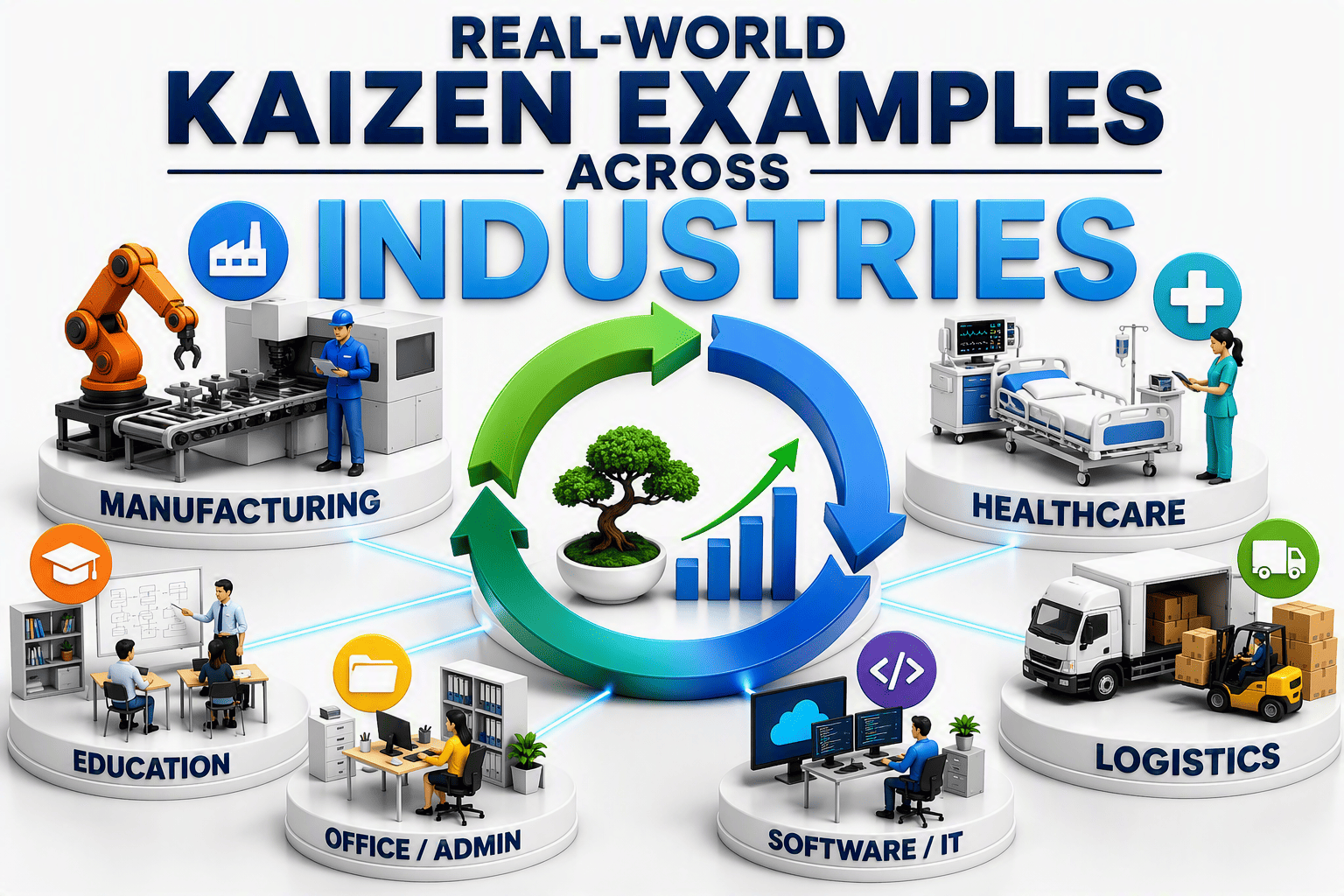
Real-World Kaizen Examples Across Industries
One of the reasons I admire Kaizen is that it isn't limited to manufacturing. The same mindset works just as well in healthcare, engineering, software development, logistics, and even office operations. While the work may look different, the principle remains the same: find a small improvement, implement it, learn from it, and repeat.
Early in my career, I assumed meaningful improvements required new systems or major investments. Experience taught me otherwise. Some of the most valuable improvements I've been involved in came from simplifying a document review, standardizing a checklist, removing an unnecessary approval, or improving communication between cross-functional teams. None of these changes made headlines, but together they reduced delays, prevented recurring issues, and made projects run far more smoothly. That's the real strength of Kaizen—small improvements that compound over time.
Manufacturing
Manufacturers use Kaizen to improve production flow, reduce defects, shorten setup times, and eliminate unnecessary motion. A simple change, such as reorganizing a workstation or improving tool placement, may save only a few seconds, but repeated thousands of times, those seconds become significant gains in productivity.
Healthcare
Hospitals apply Kaizen to reduce patient waiting times, improve medication safety, streamline admissions, and make better use of clinical resources. Small process improvements allow healthcare professionals to spend more time caring for patients and less time dealing with inefficient workflows.
Engineering and Product Development
In engineering, Kaizen often focuses on improving how information flows rather than how materials move. Standardizing documentation, simplifying design reviews, clarifying responsibilities, and improving change management help teams reduce delays and avoid costly rework. I've found that improving information flow is often just as valuable as improving the physical process.
Software and IT
Software teams use Kaizen to refine development workflows, automate repetitive tasks, improve testing, and shorten release cycles. Rather than waiting for major process overhauls, they make incremental improvements after every sprint or project iteration.
Logistics and Supply Chain
Logistics organizations use Kaizen to optimize warehouse operations, improve inventory accuracy, reduce delivery delays, and streamline material movement. Small improvements in process flow often lead to faster deliveries and lower operating costs.
Office and Business Operations
Kaizen is equally valuable in office environments. Simplifying approval workflows, reducing duplicate data entry, organizing digital files, and standardizing routine tasks can eliminate hours of unnecessary work while improving collaboration across teams.
A Common Thread
Although these examples come from different industries, they all share one principle: continuous improvement is driven by people, not by technology alone. Organizations that encourage employees to question existing processes, solve problems, and improve their work every day create a culture where operational excellence becomes sustainable rather than temporary.
The best Kaizen examples rarely involve dramatic breakthroughs. They begin with someone asking a simple question: "Is there a better way to do this?"
Kaizen in the Era of AI
Artificial Intelligence is changing how organizations analyze data, automate routine work, and make decisions. With so much attention on AI, it's natural to ask whether Kaizen is still relevant. From what I've seen, the answer is yes—perhaps more than ever. As artificial intelligence becomes part of everyday business, one question comes up frequently: Does AI make Kaizen less important? From my experience, the opposite is true. AI can process massive amounts of data, identify patterns, and automate repetitive work, but it cannot replace the mindset of continuous improvement. Someone still needs to ask the right questions, challenge inefficient processes, and decide what should change.
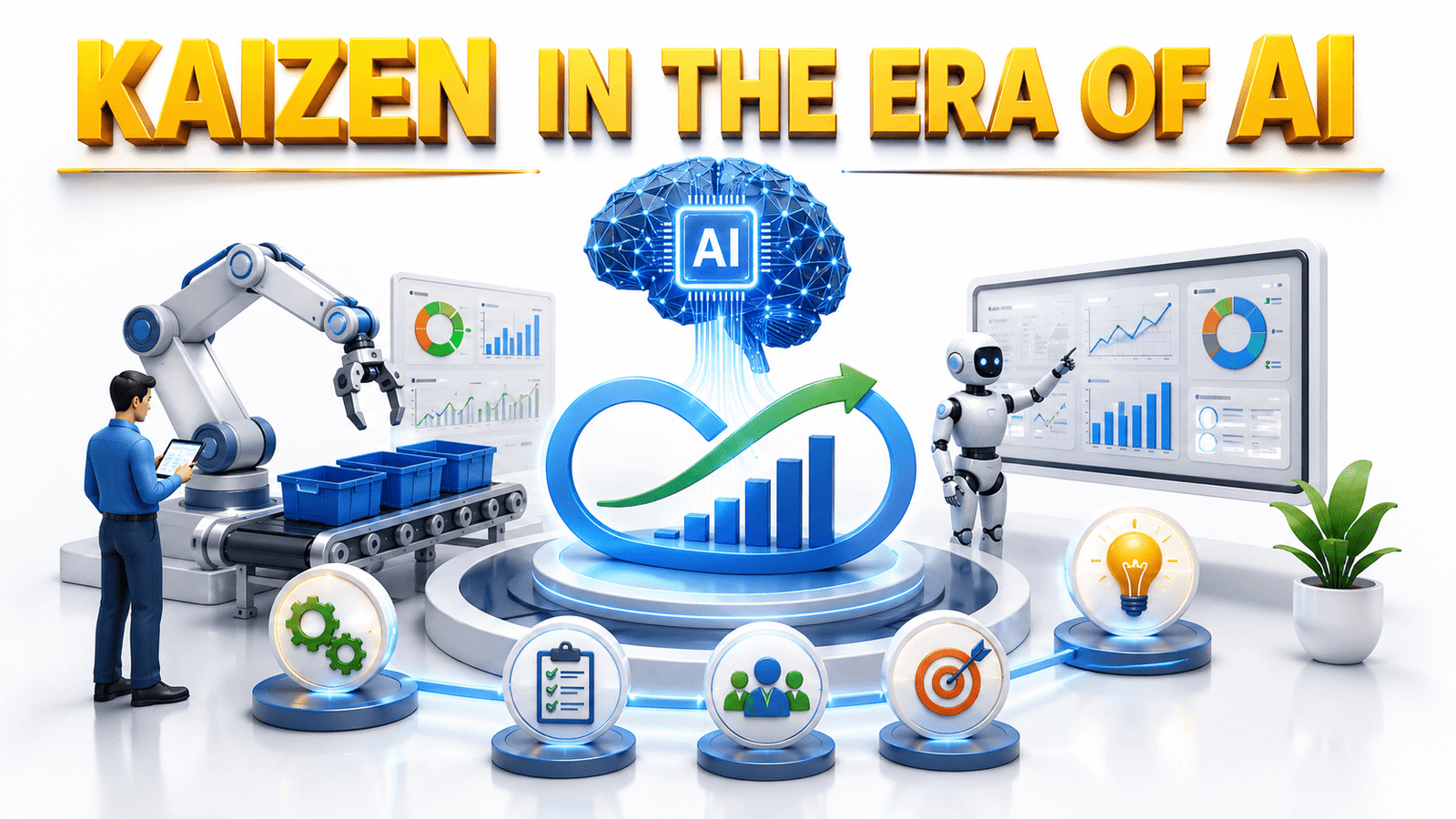
I've seen organizations invest heavily in digital tools expecting instant improvements. While technology certainly makes work faster, it doesn't automatically fix a poor process. Automating an inefficient workflow simply allows the same problem to happen more quickly. Kaizen encourages teams to improve the process first and then use technology to make that better process even more effective.
Where AI adds real value is by accelerating improvement. It can detect trends, predict potential issues, highlight bottlenecks, and provide real-time insights that once took days or weeks to uncover. That allows teams to spend less time collecting data and more time solving problems. Instead of replacing Kaizen, AI strengthens it by providing faster feedback and better information for decision-making.
I believe the future of operational excellence belongs to organizations that combine AI with a continuous improvement culture. Technology can generate insights, but people create meaningful change. When AI supports data-driven decisions and Kaizen encourages people to learn, experiment, and improve every day, organizations become more adaptable, efficient, and innovative.
Why some Kaizen Initiatives still Fail
If Kaizen is such a powerful philosophy, built on small, practical improvements,, why do so many Kaizen initiatives fail to deliver lasting results? I've seen teams introduce improvement boards, conduct Kaizen workshops, and create action plans with great enthusiasm, only to lose momentum a few months later. The reason was simple: Kaizen was treated as a project instead of becoming part of everyday work.
Teams achieve better results when leaders consistently support improvement, employees feel comfortable sharing ideas, and every successful change becomes the new standard. On the other hand, when improvements are driven only from the top, measured only during audits, or abandoned after the initial excitement, the same problems eventually return.
Common Reasons Kaizen Initiatives Fail
- Lack of consistent leadership support.
- Treating Kaizen as a one-time event instead of a daily habit.
- Focusing on tools while ignoring culture.
- Limited involvement from frontline employees.
- Blaming people instead of improving the process.
- Failing to standardize successful improvements.
- Expecting quick wins instead of long-term progress.
Most Kaizen initiatives do not fail because the methodology is flawed. They fail because organizations treat Kaizen as a short-term project instead of a long-term cultural transformation. Common causes include weak leadership commitment, poor employee engagement, fear of failure, lack of standardization, excessive focus on tools, and failure to connect improvement efforts to business objectives. Organizations that build a culture of trust, learning, ownership, and continuous improvement are far more likely to sustain Kaizen and achieve operational excellence over the long term.
Common Challenges and How to Overcome Them
No Kaizen journey is perfectly smooth. From my experience, the biggest challenges are usually not technical, they are human. People often resist change because the current process feels familiar, even when it is inefficient. I have seen teams hesitate to adopt simple improvements only because they were used to doing things a certain way. What works best is not forcing change, but involving people early, listening to their concerns, and showing quick wins that make their daily work easier.
Another common challenge is losing momentum. Many organizations start Kaizen with excitement, but after a few weeks, urgent deadlines and daily work take over. The teams that succeed are the ones that do not treat Kaizen as a special event. They make improvement part of regular discussions, encourage small ideas continuously, and recognize people when they contribute. Even a small improvement matters if it removes frustration, saves time, or prevents repeated mistakes.
I have also noticed that some teams try to improve too many things at once. This usually creates confusion and slows progress. Kaizen works best when the focus is narrow, practical, and easy to sustain. Solving one recurring problem properly is often more valuable than launching several improvement actions that never get completed.
A practical way to overcome Kaizen challenges is to keep the approach simple. Involve employees before making changes, ensure leaders actively support improvement efforts, measure whether the change actually worked, and update the standard process once the improvement is successful. Most importantly, create a culture where problems are not hidden or blamed on individuals. Problems should be treated as opportunities to improve the system.
From my experience, organizations that succeed with Kaizen have one thing in common: they do not treat continuous improvement as extra work. They make it part of everyday thinking. When people regularly ask, “How can we make this process a little better today?”, improvement becomes a habit. That is when Kaizen starts delivering real long-term value.
Step-by-Step Guide to Implementing Kaizen
One of the biggest misconceptions about Kaizen is that it requires a large transformation program. From my experience, the most meaningful improvements rarely begin with expensive software, consultants, or months of planning. They usually start with someone asking a simple question: "Is there a better way to do this?" I've seen small changes—such as simplifying a review process, removing an unnecessary approval, or standardizing a document template—save countless hours and prevent recurring mistakes. That's the strength of Kaizen: small improvements, applied consistently, create lasting results.
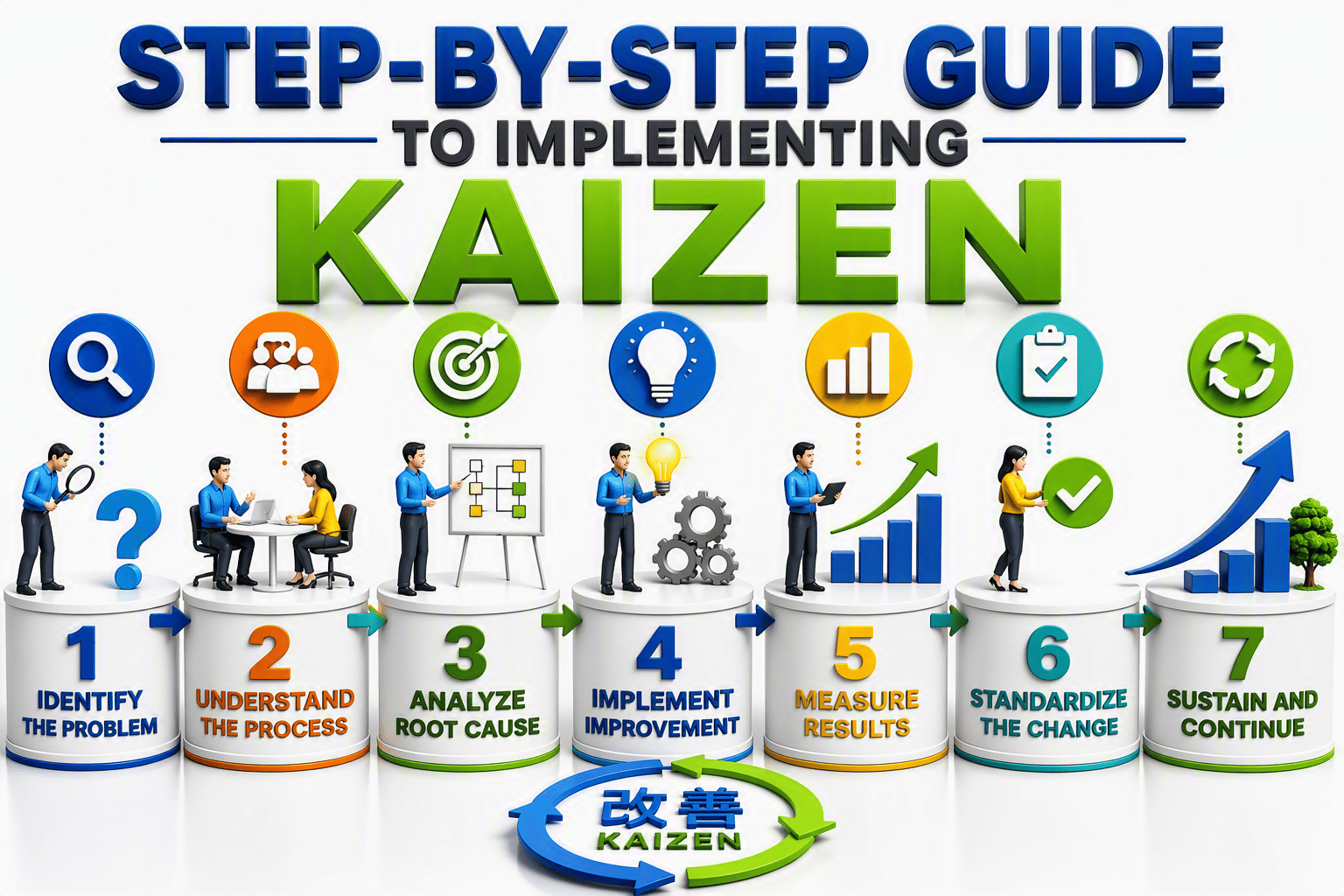
Step 1: Identify the Opportunity
Start by observing the process as it actually happens. Look for delays, rework, defects, unnecessary approvals, repeated questions, or anything that frustrates the people doing the work. The best Kaizen opportunities are often hiding in everyday tasks.
Step 2: Find the Root Cause
Resist the temptation to jump straight to a solution. Spend time understanding why the problem exists. In my experience, fixing the symptom may provide temporary relief, but solving the root cause prevents the problem from coming back.
Step 3: Involve the Right People
The people closest to the process usually know where the biggest improvement opportunities exist. Listen to their ideas, encourage open discussion, and involve them in designing the solution. The most practical improvements I've seen have come from frontline team members.
Step 4: Start Small
Don't wait for the perfect solution. Test one simple improvement that can be implemented quickly with minimal risk. Kaizen values steady progress over large, complicated changes.
Step 5: Measure the Impact
Every improvement should answer one question: Did it make the process better? Measure the outcome using meaningful indicators such as quality, cycle time, productivity, cost, safety, or customer satisfaction. Decisions should be based on evidence, not assumptions.
Step 6: Standardize the Improvement
If the change delivers results, make it the new way of working. Update procedures, checklists, templates, or training materials so the improvement becomes sustainable rather than temporary.
Step 7: Repeat the Cycle
Kaizen is a continuous journey, not a one-time project. Every successful improvement creates an opportunity to improve again. That's how small changes gradually transform an organization's performance.
Simple Kaizen Roadmap

Lean Six Sigma • Six Sigma • Statistics • Project Management • Artificial Intelligence (AI) • Operations Management • Quality Management
Kaizen Templates and Free Downloads
📥 Download the FREE Kaizen A3 Problem-Solving Excel Template to document improvement ideas, identify root causes, track action items, compare before-and-after results, and standardize successful improvements.
Frequently Asked Questions (FAQs)
What is Kaizen?
Kaizen is a Japanese approach to continuous improvement that focuses on making small, consistent changes to improve processes, reduce waste, increase efficiency, and create better results over time.
What are the 5 principles of Kaizen?
The five key principles of Kaizen are creating a mindset of continuous improvement, identifying problems, eliminating waste, involving employees, and standardizing successful improvements.
What is a Kaizen event?
A Kaizen event is a short-term improvement activity where a team works together to identify a problem, analyze its root cause, implement solutions, and measure the results.
What are some examples of Kaizen in the workplace?
Examples of Kaizen include reducing machine setup time, improving workplace organization through 5S, eliminating unnecessary steps in a process, reducing defects, and improving employee workflows.
What are the benefits of Kaizen?
Kaizen helps organizations improve productivity, reduce waste, improve quality, increase employee engagement, lower costs, and create a culture of continuous improvement.
What are common Kaizen tools and techniques?
Popular Kaizen tools include PDCA (Plan-Do-Check-Act), 5S, 5 Why Analysis, Value Stream Mapping, Standard Work, Visual Management, and Root Cause Analysis.
What is the difference between Kaizen and Six Sigma?
Kaizen focuses on continuous small improvements involving everyone, while Six Sigma uses data-driven methods to reduce variation and defects. Many organizations use both approaches together.
How does Kaizen reduce waste?
Kaizen reduces waste by identifying and eliminating activities that do not add value, such as waiting time, excess motion, overproduction, defects, and unnecessary processing.
Can Kaizen be applied outside manufacturing?
Yes. Kaizen is widely used in healthcare, software development, education, banking, and daily life to improve processes, save time, and achieve better outcomes.
How can a company implement Kaizen?
A company can implement Kaizen by encouraging employee participation, identifying improvement opportunities, using problem-solving methods, testing solutions, measuring results, and continuously improving processes.
Conclusion
Over the years of learning and applying Lean principles, I have realized that Kaizen is not about making huge changes overnight. The real power of Kaizen comes from small improvements made consistently by the people closest to the process.
In my experience, the best improvements often come from simple observations — removing an unnecessary step, reducing waiting time, improving workplace organization, or finding an easier way to complete a task. These small changes may look minor at first, but together they create meaningful improvements in quality, productivity, and employee engagement.
Kaizen is ultimately about building a culture where everyone feels responsible for improvement. Whether in manufacturing, business processes, or daily life, the habit of asking “How can we do this better?” is what drives continuous improvement and long-term success.
Continue Your Learning Journey
Learning is a continuous process. Explore related topics, practical guides, tools, calculators, templates, and learning resources to expand your knowledge and develop new skills.
Choose a category below to explore practical tutorials, tools, calculators, templates, case studies, and learning resources.
Recommended Learning Resources
Expert-led courses to build practical skills, earn credentials, and advance your career.
Recommended professional books, certification guides, and practical study resources.
Ready-to-use templates, checklists, guides, and workbooks for practical applications.
Interactive calculators for statistics, quality, engineering, analysis, and decision-making.
Interactive Z, t, Chi-Square, and F tables with critical values and distribution curves.
Discover practical tutorials, case studies, and professional resources across Quality, Lean Six Sigma, Project Management, Statistics, AI, and Data Analytics.
Published: July 31, 2026
Last Updated: September 18, 2026