PDCA Cycle (Plan-Do-Check-Act): How World-Class Manufacturers Improve Quality and Reduce Defects
Think about how people try to improve their lives. Someone decides to wake up early, exercise regularly, or become more productive. The intention is strong at the beginning, but after a few days, things start slipping. The effort fades, and the result is frustration rather than improvement. The problem is not the intention. The problem is the absence of a structured approach to improvement.
This is exactly where the PDCA Cycle (Plan–Do–Check–Act) becomes powerful. It provides a simple yet systematic way to improve anything—whether it is a business process, a product, or even personal habits. Instead of relying on random attempts, PDCA helps you move forward step by step, learning continuously and improving consistently.
What is PDCA Cycle? (Simple Explanation)
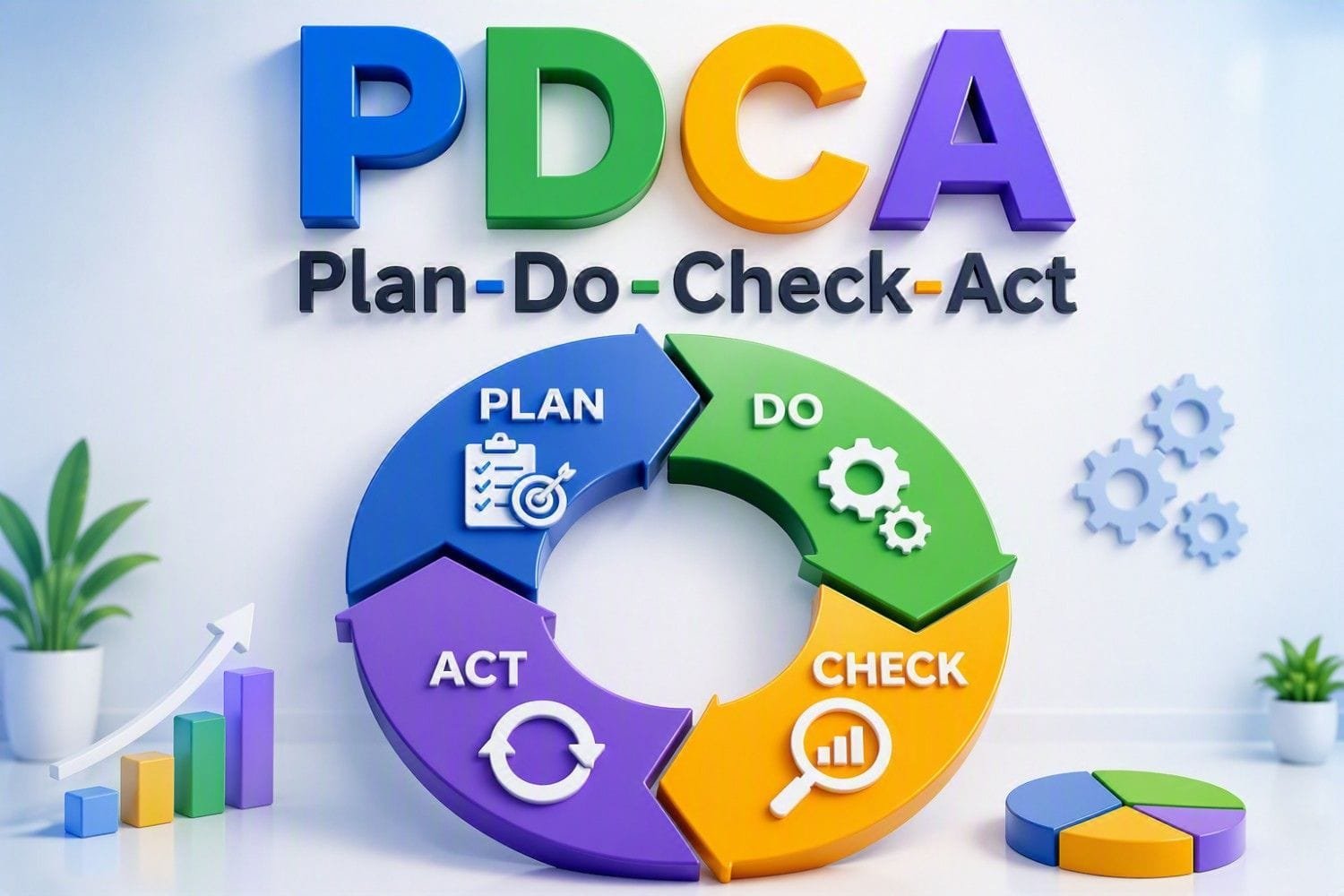
The PDCA Cycle is a proven framework for continuous improvement that helps individuals and organizations enhance processes, solve problems, and achieve better results. The acronym PDCA stands for Plan, Do, Check, and Act, representing four simple but effective stages that are repeated in a continuous cycle.
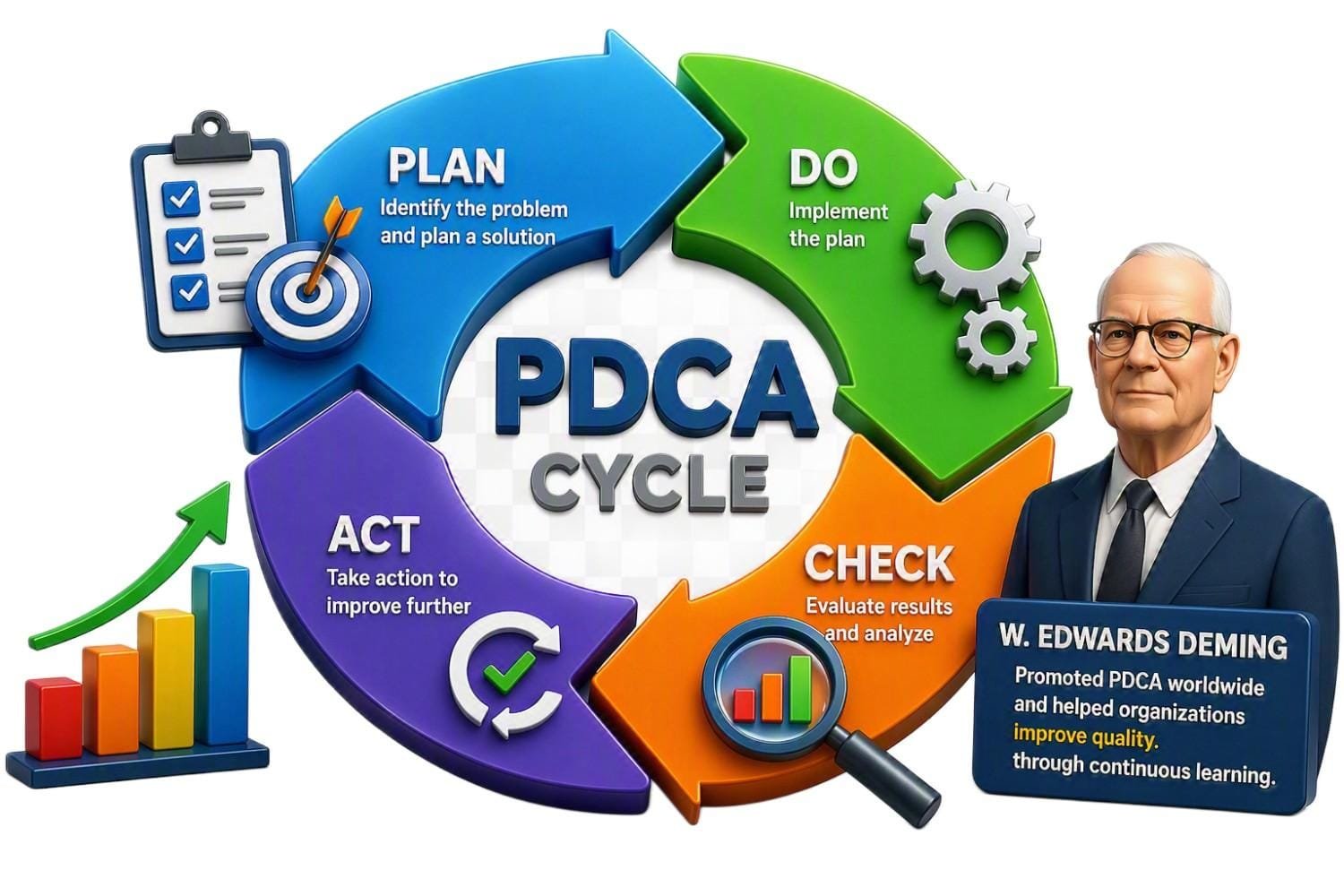
In simple words, the PDCA cycle involves planning an improvement, implementing it on a small scale, evaluating the results, and taking action based on what was learned. If the change is successful, it can be standardized and expanded. If not, the process is refined and tested again. This ongoing approach encourages learning through real-world experience rather than relying on assumptions. One of the biggest advantages of the PDCA cycle is its simplicity and flexibility. It breaks down complex challenges into manageable steps, making it easier to identify opportunities for improvement and make informed decisions. Since the cycle is continuous, organizations can keep refining their processes and adapting to changing needs over time.
The PDCA methodology is widely used across industries such as manufacturing, healthcare, education, information technology, and service sectors to improve quality, increase efficiency, reduce errors, and promote innovation. It provides a systematic approach for testing ideas, measuring outcomes, and implementing lasting improvements. Originally popularized by quality management expert Dr. W. Edwards Deming, the PDCA cycle has become one of the most widely recognized tools for operational excellence and continuous improvement. Whether applied to business operations, project management, or personal productivity, the PDCA cycle helps create a culture of ongoing learning, problem-solving, and sustainable success.
Understanding the History and Evolution of the PDCA Cycle
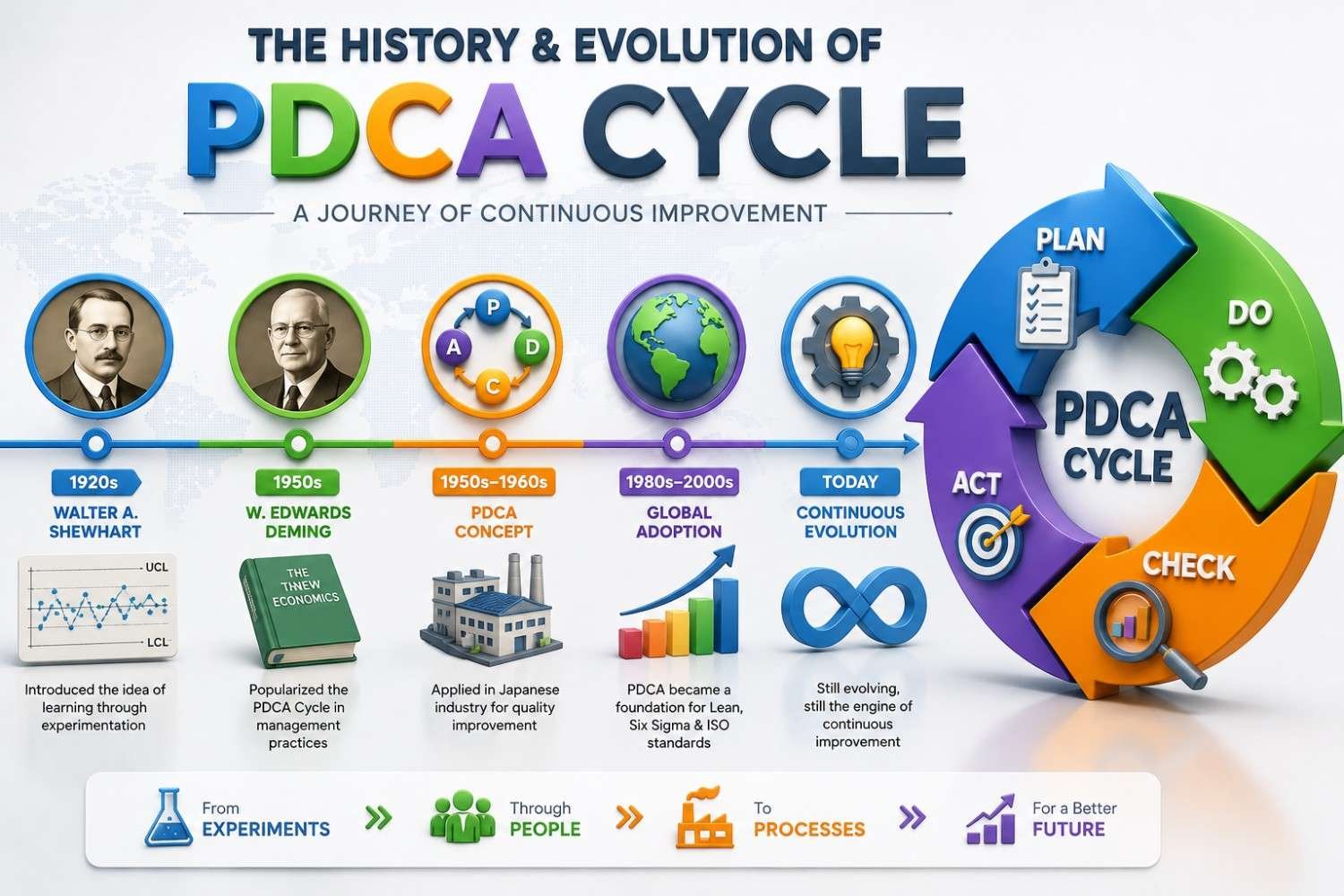
The PDCA Cycle has a rich history that dates back to the early development of quality management practices. Rather than being created overnight, it evolved through the contributions of pioneering experts who sought a systematic approach to process improvement. The foundation of this concept was laid by Walter A. Shewhart, who introduced a scientific method for controlling and improving manufacturing processes through iterative learning and experimentation. His work emphasized using data and observation to make informed decisions instead of relying on guesswork.
Walter Shewhart’s Contribution to PDCA
In simple terms, Walter Shewhart was the person who planted the seed that eventually grew into the PDCA Cycle. Working as a statistician at Bell Laboratories in the 1920s, he believed that improving a process should not rely on assumptions or opinions. Instead, teams should make a change, observe the results, learn from what happened, and use that knowledge to improve future performance.
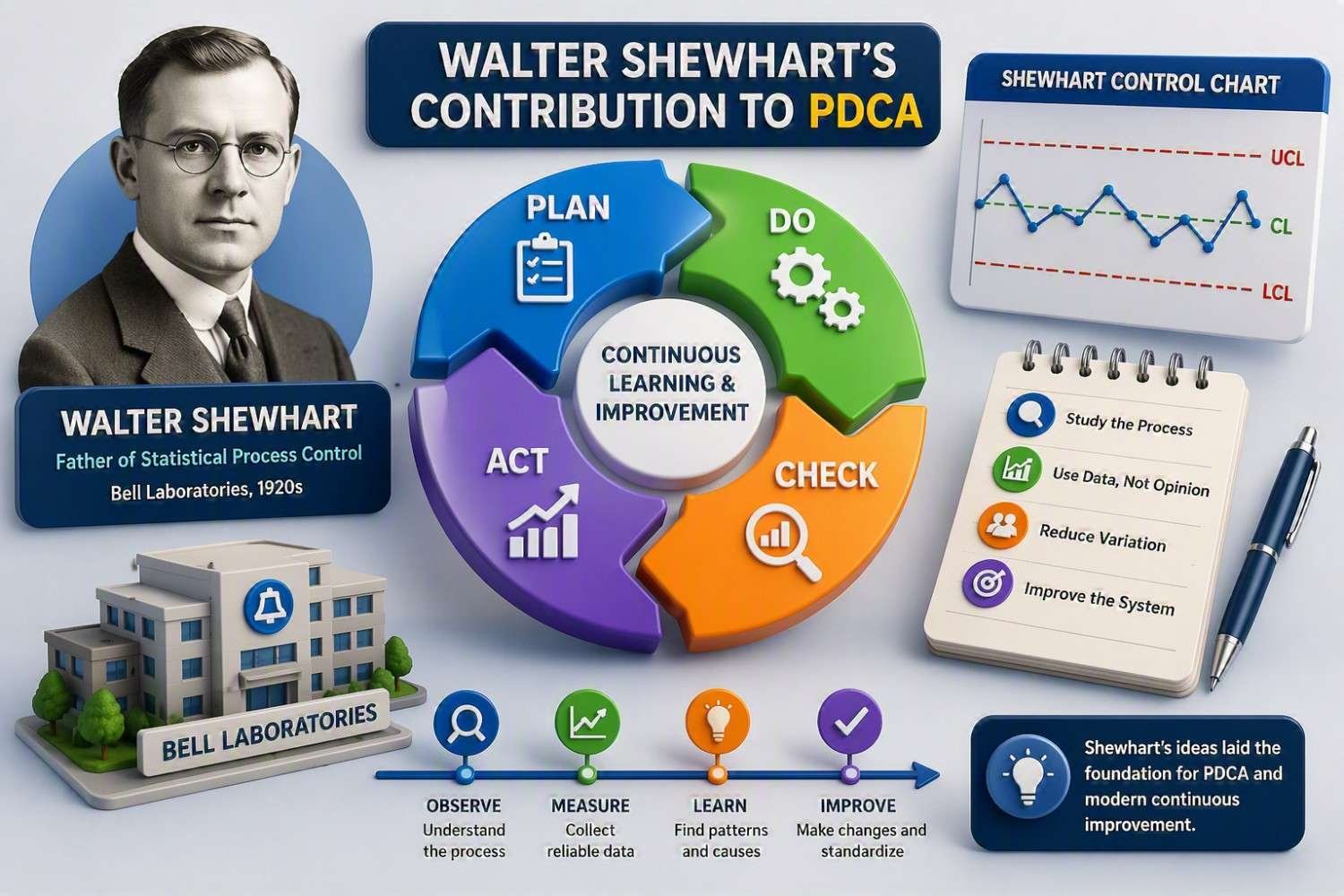
He introduced the idea of a continuous learning loop where decisions are guided by evidence rather than guesswork. Although Shewhart did not formally create the modern PDCA Cycle as we know it today, his work provided the foundation for systematic improvement. In my experience, this principle remains just as relevant now as it was a century ago—some of the best improvements happen when teams take the time to study the process, understand the results, and use real data to guide the next step instead of rushing into solutions.
How W. Edwards Deming Popularized PDCA
While Walter Shewhart provided the foundation, W. Edwards Deming was the person who transformed those ideas into a practical management philosophy that organizations could use every day. Deming believed that real improvement comes from understanding how a process behaves, making decisions based on data, and continuously learning from results. Through his work with Japanese industries after World War II, he demonstrated that quality is not achieved through inspection alone but through a systematic approach to improving the process itself.
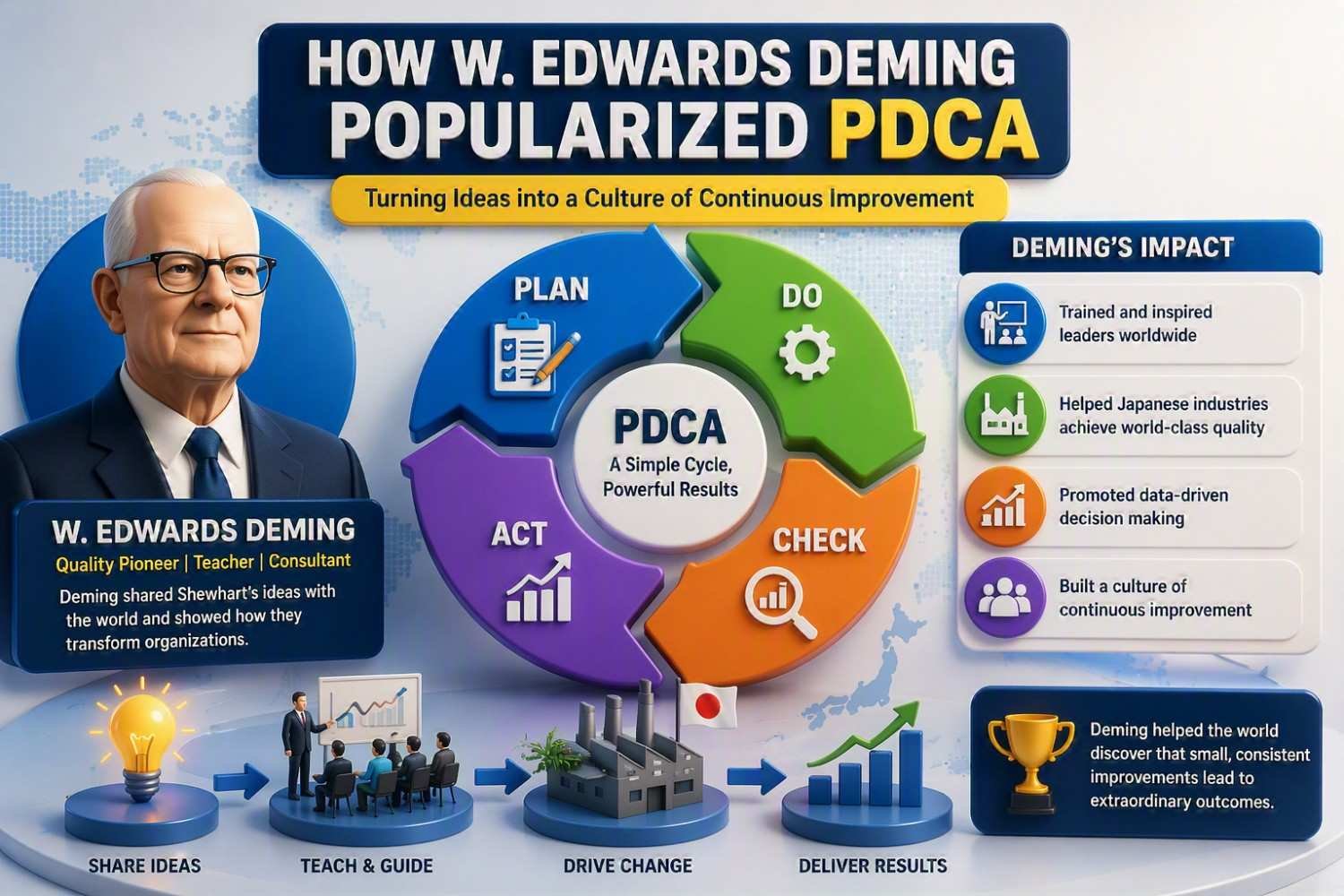
From my own experience leading quality and continuous improvement initiatives across manufacturing and medical device environments, I have seen Deming’s philosophy deliver results repeatedly. The projects that achieved the most sustainable improvements were rarely the ones with the most sophisticated tools. Instead, they were the projects where teams took the time to test ideas, review the data honestly, learn from unexpected outcomes, and make small adjustments before moving forward. That mindset reflects Deming’s influence perfectly. Rather than chasing quick fixes, he encouraged organizations to build a culture of learning and continuous improvement. This practical approach is one of the key reasons the PDCA Cycle remains one of the most widely used improvement frameworks in the world today.
🎓 Top-Rated Courses & Certifications
Try changing your filters or searching for another course.
PDCA vs PDSA: Understanding the Difference
PDCA and PDSA are often viewed as slight variations of the same improvement method, but my experience has shown that the distinction becomes important once you start applying them to real problems. PDCA focuses on confirming whether a change produced the desired outcome, whereas PDSA encourages teams to step back, analyze what happened, and learn from the results before deciding what to do next. Over the years, I have found that some of the most valuable improvements came from unexpected findings rather than the original plan itself. Those moments reinforced the importance of studying the results, not just checking them. While PDCA remains a powerful framework for disciplined execution, PDSA offers a deeper understanding when processes are complex, data is evolving, or the root cause is not yet fully understood.
This practical approach is one of the reasons why PDCA continues to be widely used across manufacturing, healthcare, technology, education, construction, and service industries. Its strength lies in providing a simple, repeatable structure for solving problems, testing ideas, and continuously improving performance. Whether improving a production process, managing a project, or developing personal skills, the cycle helps turn learning into action and action into measurable results. Organizations that consistently apply this mindset are often better equipped to adapt to change, strengthen decision-making, and achieve sustainable long-term improvement.
Understanding the Four Stages of PDCA Cycle
The PDCA cycle consists of four interconnected stages that create a continuous loop of improvement. Each step plays a specific role, and skipping any one of them reduces the effectiveness of the entire cycle.
The journey begins with the Plan phase, where the problem is identified and analyzed carefully. This is where people stop reacting randomly and start thinking logically. They define what they want to achieve, study the current situation, and prepare a clear plan of action. A well-defined plan ensures that the effort is not wasted later.
Plan Phase: Identifying Problems and Setting Objectives
Plan: The first stage of PDCA is planning. In this stage, the individual or organization identifies the problem or opportunity for improvement and determines the objectives, processes, and resources required to achieve the desired outcome. In this stage, the team identifies the problem or opportunity for improvement, establishes goals and objectives, and develops a plan of action. The team must ensure that the goals and objectives are specific, measurable, achievable, relevant, and time-bound. The plan should be specific, measurable, achievable, relevant, and time-bound (SMART Goal).
Example: A company wants to reduce its production time for a particular product by 25%. The team sets a goal to achieve this reduction within the next six months. They then develop a plan that includes identifying bottlenecks in the production process, implementing process improvements, and training staff on the new processes.
Do Phase: Testing Solutions on a Small Scale
Do: The second stage of PDCA is to implement the plan. In this stage, the team puts the plan into action and implements the changes. The do stage is where the rubber meets the road, and the team must be prepared to face challenges and make adjustments as needed. In this stage, the plan is put into action. This may involve testing, implementing, or executing the proposed solution.
Example: The team starts implementing the plan by identifying bottlenecks and implementing process improvements. They provide training to the staff, and new processes are implemented. The team also collects data on the new process and monitors the progress.
Check Phase: Measuring Results and Evaluating Performance
Check: The third stage of PDCA is to check the results. In this stage, the team collects data, measures the results, and analyzes the data to determine if the plan is working as intended. The check stage is critical because it helps the team identify any problems or issues that may have arisen during the implementation phase. In this stage, the results of the implementation are evaluated to determine if the desired outcome was achieved. This may involve collecting and analyzing data, comparing results to benchmarks or standards, and identifying areas for improvement.
Example: The team collects data on the production time for the product and measures the results. They find that the production time has reduced by 20% but not by the desired 25%. The team analyzes the data to identify the reasons for the shortfall and identifies areas where further improvements can be made.
Act Phase: Standardizing Success and Driving Continuous Improvement
Act: The fourth and final stage of PDCA is to act on the results. In this stage, the team makes adjustments to the plan based on the data collected in the check stage. The act stage is critical because it ensures that the team continuously improves the process and achieves its goals. Based on the results of the Check stage, the individual or organization takes action to implement improvements. This may involve revising the plan, modifying processes or procedures, or implementing new solutions.
Example: The team identifies the areas where further improvements can be made and adjusts the plan accordingly. They implement the changes and continue to collect data and monitor progress. The team also identifies new areas for improvement and begins the PDCA process again.
Why the PDCA Cycle is Highly Effective
One of the key strengths of the PDCA Cycle is its emphasis on ongoing learning and steady improvement rather than expecting instant perfection. Instead of implementing large-scale changes all at once, the method encourages organizations to make small, controlled improvements, evaluate their impact, and refine their approach based on actual results.
Each time the cycle is repeated, valuable insights are gained that help teams make better decisions and improve performance. This step-by-step process reduces uncertainty and allows organizations to adapt quickly to new challenges while continuously enhancing their processes. The PDCA Cycle is closely linked with the philosophy of continuous improvement because it promotes regular, incremental changes that accumulate into substantial long-term benefits. By testing new ideas on a limited scale before full implementation, organizations can identify potential issues early, minimize risks, and avoid costly mistakes.
This structured yet flexible approach makes PDCA a dependable problem-solving tool for businesses of all sizes. It fosters a culture of innovation, evidence-based decision-making, and continuous growth, enabling organizations to improve quality, efficiency, and customer satisfaction over time.
Is the PDCA Cycle Part of Lean or Six Sigma?
The PDCA (Plan-Do-Check-Act) Cycle is a versatile continuous improvement framework that plays an important role in both Lean and Six Sigma methodologies. Rather than belonging exclusively to one system, it serves as a common problem-solving approach that supports process improvement across different management philosophies.
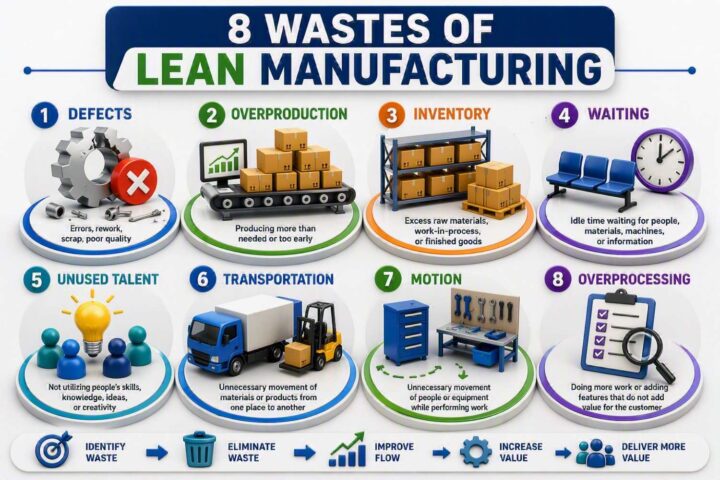
Within the Lean framework, the PDCA Cycle is widely used to identify inefficiencies, reduce waste, and improve workflow through small, ongoing improvements. Lean organizations encourage teams to test changes, measure their effectiveness, and refine processes continuously, making PDCA a natural fit for achieving operational excellence.
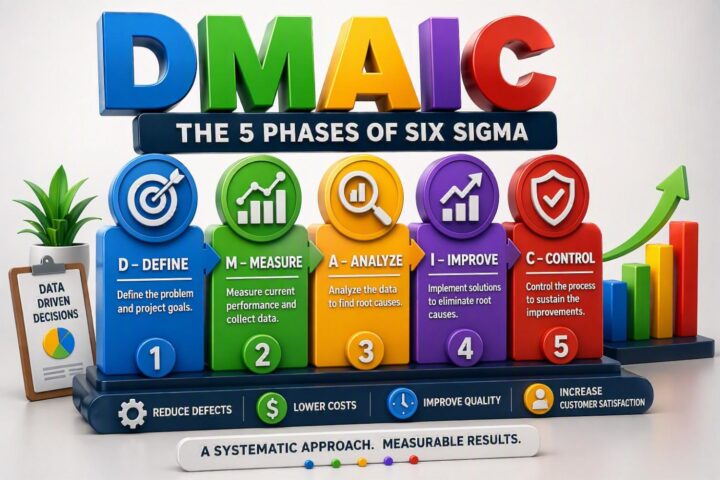
In Six Sigma, PDCA complements the data-driven approach to quality improvement. While Six Sigma primarily follows the DMAIC (Define, Measure, Analyze, Improve, Control) methodology, the principles of PDCA are often applied during the Improve stage to pilot potential solutions, evaluate their effectiveness, and implement successful changes in a controlled manner.
Because of its structured and repeatable nature, the PDCA Cycle is recognized as a universal improvement model that can be applied in a wide variety of industries and business functions. It provides a practical framework for experimenting with ideas, learning from results, and making informed decisions based on evidence. Whether an organization follows Lean, Six Sigma, or another quality management system, the PDCA Cycle remains a valuable tool for fostering continuous improvement, reducing process variation, enhancing efficiency, and building a culture focused on long-term success.
How World-Class Manufacturers Use PDCA for Continuous Improvement
One reason world-class manufacturers consistently outperform their competitors is that they treat improvement as a daily habit rather than an occasional project. Instead of reacting to problems only when they become serious, they use the PDCA Cycle to identify opportunities, test solutions on a small scale, evaluate the results, and refine the process before wider implementation. Throughout my career in manufacturing and medical device environments, I have seen the greatest gains come from teams that focus on small, data-driven improvements rather than chasing dramatic changes. A simple adjustment to a process, work instruction, or inspection method can produce significant long-term benefits when it is tested and improved through repeated PDCA cycles. What makes PDCA so powerful is its ability to turn everyday challenges into learning opportunities, creating a culture where continuous improvement becomes part of how people work rather than something extra they are asked to do.
🎓 Top-Rated Courses & Certifications
Try changing your filters or searching for another course.
PDCA Template and Implementation Checklist (Free Download)
📥 Over the years, I have used PDCA to solve production, quality, and process improvement challenges across manufacturing environments. Download these FREE PDCA templates, checklists, and worksheets to help you apply the same structured approach in your own improvement projects.

Lean Six Sigma • Six Sigma • Statistics • Project Management • Artificial Intelligence (AI) • Operations Management • Quality Management
Real-World PDCA Case Study: Reducing Defects on a Production Line
One of the most valuable lessons I have learned as a Quality Engineer is that lasting improvements rarely come from adding more inspections—they come from improving the process itself. I experienced this firsthand when a production line began producing an increasing number of defective machined components. While different teams blamed raw materials, machine settings, or operator practices, we chose to follow the PDCA (Plan-Do-Check-Act) methodology instead of making quick adjustments based on assumptions.
During the Plan phase, we analyzed defect trends, reviewed production data, and mapped the manufacturing process to identify where failures originated. Tools such as Pareto Analysis, the Fishbone Diagram, and the 5 Whys helped us trace the problem to excessive cutting tool wear that was occurring long before the scheduled replacement interval.
Rather than changing every production line, we applied the Do phase by testing a revised tool replacement schedule on a single machine. Operators were trained on the new standard, and the process was monitored closely to ensure the trial reflected normal production conditions.
The Check phase confirmed that the changes were effective. Defect rates dropped, process variation decreased, and overall process capability improved without affecting production output. The data provided clear evidence that the solution addressed the root cause rather than simply masking the symptoms.
Finally, during the Act phase, the revised maintenance schedule and operating procedures were standardized across similar production lines. The improvement was incorporated into preventive maintenance plans, operator training, and standard work instructions to ensure the gains were sustained.
This project reinforced an important principle that has shaped my approach to quality engineering: decisions should be driven by evidence, not opinions. PDCA encourages teams to understand how a process behaves, validate improvements with real data, and standardize only those changes that consistently deliver better results. Whether you work in medical devices, automotive, aerospace, or any other manufacturing industry, this disciplined approach helps reduce defects, eliminate waste, and build a culture of continuous improvement.
If you’re building a complete Problem Solving Tools toolkit, 5W1H works exceptionally well alongside other proven methodologies. Techniques such as 5 Whys Root Cause Analysis, Fishbone (Ishikawa), 8D Problem Solving, and the PDCA Cycle can help teams dig deeper into causes, implement effective corrective actions, and sustain long-term improvements. I’ve covered each of these tools in detail in separate articles on my blog.
Frequently Asked Questions (FAQs)
What is the PDCA cycle in simple terms?
The PDCA cycle is a four-step method used to improve processes continuously by planning, testing, checking results, and making improvements.
Who created the PDCA cycle?
The PDCA cycle was originally developed by Walter Shewhart and later popularized by W. Edwards Deming.
Why is PDCA important?
PDCA is important because it provides a structured way to improve processes and helps avoid repeating mistakes.
Is PDCA used only in manufacturing?
No, PDCA is widely used in healthcare, services, education, and even personal life for continuous improvement.
What makes PDCA different from other methods?
Its continuous and iterative nature makes PDCA a long-term improvement approach rather than a one-time solution.
What does PDCA stand for?
PDCA stands for Plan, Do, Check, and Act.
Why is PDCA called a cycle?
It is called a cycle because the steps repeat continuously, creating ongoing improvement.
What is the main goal of PDCA?
The main goal of PDCA is to achieve continuous improvement through structured problem-solving.
Is PDCA a one-time process?
No, PDCA is a continuous loop that is repeated again and again for better results.
What happens if PDCA fails in one cycle?
If one cycle fails, you learn from the results, refine the plan, and repeat the cycle with improvements.
Can PDCA be used for small problems?
Yes, PDCA is effective for both small everyday problems and large organizational improvements.
Is PDCA useful for individuals?
Yes, individuals can use PDCA to improve habits, productivity, and personal goals.
What is the most important stage in PDCA?
The Plan stage is often considered the most important because it sets the foundation for the entire cycle.
Why is the Check phase important?
The Check phase ensures decisions are based on actual results and data rather than assumptions.
What is the difference between Do and Act in PDCA?
The Do phase involves implementing a solution, while the Act phase focuses on improving or standardizing based on results.
Conclusion
The PDCA (Plan-Do-Check-Act) Cycle has earned its place as one of the most practical and effective models for continuous improvement. Although it consists of only four straightforward steps, its true value lies in the mindset it promotes—a commitment to learning, adapting, and improving through repeated action.
The central principle of the PDCA Cycle is simple yet powerful:
👉 Lasting success is achieved through continuous improvement, not through a single perfect solution.
Rather than depending on assumptions or quick fixes, PDCA encourages a structured process of planning changes, implementing them, evaluating the outcomes, and taking corrective action based on evidence. This systematic approach helps reduce uncertainty, minimizes risks, and creates improvements that can be sustained over the long term.
Another major advantage of the PDCA methodology is its flexibility. It can be applied in almost any environment, from manufacturing and healthcare to education, information technology, service industries, and even personal goal setting. Regardless of the application, the cycle provides a reliable framework for identifying opportunities, testing ideas, and achieving better results with each iteration.
The PDCA Cycle also reinforces the importance of learning from experience. Every completed cycle—whether it produces the expected outcome or reveals new challenges—offers valuable insights that can guide future decisions. This continuous feedback loop enables organizations and individuals to refine their processes, enhance quality, and improve overall performance over time.
In today’s rapidly changing business environment, adaptability has become a critical success factor. The PDCA Cycle equips teams with a disciplined yet flexible approach to managing change, solving problems, and driving innovation. By embracing continuous improvement as an ongoing journey rather than a one-time project, organizations can build stronger processes, deliver greater value, and remain competitive in an evolving world.
Ultimately, the PDCA Cycle is more than a quality management tool—it is a practical philosophy for continuous learning and sustainable growth. Organizations and professionals who consistently apply its principles are better positioned to improve efficiency, increase customer satisfaction, and achieve long-term excellence.
Continue Your Learning Journey
Learning is a continuous process. Explore related topics, practical guides, tools, calculators, templates, and learning resources to expand your knowledge and develop new skills.
Choose a category below to explore practical tutorials, tools, calculators, templates, case studies, and learning resources.
Recommended Learning Resources
Expert-led courses to build practical skills, earn credentials, and advance your career.
Recommended professional books, certification guides, and practical study resources.
Ready-to-use templates, checklists, guides, and workbooks for practical applications.
Interactive calculators for statistics, quality, engineering, analysis, and decision-making.
Interactive Z, t, Chi-Square, and F tables with critical values and distribution curves.
Discover practical tutorials, case studies, and professional resources across Quality, Lean Six Sigma, Project Management, Statistics, AI, and Data Analytics.
Published: March 19, 2023
Last Updated: September 18, 2026