Industry 5.0 and Quality 5.0
Manufacturing is entering a new era. After years of focusing on connectivity, automation, and data-driven operations, organizations are increasingly recognizing that technology alone is not enough. The next evolution, known as Industry 5.0, places people, sustainability, and resilience at the center of innovation. Rather than replacing human expertise, Industry 5.0 emphasizes collaboration between humans and intelligent technologies such as Artificial Intelligence (AI), collaborative robots (cobots), digital twins, advanced analytics, automation, and connected systems to create smarter, more adaptable, and more sustainable manufacturing environments.
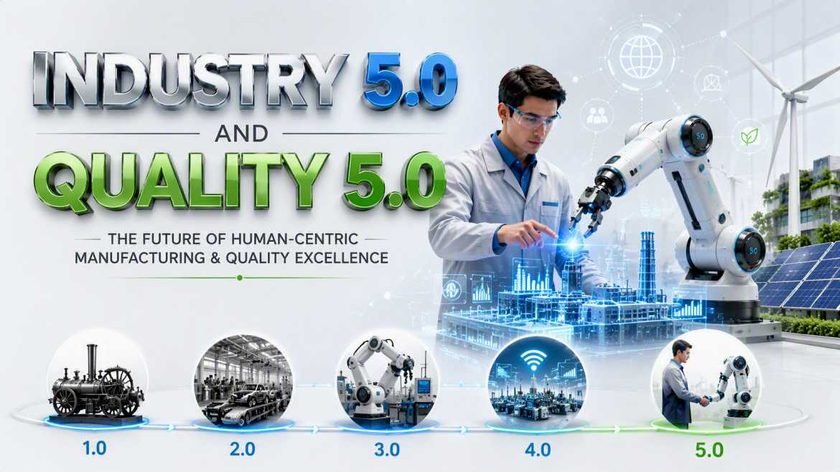
This evolution also extends to quality management. Known as Quality 5.0, it combines human expertise with digital intelligence to create a more proactive, customer-focused, and trusted approach to quality. Instead of relying solely on inspections, reports, and automated analytics, Quality 5.0 leverages AI, connected quality systems, predictive insights, and human judgment to improve decision-making, reduce risk, and enhance customer outcomes.
At its core, Industry 5.0 is about creating human-centric manufacturing, while Quality 5.0 is about creating human-centric quality excellence. Together, they help organizations balance technological innovation with human creativity, operational performance with sustainability, and efficiency with customer value. As businesses navigate increasingly complex markets and rising customer expectations, Industry 5.0 and Quality 5.0 provide a framework for building resilient, sustainable, and high-performing organizations.
Evolution of Industrial Revolutions
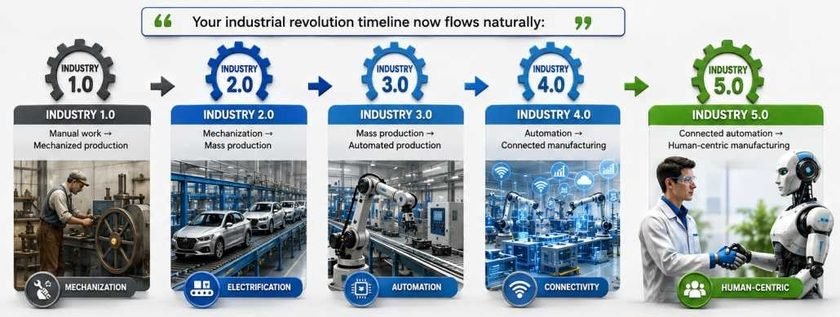
When I look at how manufacturing has changed, I see a clear progression: mechanization, electrification, automation, and now connectivity. Each industrial revolution solved a different manufacturing challenge and created the foundation for what came next.
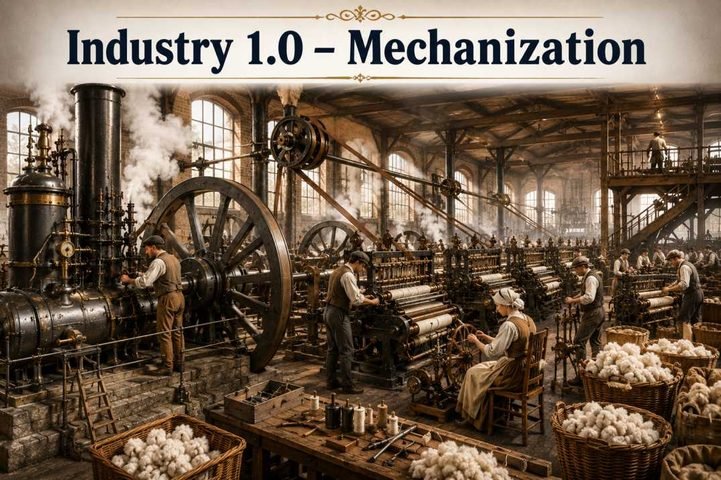
Industry 1.0 – Mechanization
Beginning in the late 18th century, the First Industrial Revolution transformed manufacturing by introducing steam power and water-powered machinery. Production gradually moved from small workshops and manual labor to centralized factories, enabling goods to be produced faster and at a much larger scale. Industries such as textiles, mining, and iron production experienced significant growth during this period.
Key technologies: Steam engines, water wheels, mechanized looms
Key shift: Manual work → Mechanized production
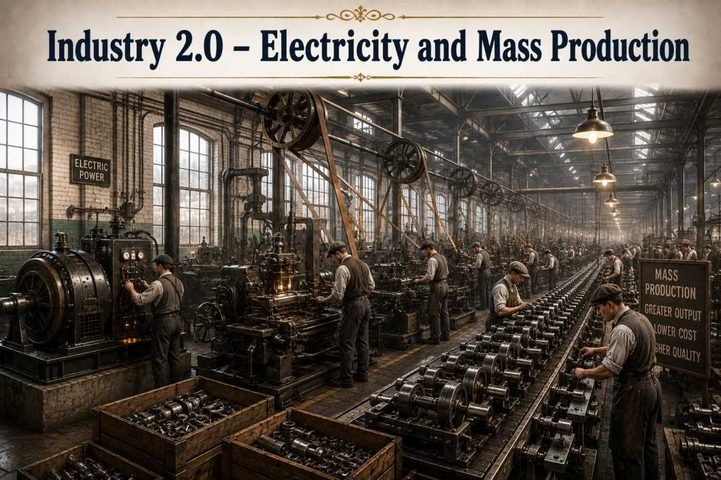
Industry 2.0 – Electricity and Mass Production
During the late 19th and early 20th centuries, the Second Industrial Revolution introduced electricity, significantly improving factory efficiency and productivity. Unlike steam-powered systems, electric machines offered greater flexibility, reliability, and scalability. This era also saw the rise of assembly lines, standardized processes, and mass production techniques, allowing manufacturers to produce goods faster, more consistently, and at lower costs. Industries such as automotive, steel, and consumer goods expanded rapidly, making products more accessible to people worldwide.
Key technologies: Electricity, assembly lines, interchangeable parts, mass production systems
Key shift: Mechanization → Mass production
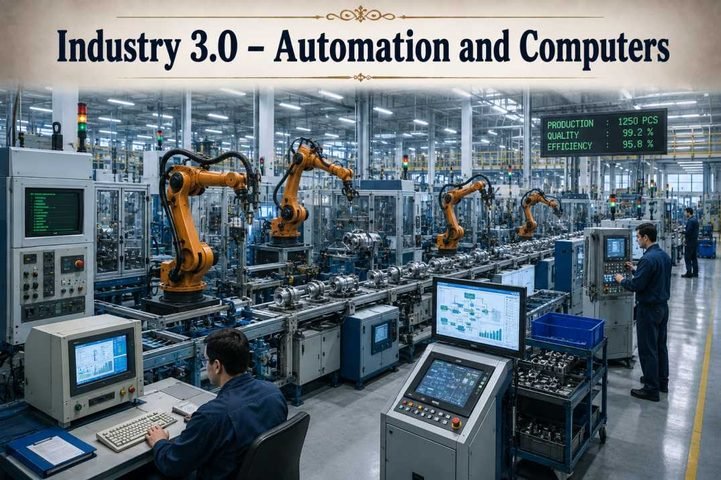
Industry 3.0 – Automation and Computers
Beginning in the 1970s, the Third Industrial Revolution introduced electronics, computers, programmable logic controllers (PLCs), and industrial robots into manufacturing. These technologies enabled machines to perform repetitive tasks automatically with greater speed, consistency, and precision than ever before. Automation reduced human intervention in many production processes, improved product quality, and increased operational efficiency. This era also marked the rise of computer-integrated manufacturing, laying the foundation for the digital technologies that would later power Industry 4.0.
Key technologies: Computers, PLCs, industrial robots, automation systems, electronics
Key shift: Mass production → Automated production
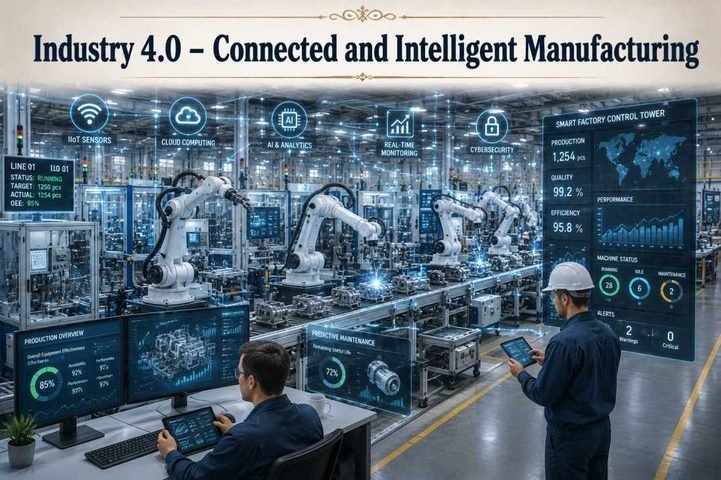
Industry 4.0 – Connected and Intelligent Manufacturing
Introduced in the early 21st century, Industry 4.0 transformed manufacturing by connecting machines, systems, products, and people through digital technologies. Using the Industrial Internet of Things (IIoT), cloud computing, big data analytics, artificial intelligence (AI), and digital twins, manufacturers can collect and analyze real-time data across the entire production process. This connectivity enables smarter decision-making, predictive maintenance, improved efficiency, and greater operational visibility. Industry 4.0 created the foundation for highly connected and data-driven smart factories.
Key technologies: IIoT, cloud computing, artificial intelligence, big data analytics, digital twins, smart sensors
Key shift: Automation → Connected manufacturing
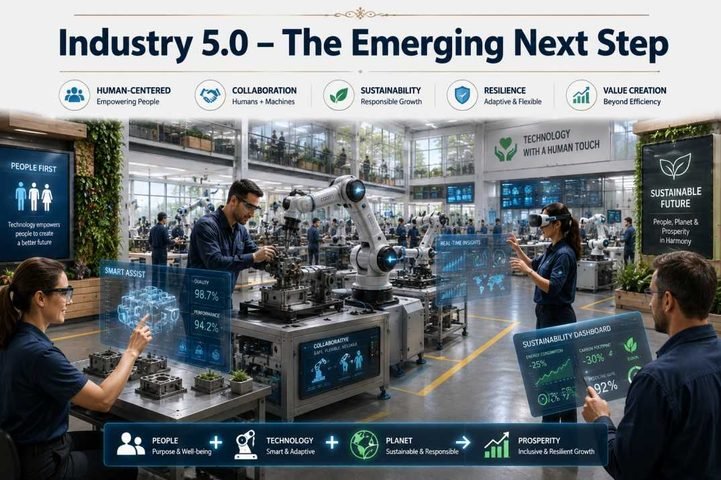
Industry 5.0 – The Emerging Next Step
Industry 5.0 builds on the digital foundation established by Industry 4.0 while placing greater emphasis on people, sustainability, resilience, and human-machine collaboration. Rather than focusing solely on efficiency and automation, Industry 5.0 aims to create manufacturing systems where advanced technologies such as artificial intelligence, collaborative robots (cobots), digital twins, and smart automation work alongside human expertise. This approach enables more personalized production, improved adaptability, sustainable operations, and stronger resilience against disruptions while ensuring technology serves both business objectives and human needs.
Key technologies: Artificial intelligence, cobots, digital twins, advanced analytics, sustainable technologies, smart automation
Key shift: Connected automation → Human-centric manufacturing
Industrial Revolutions at a Glance
| Revolution | Approximate Period | Defining Change |
|---|---|---|
| Industry 1.0 | Late 18th century | Mechanization and steam power |
| Industry 2.0 | Late 19th century | Electricity and mass production |
| Industry 3.0 | 20th century | Computers and automation |
| Industry 4.0 | 21st century | Connectivity and intelligent manufacturing |
| Industry 5.0 | Emerging | Human-centric and sustainable manufacturing |
The important point is that each revolution built on the previous one. Industry 4.0 is not simply another step in automation; it changes how manufacturing systems communicate, use information, and make decisions. Now, let’s look at what Industry 4.0 actually means.
What is Industry 5.0?
Industry 5.0 is an emerging approach to manufacturing that puts people, technology, and sustainability at the center of industrial operations. It builds on the connected and automated foundation of Industry 4.0 but gives greater importance to human expertise, resilience, and responsible value creation.
From my experience in manufacturing, I see Industry 5.0 less as a replacement for Industry 4.0 and more as a change in priorities. Industry 4.0 asks how technology can make manufacturing smarter. Industry 5.0 asks how smarter manufacturing can better serve people and the planet. Industry 5.0 brings human expertise and intelligent technology together.
What Makes Industry 5.0 Different? Three ideas stand out:
- Human-centric: Technology supports people rather than simply replacing them. Humans and intelligent machines work together, combining practical judgment with automation and AI.
- Sustainable: Manufacturing considers resource use, environmental impact, and long-term value—not just output and efficiency.
- Resilient: Operations are designed to respond better to supply disruptions, changing demand, equipment problems, and other unexpected events.
Industry 5.0 is not about abandoning automation or AI. It is about using those technologies with greater purpose. The future factory will need to deliver more than productivity—it will need to create value for people, customers, businesses, and the planet.
What is Quality 5.0?
Quality 5.0 is an emerging approach to quality management that extends the ideas of Quality 4.0 into a more human-centered, sustainable, resilient, and purpose-driven model. From my perspective, the key change is that quality is no longer viewed only through defects, specifications, compliance, and process performance. The broader question becomes: Are we creating the right value for customers, people, the business, and society?
What Makes Quality 5.0 Different? Quality 5.0 brings together three important dimensions:
- Human-centered quality: Technology supports quality professionals, engineers, and operators rather than simply replacing human judgment.
- Intelligent quality: AI, analytics, connected data, and automation help identify risks earlier and support better decisions.
- Sustainable and resilient quality: Quality decisions consider long-term environmental impact, resource use, supply-chain resilience, and customer value.
Instead of using AI only to identify defective products after inspection, a Quality 5.0 approach could combine process data, quality signals, human expertise, and customer feedback to identify emerging risks and recommend preventive action.
Industry 5.0 vs Quality 5.0: What is the Difference?
Industry 5.0 and Quality 5.0 both build upon the digital foundation created by Industry 4.0 and Quality 4.0, but they focus on different outcomes. Industry 5.0 expands beyond automation and efficiency by emphasizing human-centric manufacturing, sustainability, and resilience. It focuses on creating smarter workplaces where people, AI, robotics, and digital systems collaborate rather than compete. Quality 5.0 applies the same philosophy to quality management. Instead of relying solely on automated inspections and analytics, it combines human expertise with AI-driven insights to improve quality decisions, reduce risk, and enhance customer outcomes. In my experience, the simplest way to distinguish the two is this:
Industry 5.0 asks, “How can people and technology work together better?“
Quality 5.0 asks, “How can people and technology work together to deliver exceptional quality?”
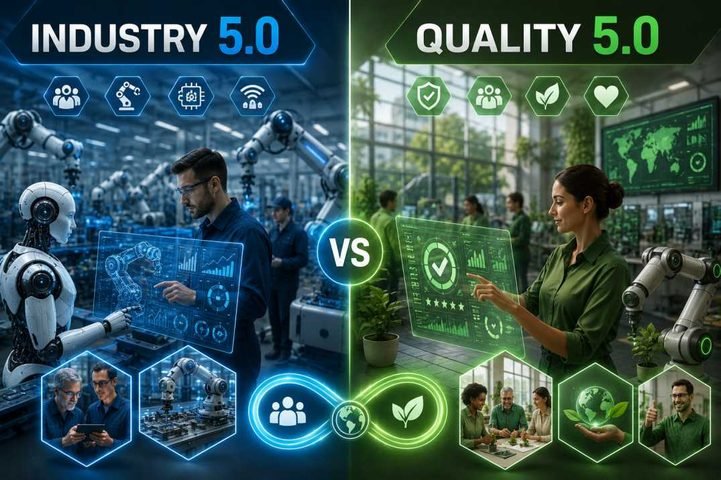
| Industry 5.0 | Quality 5.0 |
|---|---|
| How can people and technology work together better? | How can people and technology deliver exceptional quality? |
| Connects people, machines, AI, and digital systems | Connects quality, product, process, and customer data |
| Focuses on human-centric manufacturing | Focuses on human-centric quality management |
| Prioritizes productivity, sustainability, and resilience | Prioritizes quality, trust, risk reduction, and prevention |
| Uses AI, robotics, digital twins, IoT, and automation | Uses these technologies to improve quality decisions and customer outcomes |
| Enhances human-machine collaboration | Enhances quality professional-AI collaboration |
| Drives sustainable smart manufacturing | Drives predictive, connected, and trusted quality |
| Goal: Better operations and better work environments | Goal: Better quality and better customer experiences |
Key Technologies Behind Industry 5.0
Industry 5.0 is powered by a combination of digital technologies that enable machines, systems, and people to work together in a connected and intelligent environment. While each technology delivers value on its own, the real transformation occurs when they are integrated to create smarter, data-driven manufacturing operations. In my experience, many organizations think Industry 5.0 is a single technology. It isn’t. The real value comes from combining several technologies that turn raw manufacturing data into actionable insights and smarter decisions.
From my experience, the important point is not which technology is newest, but how well it works with people and the manufacturing process.
Key Technologies
- Artificial Intelligence (AI): Supports prediction, decision-making, process optimization, and intelligent assistance.
- Collaborative Robots (Cobots): Allow people and robots to work together, combining human judgment with machine precision.
- Industrial IoT (IIoT): Connects machines, sensors, products, and systems to provide real-time operational information.
- Digital Twins: Create virtual representations of machines, products, or processes for monitoring, simulation, and optimization.
- Advanced Analytics: Turns manufacturing and quality data into actionable insights.
- Extended Reality (AR/VR): Supports training, maintenance, assembly, remote assistance, and complex manufacturing tasks.
- Edge & Cloud Computing: Provides the computing capability needed to process and share industrial data efficiently.
- Smart Automation: Combines robotics, AI, sensors, and control systems to create more adaptive production processes.
- Additive Manufacturing: Enables flexible production, rapid prototyping, customization, and complex part designs.
- Sustainable Technologies: Energy monitoring, resource optimization, circular manufacturing, and low-waste technologies support Industry 5.0’s sustainability focus.
Industry 5.0 Applications in Manufacturing
Industry 5.0 is becoming relevant where technology needs to work with people rather than simply replace them. From my experience, its strongest applications are where human judgment, intelligent systems, and automation complement each other.
Key Applications
- Human–Robot Collaboration: Cobots handle repetitive, heavy, or precision tasks while operators focus on judgment, problem-solving, and improvement.
- Personalized Manufacturing: Flexible automation and digital tools make it easier to produce customized products without sacrificing efficiency.
- AI-Assisted Decision-Making: AI can analyze production and quality data, identify patterns, and give engineers or operators useful recommendations.
- Human-Centered Quality: Digital inspection and predictive analytics help detect quality risks early while experienced quality professionals provide context and final judgment.
- Predictive Maintenance: Connected equipment and AI help identify early signs of failure, allowing teams to intervene before an unexpected breakdown.
- Sustainable Manufacturing: Smart systems can monitor energy, materials, waste, and resource consumption to identify opportunities for more sustainable production.
- Resilient Supply Chains: Real-time data and analytics improve visibility and help manufacturers respond faster to supply disruptions and changing demand.
- AR/VR-Assisted Work: Augmented and virtual reality can support training, maintenance, assembly, remote assistance, and complex tasks.
- Mass Customization: Digital manufacturing systems allow greater product variation and personalization while maintaining control over quality and cost.
Challenges of Implementing Industry 5.0 and Quality 5.0
From my experience, the biggest challenge is not adopting AI, cobots, or digital platforms. It is creating a culture where people and technology genuinely work together. From my experience, these are the challenges that matter most:
- Balancing humans and automation: The objective is collaboration, not simply replacing people with machines. Finding the right division of responsibility takes careful process design.
- Skills gap: Teams need a mix of manufacturing knowledge, quality expertise, digital skills, data literacy, and the ability to work with AI and automation.
- Legacy equipment: Older machines and systems may not easily support modern connectivity, analytics, or collaborative technologies.
- Data quality and integration: AI and predictive quality depend on reliable data. Inconsistent measurements, disconnected systems, and poor data governance can quickly reduce their value.
- Cybersecurity and privacy: Greater connectivity creates additional risks, particularly when production, quality, people, and enterprise systems become increasingly interconnected.
- Sustainability vs. productivity: Improving environmental performance while maintaining cost, quality, and delivery targets can involve difficult trade-offs.
- Proving business value: New technology can be impressive, but the investment still needs to demonstrate measurable improvements in quality, productivity, resilience, cost, safety, or sustainability.
- Change management: Even excellent technology can fail if operators, engineers, and quality teams do not understand it, trust it, or see its practical value.
Future of Industry 5.0 and Quality 5.0
The future of manufacturing will not be defined by the pursuit of fully autonomous factories or by the replacement of human decision-making with machines. The real opportunity lies in creating human-centric organizations where people and intelligent technologies complement one another—combining human creativity, judgment, and experience with the speed, scale, and analytical power of AI and connected systems. The organizations that succeed in the next industrial era will not necessarily be those with the most advanced technologies, but those that know how to integrate technology with human capability to create sustainable, resilient, and trusted outcomes.
This is the fundamental premise of Industry 5.0. It represents a shift beyond the traditional focus on automation, productivity, and operational efficiency toward a broader definition of industrial value—one that places people, sustainability, and resilience at the center of manufacturing strategy. Technology remains an essential enabler, but it is no longer the destination. The objective is to use technology to create better workplaces, more adaptable operations, more sustainable products, and greater value for customers and society.
The same transformation is emerging within quality through the concept of Quality 5.0. Quality can no longer remain primarily a reactive function focused on inspection, compliance, and defect detection. The next generation of quality will combine quality expertise, artificial intelligence, real-time data, predictive analytics, and connected processes to anticipate risks, strengthen decision-making, and continuously improve product and process performance. The role of quality professionals will increasingly evolve from analyzing historical problems to influencing decisions before those problems occur.
Human-AI collaboration will become one of the defining characteristics of this transformation. AI will increasingly function as an intelligent decision-support partner for engineers, quality professionals, and operational leaders. Instead of spending valuable time searching for information, analyzing fragmented datasets, or manually identifying patterns, professionals will be able to use AI to rapidly synthesize knowledge, identify emerging risks, and generate actionable insights. Human expertise, however, will remain critical. Context, judgment, ethics, creativity, and accountability cannot simply be delegated to an algorithm. The competitive advantage will come from the combination of human intelligence and machine intelligence.
At the same time, sustainability will move from a corporate objective to an operational imperative. Environmental impact will increasingly be evaluated alongside traditional measures such as cost, productivity, quality, and delivery. Manufacturers will need to rethink how products are designed, materials are selected, energy is consumed, waste is minimized, and supply chains are managed. The future organization will not ask only, “Can we produce this better, faster, and cheaper?” It will also ask, “Can we produce it responsibly and sustainably over its entire lifecycle?”
Another defining capability will be personalization at scale. Intelligent and flexible manufacturing systems will enable organizations to respond to increasingly individualized customer requirements without sacrificing quality, speed, or economic viability. The convergence of automation, data, AI, modular production, and advanced manufacturing technologies will make mass customization increasingly achievable.
Quality itself will also undergo a fundamental transformation. Predictive and trusted quality will become more important than traditional inspection-driven quality. Instead of waiting for defects to occur and then responding to them, organizations will increasingly identify patterns, predict potential failures, and intervene before quality risks reach the customer. This represents a shift from detecting quality to engineering quality into every decision and continuously earning customer trust.
Resilience will become another defining measure of operational excellence. Future factories and supply networks must be capable of adapting rapidly to disruptions, changing customer expectations, geopolitical uncertainty, resource constraints, and technological change. Resilience will therefore require more than contingency planning. It will require connected data, intelligent decision-making, flexible processes, diversified capabilities, and a culture capable of responding to change.
Ultimately, the next industrial revolution will not be won by technology alone. The organizations that create lasting competitive advantage will be those that successfully combine human creativity, digital intelligence, sustainability, resilience, and quality excellence. Technology will provide unprecedented capabilities, but leadership will determine how those capabilities are used.
Industry 5.0 is therefore more than the next stage of industrial technology—it is a shift in the philosophy of manufacturing. Quality 5.0 extends that philosophy into the quality function, transforming quality from a predominantly reactive discipline into a strategic capability for prediction, trust, and value creation.
The future belongs to organizations that understand this distinction: the goal is not to build factories where humans become unnecessary; the goal is to build organizations where technology enables people to achieve what was previously impossible. When human expertise is amplified by AI, when sustainability is embedded into decision-making, when resilience is designed into operations, and when quality becomes the foundation of customer trust, Industry 5.0 becomes more than a technological evolution—it becomes a new model for sustainable and human-centric industrial excellence.
Benefits of Industry 5.0 and Quality 5.0
The biggest advantage of Industry 5.0 and Quality 5.0 is not greater automation alone. It is the ability to combine technology with human expertise to create manufacturing that is smarter, more resilient, sustainable, and focused on real customer value. From my experience, the most meaningful benefits are:
- Better human–machine collaboration — technology handles repetitive and data-intensive work while people focus on judgment, creativity, and problem-solving.
- Higher quality — connected data and AI can identify emerging quality risks earlier and support preventive action.
- Greater productivity — intelligent automation can improve throughput while allowing people to focus on higher-value activities.
- More flexible manufacturing — smart, adaptable systems make customization and changing production requirements easier to manage.
- Less downtime — predictive maintenance helps identify equipment problems before unexpected failures.
- Improved resilience — connected systems provide better visibility and help organizations respond faster to disruptions.
- Greater sustainability — monitoring energy, materials, waste, and resource use helps reduce environmental impact.
- Faster, better decisions — combining real-time data with human experience gives teams a stronger basis for action.
- Stronger employee experience — technology can reduce repetitive, physically demanding, and information-heavy tasks.
- Greater customer value — better quality, customization, reliability, and responsiveness can ultimately improve the customer experience.
Frequently Asked Questions (FAQ)
Q. What is Industry 5.0?
Industry 5.0 is a human-centric approach to manufacturing that combines people, intelligent technologies, sustainability, and resilience.
Q. What is Quality 5.0?
Quality 5.0 combines human expertise with AI, connected systems, and digital insights to improve quality decisions and customer trust.
Q. How is Industry 5.0 different from Industry 4.0?
Industry 4.0 focuses on automation and connectivity, while Industry 5.0 adds human well-being, sustainability, and resilience.
Q. How is Quality 5.0 different from Quality 4.0?
Quality 4.0 focuses on digital quality systems, whereas Quality 5.0 focuses on combining digital intelligence with human judgment and customer value.
Q. What are the key pillars of Industry 5.0?
The three pillars of Industry 5.0 are human-centricity, sustainability, and resilience.
Q. What technologies enable Industry 5.0?
Key technologies include AI, collaborative robots (cobots), digital twins, IIoT, advanced analytics, AR/VR, and cloud computing.
Q. Why is Industry 5.0 important?
It helps organizations balance productivity with employee well-being, environmental responsibility, and long-term business resilience.
Q. What are the benefits of Quality 5.0?
Quality 5.0 improves customer trust, reduces quality risks, enhances decision-making, and supports proactive quality management.
Q. What is a collaborative robot (cobot)?
A cobot is a robot designed to work safely alongside people, helping with tasks while allowing humans to focus on higher-value activities.
Q. How does AI support Quality 5.0?
AI helps identify patterns, predict risks, and provide insights that support faster and more effective quality decisions.
Q. Can small and medium-sized businesses adopt Industry 5.0?
Yes. Many organizations start with focused initiatives such as AI-assisted decision-making, cobots, or sustainability programs and scale over time.
Q. What is the future of Industry 5.0 and Quality 5.0?
The future will focus on stronger human-AI collaboration, sustainable operations, resilient supply chains, and customer-centric quality excellence.
Q. What is Industry 4.0?
Industry 4.0 is the digital transformation of manufacturing using connected technologies such as IoT, AI, analytics, and automation.
Q. What is Quality 4.0?
Quality 4.0 applies Industry 4.0 technologies to quality management to improve decision-making, visibility, and defect prevention.
Q. What is the difference between Industry 4.0 and Quality 4.0?
Industry 4.0 focuses on smarter manufacturing operations, while Quality 4.0 focuses on smarter quality management and continuous improvement.
Q. What are the key technologies behind Industry 4.0?
Common technologies include IoT, Artificial Intelligence, Machine Learning, Cloud Computing, Big Data Analytics, Digital Twins, and Robotics.
Q. Why is Industry 4.0 important?
It helps manufacturers improve productivity, reduce downtime, increase visibility, and make better decisions using real-time data.
Q. What are the benefits of Quality 4.0?
Quality 4.0 helps organizations reduce defects, improve process control, strengthen compliance, and prevent problems before they occur.
Q. How does AI support Industry 4.0?
AI analyzes large volumes of data to identify patterns, predict outcomes, and support faster, more informed decisions.
Q. What is a Smart Factory?
A Smart Factory uses connected systems, automation, and real-time data to optimize manufacturing operations and performance.
Q. What is Predictive Quality?
Predictive Quality uses data and analytics to identify potential quality issues before they become defects or customer complaints.
Q. Can small and medium-sized companies adopt Industry 4.0?
Yes. Many organizations start with small pilot projects and gradually expand their digital transformation initiatives over time.
Q. Is Quality 4.0 replacing traditional quality tools?
No. Quality 4.0 enhances established quality practices such as SPC, CAPA, audits, and continuous improvement through digital technologies.
Q. What is the future of Industry 4.0 and Quality 4.0?
The future will focus on AI-driven insights, predictive decision-making, connected ecosystems, and more proactive quality management.
Conclusion
Industry 5.0 and Quality 5.0 represent a shift toward smarter, more human-centered manufacturing. The focus is no longer only on automation, efficiency, or defect reduction. It is about combining human expertise, AI, connected systems, sustainability, and resilience to create better outcomes. From my experience, the technology itself is rarely the hardest part. The real value comes from knowing where technology can strengthen human decision-making and prevent problems before they become costly. Industry 5.0 and Quality 5.0 represent a natural evolution of digital transformation. While Industry 4.0 and Quality 4.0 focused on connectivity, automation, and data, the next generation places greater emphasis on people, sustainability, resilience, and long-term value creation.
The direction is simple: Connect → Understand → Predict → Prevent → Improve
Ultimately, Industry 5.0 and Quality 5.0 are not about replacing people with technology. They are about using technology to help people build better products, stronger processes, and more sustainable manufacturing systems.
Continue Your Learning Journey
Learning is a continuous process. Explore related topics, practical guides, tools, calculators, templates, and learning resources to expand your knowledge and develop new skills.
Choose a category below to explore practical tutorials, tools, calculators, templates, case studies, and learning resources.
Accelerate your learning with carefully selected courses, books, templates, and practical tools.
Expert-led courses to build skills and advance careers.
Explore CoursesRecommended books and professional study guides.
Explore BooksReady-to-use templates, guides, workbooks, and checklists.
Browse TemplatesPractical calculators for analysis and data-driven decisions.
Open CalculatorsPublished: August 29, 2026
Last Updated: September 4, 2026