What is Quality Assurance (QA)?
Quality Assurance (QA) is a proactive and process-oriented approach to quality management that focuses on preventing defects before they occur. Rather than inspecting finished products for errors, QA aims to design, implement, and continuously improve processes that consistently produce high-quality outcomes. Throughout my career, I’ve learned that the best way to improve quality is not by finding defects faster, but by preventing them from happening in the first place. That’s the core idea behind Quality Assurance (QA).
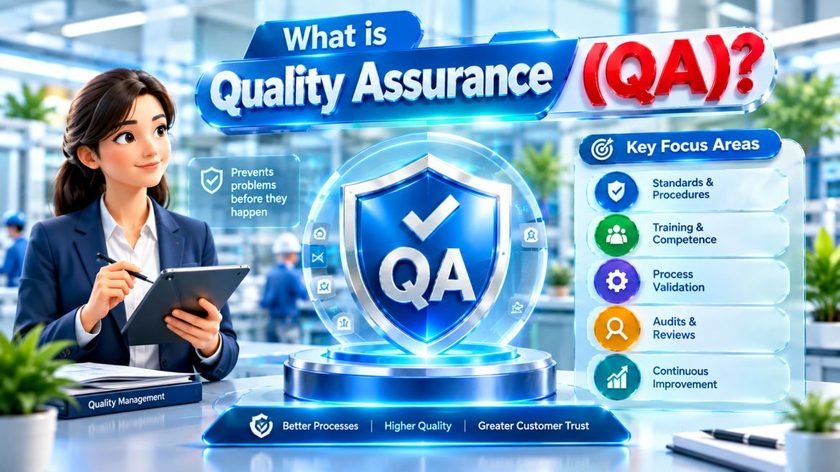
The primary objective of QA is to build quality into every stage of a process, ensuring that products or services meet customer expectations, regulatory requirements, and organizational standards.
In simple terms, Quality Assurance is a proactive approach that prevents defects by improving the process before problems occur.
What is Quality Control (QC)?
Quality Control (QC) is a product-focused approach to quality management that focuses on identifying defects before products or services reach the customer. Rather than improving the process itself, QC evaluates the final output through inspections, testing, measurements, and reviews to verify that it meets established quality standards and requirements
From my experience, Quality Control (QC) is where we verify that the actual output meets the requirements. Even a well-designed process can produce an unexpected result, so QC provides the evidence needed to identify and address those issues. QC may involve inspection, testing, measurement, sampling, or data review, depending on the product and process. The focus is not simply to find defects, but to detect nonconformities early enough to prevent them from reaching the customer.
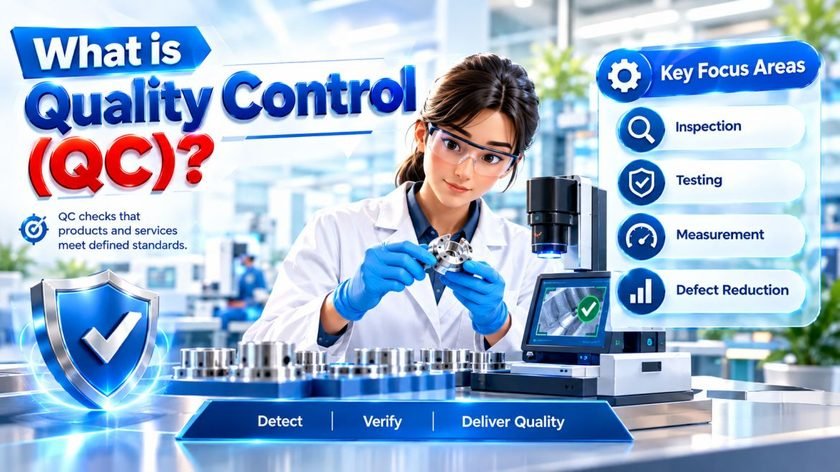
In simple terms, Quality Control (QC) is the process of checking the output to verify that it meets defined quality standards and customer expectations.
Difference Between Quality Assurance and Quality Control
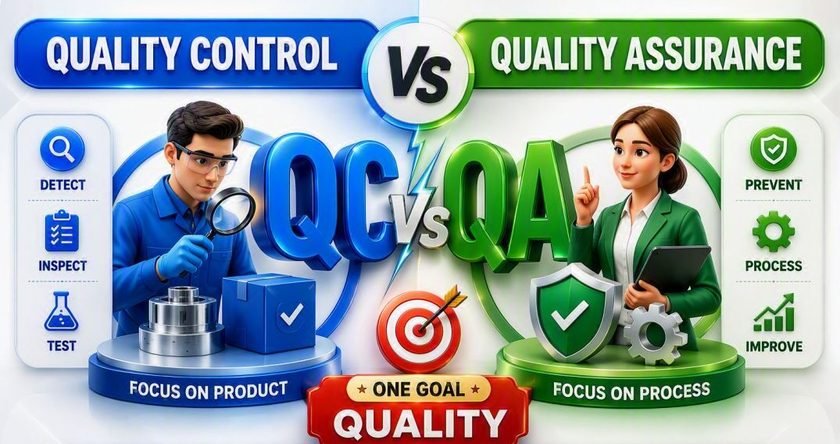
Many professionals use the terms Quality Assurance and Quality Control interchangeably, but they are not the same. Understanding the difference is essential for building effective quality systems, reducing defects, and improving customer satisfaction. The table below provides a side-by-side comparison of QA and QC.
| Criteria | 🛡️ Quality Assurance (QA) | 🔍 Quality Control (QC) |
|---|---|---|
| Focus | Preventing defects before they occur. | Identifying defects before they reach the customer. |
| Approach | Proactive and process-oriented. | Reactive and product-oriented. |
| Goal | Build quality into the process. | Verify quality of the final output. |
| When It Happens | Before and during production. | During and after production. |
| Activities | SOPs, audits, training, process improvements. | Inspection, testing, measurements, reviews. |
| Question | How can we prevent defects? | How can we find defects? |
| Example | Create work instructions and train employees. | Inspect and test products before release. |
QA prevents defects. QC detects defects. Together, they create a robust quality management system that consistently delivers products that meet customer expectations.
Top-Rated Courses & Professional Certifications
🧭 How to Choose: Use the filters to browse by category and provider. Click View Course to review course details, curriculum, pricing, and enrollment options.
Try changing your filters or search for another course.
How QA and QC Work Together
In my experience, QA and QC work best as a feedback loop—not as two separate quality activities. QA establishes the processes, controls, and standards intended to prevent problems. QC then checks the actual output to see whether those controls are working as expected. When QC identifies a recurring issue, the learning should flow back into QA to strengthen the process.
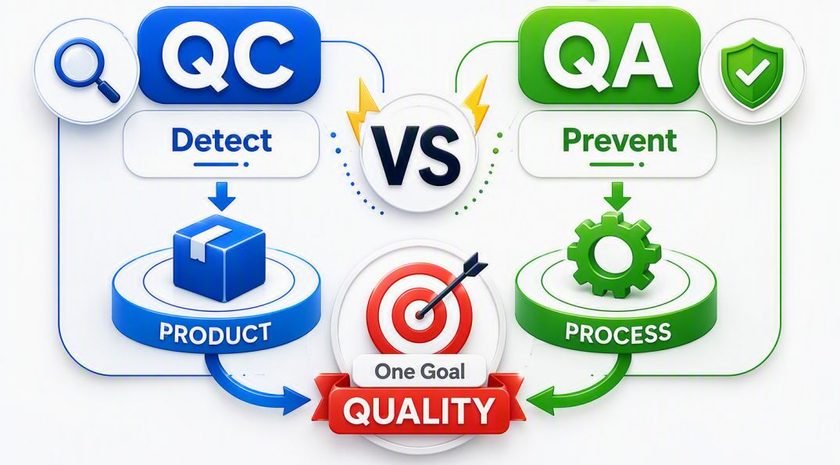
Think of QA as the system that prevents problems, and QC as the checkpoint that confirms quality. When QC identifies recurring defects, that information can be fed back into QA activities to improve processes, update procedures, strengthen training, or implement additional controls. Think of QA as the system that prevents problems, and QC as the checkpoint that confirms quality. When QC identifies recurring defects, that information can be fed back into QA activities to improve processes, update procedures, strengthen training, or implement additional controls.
For example, if QC repeatedly finds the same defect, simply rejecting more products does not solve the underlying problem. QA should investigate why it is happening and improve the process to prevent it from recurring.
Role of QA and QC in Modern Quality Management
Over the years, I’ve found that organizations delivering the most consistent results don’t rely solely on inspections or audits. They combine Quality Assurance (QA) and Quality Control (QC) to create a system that prevents issues, verifies outcomes, and continuously improves performance.
QA helps establish reliable processes, clear standards, and effective controls, while QC confirms that products and services meet expectations before reaching the customer. When defects, complaints, or trends are identified through QC activities, the insights are fed back into QA to strengthen the process and prevent recurrence. This ongoing cycle moves quality beyond simple compliance and turns it into a driver of customer satisfaction, operational excellence, and continuous improvement.
In simple terms, QA prevents defects, QC detects defects, and together they create a culture of quality that supports long-term success.
Recommended Books for Professionals
🇮🇳 India: Click in India | International: Click 🌐 Global
Try removing one or more filters.
QA vs QC Examples: Real-World Applications Across Industries
One of the easiest ways to understand the difference between Quality Assurance (QA) and Quality Control (QC) is through real-world examples. In my experience, professionals often grasp the concepts much faster when they see how QA and QC are applied in everyday business operations. While QA focuses on preventing defects, QC focuses on detecting defects before they reach the customer.
| Scenario | Quality Assurance (QA) | Quality Control (QC) |
|---|---|---|
| Manufacturing | Establishing process standards, work instructions, and production controls | Inspecting finished parts for defects and dimensional accuracy |
| Software Development | Defining coding standards, development processes, and peer reviews | Testing software for bugs, defects, and functionality issues |
| Medical Devices | Process validation, risk management, and quality system implementation | Product inspection, verification, and performance testing |
| Food Industry | Establishing hygiene standards and production procedures | Testing products for contamination and quality compliance |
| Documentation | Creating document control procedures and approval workflows | Reviewing documents for errors, omissions, and accuracy |
| Construction | Developing quality plans and construction standards | Inspecting completed work for compliance with specifications |
| Healthcare | Establishing clinical procedures and staff training programs | Reviewing patient records and verifying test results |
| Automotive | Implementing manufacturing processes and preventive controls | Inspecting vehicle components and performing quality checks |
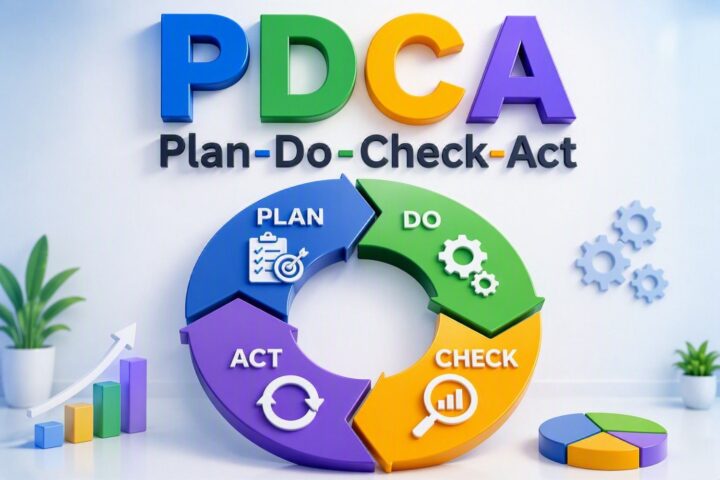
While Quality Assurance focuses on preventing defects and building quality into processes, Quality Control focuses on detecting and correcting issues before products reach customers. In practice, both functions rely on a combination of quality and problem-solving tools. For example, FMEA (Failure Mode and Effects Analysis) helps identify potential failures before they occur, while a Control Plan ensures critical process characteristics are monitored throughout production. Organizations also use Poka-Yoke techniques to prevent human errors, Process Capability (Cp & Cpk) to measure process performance, and structured problem-solving tools such as 5 Why Analysis, Fishbone Diagram, and 8D Problem Solving to investigate and eliminate root causes when quality issues occur. Continuous improvement frameworks such as DMAIC and PDCA further help organizations strengthen both Quality Assurance and Quality Control activities.
Frequently Asked Questions (FAQs)
Q: What is Quality Assurance?
Quality Assurance is a proactive approach focused on preventing defects by improving processes.
Q: What is Quality Control?
Quality Control is a reactive approach focused on identifying and correcting defects in products or outputs.
Q: What is the difference between QA and QC?
QA focuses on defect prevention and process improvement, while QC focuses on defect detection and product inspection.
Q: Is QA better than QC?
Neither is better; effective quality management requires both QA and QC working together.
Q: Is Quality Assurance preventive or corrective?
Quality Assurance is primarily preventive because it aims to stop quality problems before they occur.
Q: Is Quality Control preventive or detective?
Quality Control is primarily detective because it identifies defects through inspection, testing, and measurement.
Q: What are common Quality Assurance tools?
Common QA tools include audits, SOPs, process mapping, FMEA, CAPA, and quality management systems.
Q: What are common Quality Control tools?
Common QC tools include inspection, testing, check sheets, control charts, sampling, and statistical process control.
Q: Can Quality Assurance exist without Quality Control?
QA can operate independently, but QC helps verify whether processes consistently produce conforming results.
Q: How do QA and QC work together?
QA prevents quality problems through robust processes, while QC verifies results and detects problems when they occur.

Lean Six Sigma • Six Sigma • Statistics • Project Management • Artificial Intelligence (AI) • Operations Management • Quality Management
Conclusion: QA Prevents, QC Detects — Quality Needs Both
Throughout my career, one lesson has remained consistent: quality cannot be achieved through prevention alone, nor can it rely solely on inspection. Organizations that consistently deliver reliable products and services understand the value of both Quality Assurance (QA) and Quality Control (QC).
QA focuses on building strong processes, reducing risk, and preventing defects before they occur. QC verifies the results by inspecting, testing, and identifying issues before they reach the customer. While their approaches differ, their purpose is the same: delivering quality that customers can trust.
The most successful organizations don’t choose between QA and QC. They use QA to create the right process and QC to confirm the right outcome. Together, they form a continuous improvement cycle that drives better performance, lower costs, stronger compliance, and higher customer satisfaction.
In simple terms, QA prevents defects, QC detects defects, and lasting quality requires both
Continue Your Learning Journey
Learning is a continuous process. Explore related topics, practical guides, tools, calculators, templates, and learning resources to expand your knowledge and develop new skills.
Explore Learning Topics
Choose a category below to explore practical tutorials, tools, calculators, templates, case studies, and learning resources.
Accelerate your learning with carefully selected courses, books, templates, and practical tools.
Expert-led courses to build skills and advance careers.
Explore CoursesRecommended books and professional study guides.
Explore BooksReady-to-use templates, guides, workbooks, and checklists.
Browse TemplatesPractical calculators for analysis and data-driven decisions.
Open CalculatorsPublished: September 7, 2026
Last Updated: September 7, 2026