Can Generative AI Replace Lean Six Sigma in the Future?
Artificial Intelligence is transforming the way organizations work, analyze data, and solve problems. With tools capable of generating content, analyzing information, writing code, and identifying patterns in seconds, many professionals are beginning to ask an important question: Will Generative AI eventually replace Lean Six Sigma?
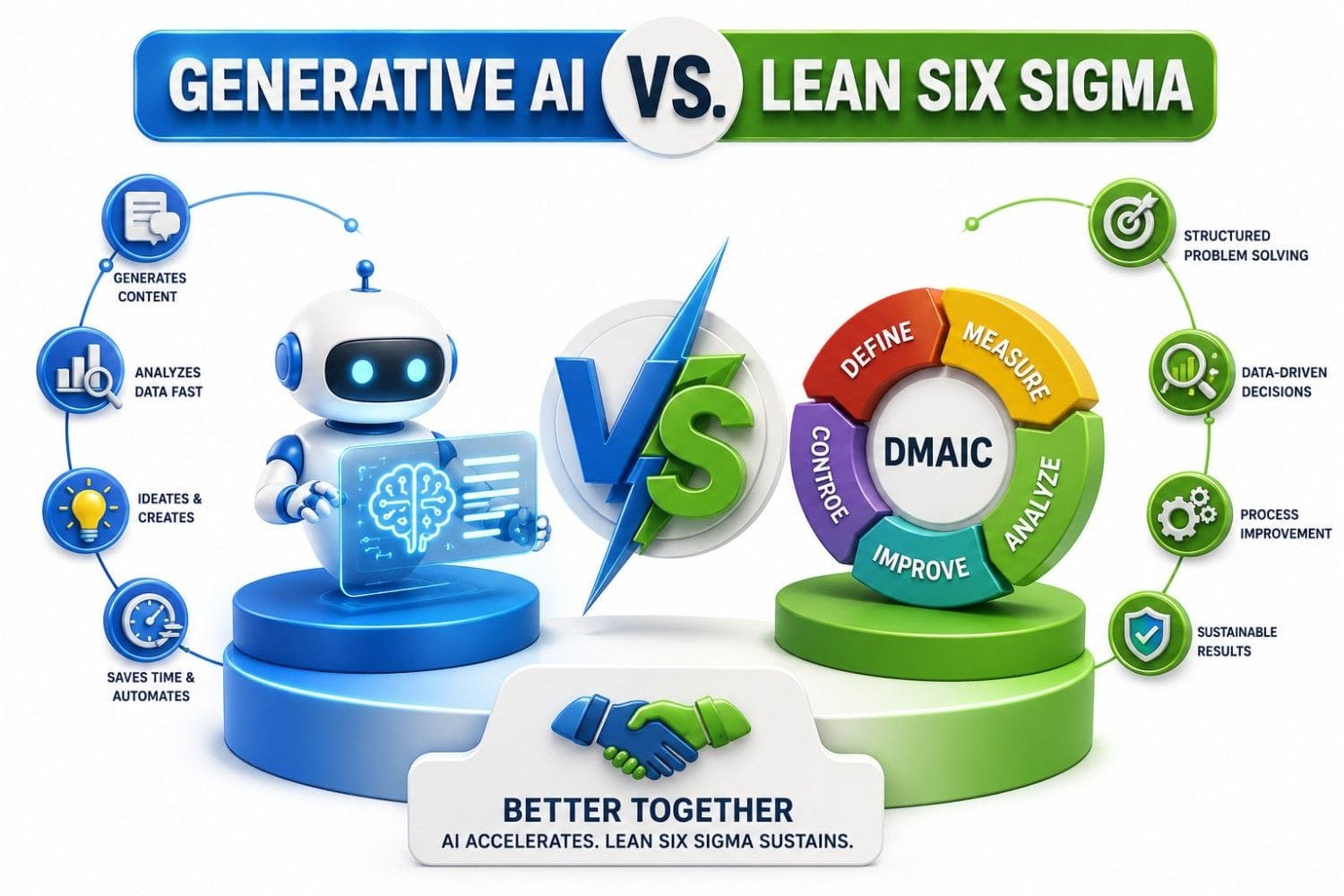
At first glance, the answer might seem obvious. AI can process vast amounts of information faster than any human and automate many tasks traditionally performed by improvement professionals. However, Lean Six Sigma is more than a collection of tools, templates, or statistical techniques. It is a systematic approach to understanding processes, solving real-world problems, reducing variation, eliminating waste, and driving sustainable organizational change.
As AI continues to evolve, its role in process improvement will undoubtedly expand. The real question may not be whether AI will replace Lean Six Sigma, but how organizations can combine the strengths of both to achieve better results than either could deliver alone. Understanding this relationship is essential for quality professionals, engineers, business leaders, and continuous improvement practitioners preparing for the future.
What is Generative AI?
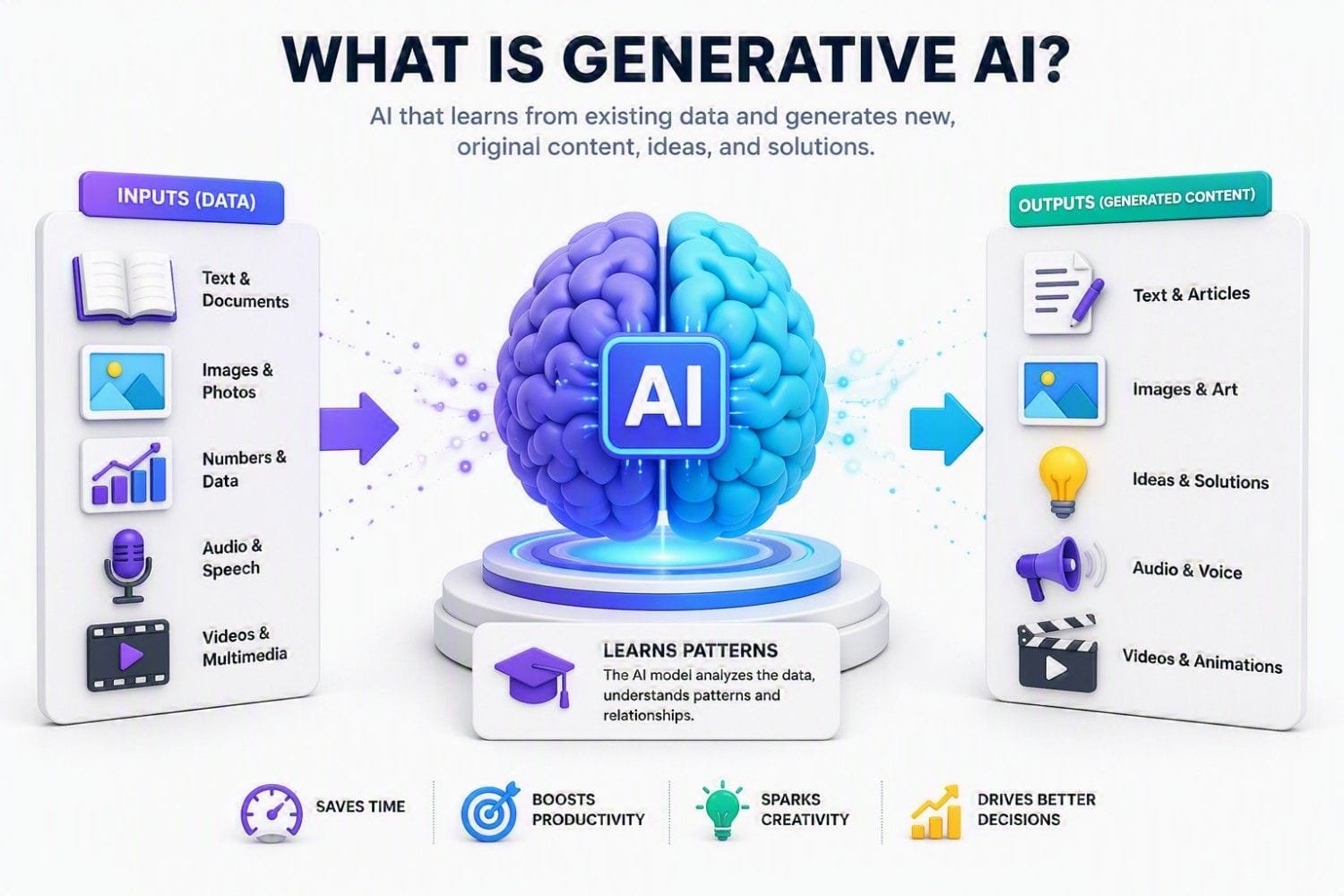
Generative AI is a type of artificial intelligence that can create content, answer questions, summarize information, generate ideas, and even write code based on the instructions you give it. Instead of simply searching for information like a traditional search engine, it understands the context of your request and generates a response that is tailored to your needs. Tools like ChatGPT, Google Gemini, Microsoft Copilot, and Claude have made this technology accessible to anyone, from students and educators to engineers and business leaders.
From my own experience creating Lean Six Sigma training programs, writing technical articles, and developing quality improvement resources, I see Generative AI as a productivity partner rather than a replacement for expertise. It helps me overcome the blank-page problem by organizing ideas, drafting content, simplifying complex concepts, and exploring different perspectives in minutes instead of hours. That said, I never publish or implement AI-generated content without reviewing it carefully. The accuracy, relevance, and practical value still depend on human judgment and real-world experience.
This is especially true in Lean Six Sigma. AI can help draft a project charter, suggest possible root causes, or summarize customer feedback, but it cannot observe a process on the shop floor, understand an organization’s culture, or earn the trust needed to lead change. In my experience, the best results come when AI is used to enhance professional expertise—not replace it. That balance is what makes the discussion around Generative AI and Lean Six Sigma both relevant and exciting.
🎓 Top-Rated Courses & Certifications
Try changing your filters or searching for another course.
Why are People Asking if AI Will Replace Lean Six Sigma?
Ever since Generative AI became part of everyday work, I’ve noticed one question coming up repeatedly from quality professionals, engineers, and even my Lean Six Sigma students: “Will AI replace Lean Six Sigma?” The reason is easy to understand. AI can now draft project charters, summarize process data, suggest root causes, explain statistical concepts, and prepare reports in minutes—tasks that once took hours of manual effort.
I’ve experienced this change firsthand while creating Lean Six Sigma training courses, technical articles, and improvement resources. AI has dramatically reduced the time I spend on documentation and brainstorming, allowing me to focus more on refining ideas and solving real problems. But I’ve also learned that speed doesn’t always mean accuracy. Some of the most convincing AI-generated answers still require careful validation, business context, and practical experience before they can be trusted.
In my view, this debate exists because many people mistake Lean Six Sigma for a collection of tools. If AI can create a Fishbone Diagram or explain FMEA, it may seem like it has replaced the methodology. In reality, Lean Six Sigma is about understanding processes, working with people, validating data, and leading sustainable change—things I haven’t seen AI do on its own.
That’s why I don’t believe the real question is whether AI will replace Lean Six Sigma. A far more meaningful question is how Lean Six Sigma professionals can use AI to solve problems faster while still applying the human judgment and experience that technology cannot replace. That, in my experience, is where the future of continuous improvement is headed.
Will Lean Six Sigma Survive the AI Revolution?
When I started my Lean Six Sigma journey, I never saw it as just a set of tools like DMAIC, root cause analysis, or process mapping. What stayed with me was the mindset it created — looking beyond symptoms, questioning assumptions, and solving problems based on facts instead of opinions.
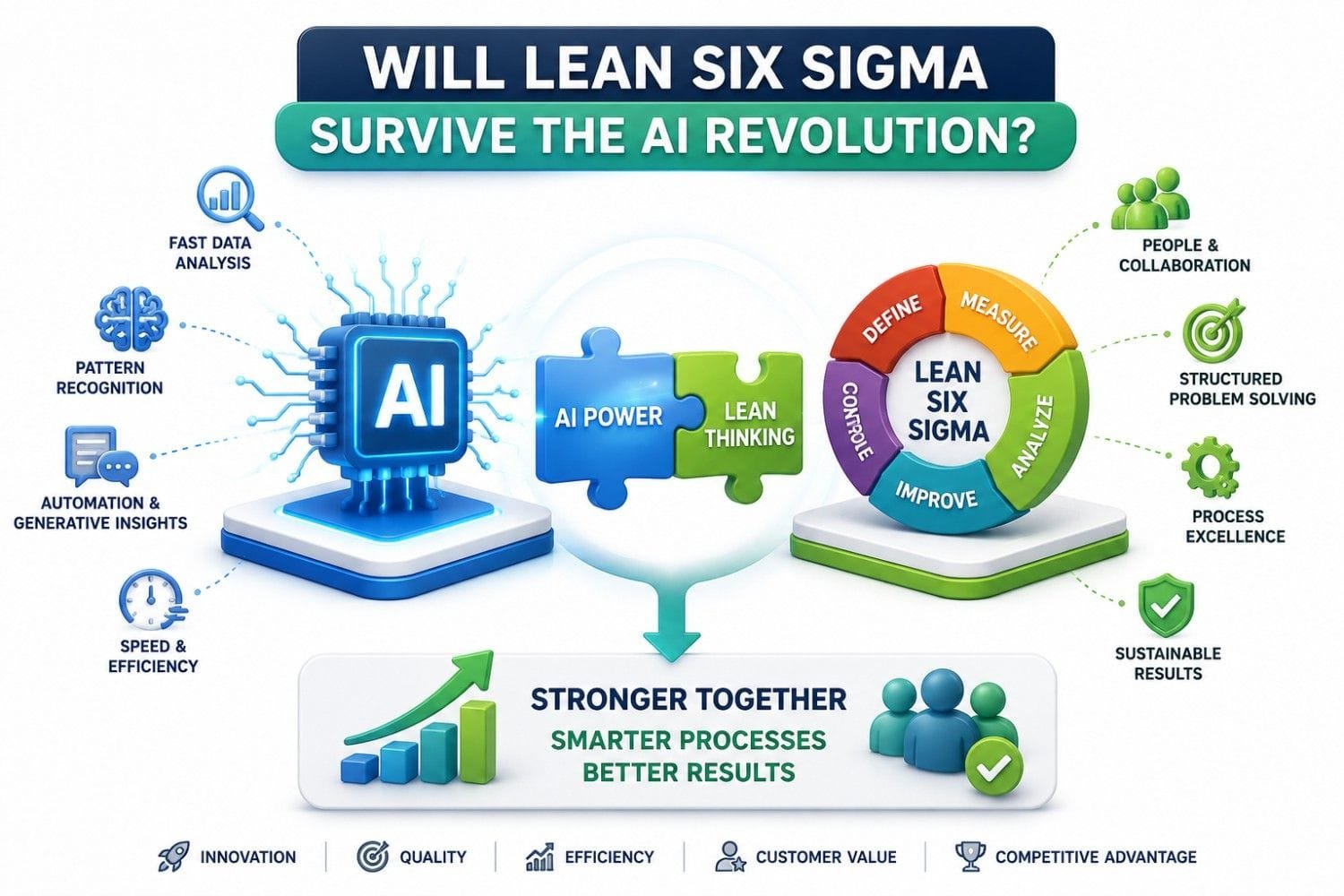
Today, with AI transforming the way businesses operate, many professionals are asking: Will Lean Six Sigma survive the AI revolution, or will AI replace it?
After more than two decades of experience in quality, engineering, manufacturing, risk management, and continuous improvement, I believe Lean Six Sigma is not becoming obsolete. It is entering a new phase of evolution. AI has already changed how we work. It can analyze large datasets, identify patterns, automate repetitive tasks, and generate insights much faster than traditional methods. Activities that once took days or weeks can now be completed in minutes. But one thing I have learned from real improvement projects is that data alone rarely tells the complete story.
I have seen situations where dashboards showed a problem, but the actual cause was discovered only by going to the process, talking with people, and understanding what was happening on the ground. The numbers pointed us in the right direction, but human observation and experience helped us find the real solution.
That is where Lean Six Sigma continues to be valuable.
Lean Six Sigma was never only about statistics or tools. It is a structured way of thinking that helps teams define the right problem, find meaningful root causes, implement practical solutions, and sustain improvements. AI can accelerate analysis, but it cannot replace the judgment needed to understand business priorities, manage change, or bring people together around a solution.
I see AI as a powerful partner for Lean Six Sigma professionals. Instead of spending hours collecting data, preparing reports, or analyzing trends, improvement teams can use AI to handle routine work and focus more on higher-value activities — solving complex problems, coaching teams, improving customer experience, and driving transformation.
The future Lean Six Sigma professional will likely be different from the traditional practitioner of the past. Knowing improvement methods alone may not be enough. The professionals who combine Lean thinking with AI, automation, and data analytics will have a stronger advantage because they can connect technology with practical business improvements.
History has shown that technology rarely eliminates the need for human expertise; it changes how that expertise is applied. Just as automation transformed manufacturing roles, AI will transform improvement roles. Repetitive analysis may become automated, but critical thinking, leadership, and process understanding will remain essential.
So, will Lean Six Sigma survive the AI revolution?
My answer is yes — but it will survive by adapting.
AI will change the tools we use, the speed at which we work, and the way we analyze problems. However, the fundamental need to reduce waste, improve processes, solve problems, and create value will never disappear.
The future is not Lean Six Sigma versus AI. It is Lean Six Sigma powered by AI — combining human experience with machine intelligence to build smarter, faster, and more effective organizations.
📚 Recommended Books for Professionals
Try removing one or more filters.
What Generative AI can Already do Today
When people talk about Generative AI, the discussion often focuses on what it may achieve in the future. But based on my experience using AI in professional work, the more interesting question is: what can Generative AI already do today?
After years of working in quality, engineering, Lean Six Sigma, risk management, and continuous improvement, I have seen how much time professionals spend on repetitive tasks — preparing reports, summarizing documents, creating presentations, organizing information, and developing training material. Generative AI is already changing this by helping complete many of these activities in minutes instead of hours.
One of the biggest advantages I have experienced is how quickly AI can help move from a blank page to a structured starting point. Whether it is drafting a document, simplifying a complex concept, creating an initial project framework, or organizing scattered ideas, AI acts like a powerful assistant that helps accelerate the thinking process.
I have personally found it valuable during improvement projects where large amounts of information need to be reviewed. AI can help summarize findings, identify possible patterns, create analysis structures, and highlight areas worth investigating. However, the final decision still requires human experience. A process cannot always be understood from data alone — sometimes you need to speak with people, observe the actual work, and understand the situation behind the numbers.
Another area where Generative AI has made a noticeable difference is communication. Many experts have strong technical knowledge but struggle to explain complex topics clearly. AI can help convert technical information into easier explanations, executive summaries, training content, or customer-friendly communication. This allows professionals to spend more time solving problems and less time formatting information.
At the same time, my experience has taught me that AI should be used with judgment. It can generate impressive responses, but it does not always understand business context, priorities, or real-world limitations. The best results come when human expertise guides the technology rather than blindly accepting every output.
Today, Generative AI can already help people write faster, analyze information, learn new skills, generate ideas, and improve decision-making. Its biggest value is not replacing professionals but helping them work at a higher level.
The future advantage will belong to those who know how to combine AI capabilities with human creativity, experience, and critical thinking. AI can provide speed and assistance, but human judgment is what turns information into meaningful action.

Lean Six Sigma • Six Sigma • Statistics • Project Management • Artificial Intelligence (AI) • Operations Management • Quality Management
Generative AI vs. Lean Six Sigma: A Head-to-Head Comparison
Having worked extensively with both Lean Six Sigma and Generative AI, I don't see them as direct competitors. In reality, they solve different parts of the same problem. Generative AI excels at speed. It can analyze information, summarize documents, identify patterns, generate reports, and provide ideas within seconds. Lean Six Sigma, on the other hand, provides the structured framework needed to ensure those ideas lead to measurable and sustainable business results. One gives you answers quickly; the other helps you determine whether those answers actually solve the problem.
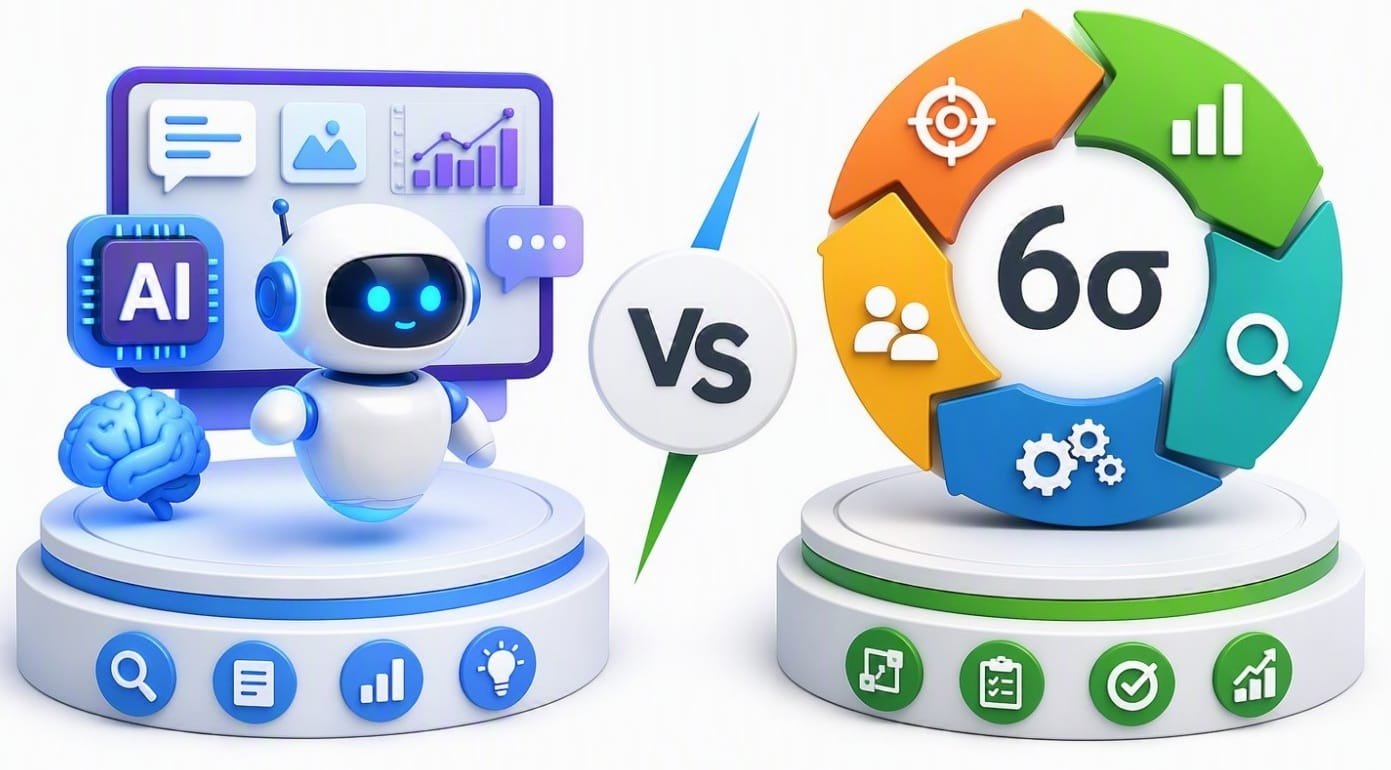
In my own projects, I have found that AI can dramatically reduce the time spent gathering information and creating documentation. It can generate a process map draft, suggest possible root causes, or summarize customer complaints much faster than I can manually. However, AI cannot visit a production line, observe how operators work, understand why employees bypass a process, or recognize the organizational challenges that often sit behind performance issues. Those insights still come from direct observation, experience, and conversations with people closest to the work.
AI Tools Every Lean Six Sigma Professional Should Know
When I first started using Generative AI, I treated it as a curiosity. Today, I see it as a practical productivity tool that can save hours of work every week. However, not every AI tool delivers the same value. For Lean Six Sigma professionals, the most useful tools are those that help analyze information, streamline documentation, improve communication, and support data-driven decision-making. Based on my experience, learning a few key AI tools can significantly increase productivity without replacing the discipline and structure that make Lean Six Sigma effective.
Recommended AI Tools for Lean Six Sigma Professionals
| AI Tool | How It Helps Lean Six Sigma Professionals |
|---|---|
| ChatGPT | Brainstorm root causes, create project charters, generate training materials, summarize findings, and explain statistical concepts. |
| Microsoft Copilot | Analyze Excel data, summarize meetings, draft reports, create presentations, and improve day-to-day productivity. |
| Google Gemini | Research topics, summarize complex information, generate ideas, and support documentation workflows. |
| Claude | Excellent for reviewing large documents, process procedures, SOPs, audit findings, and detailed reports. |
| Power BI with AI Features | Detect trends, visualize performance metrics, and uncover insights from operational data. |
| Minitab AI Features | Enhance statistical analysis, process capability studies, hypothesis testing, and quality improvement projects. |
| Power Automate | Automate repetitive administrative tasks, approvals, notifications, and process workflows. |
| AI Meeting Assistants | Capture meeting notes, action items, project updates, and follow-ups automatically. |
The Future of Lean Six Sigma: Will AI Replace It or Make It Stronger?
After spending more than 25 years working in quality, manufacturing, product development, risk management, and continuous improvement, I have learned that successful methodologies do not disappear when new technology arrives—they adapt. Lean Six Sigma has already evolved from its manufacturing roots into healthcare, finance, IT, software development, and service industries. I believe Artificial Intelligence is simply the next chapter in that evolution.
From what I have seen so far, AI is exceptionally good at handling tasks that traditionally consumed a large portion of an improvement professional's time. It can analyze data faster, summarize information instantly, generate reports, identify trends, and even suggest potential root causes. Activities that once took me hours can now be completed in minutes. This is why some people believe AI could eventually replace Lean Six Sigma.
However, the more I use AI, the more convinced I become that it actually strengthens Lean Six Sigma rather than replacing it. In real improvement projects, the biggest challenges are rarely technical. The difficult part is understanding customer expectations, observing processes, challenging assumptions, gaining stakeholder support, and ensuring that improvements are sustained long after implementation. AI can identify patterns, but it cannot fully understand organizational culture, human behavior, or the practical realities behind why processes succeed or fail.
What excites me most is the possibility of combining the strengths of both approaches. Imagine AI quickly analyzing thousands of records, detecting unusual process variation, and highlighting improvement opportunities, while Lean Six Sigma professionals use their experience and structured problem-solving skills to validate findings, prioritize actions, and drive meaningful change. That combination can make improvement efforts faster, smarter, and more effective than ever before.
I also believe the role of Lean Six Sigma professionals will continue to evolve. Future Green Belts, Black Belts, and improvement leaders will need more than traditional quality tools. They will need to understand how to work with AI, interpret AI-generated insights, and translate those insights into practical business improvements. In many ways, AI will become another tool in the continuous improvement toolkit—just as statistical software and data visualization tools did in previous generations.
So, will AI replace Lean Six Sigma? Based on my experience, the answer is no. AI may automate parts of the work, but it cannot replace critical thinking, process understanding, leadership, and human judgment. Instead, I believe AI will make Lean Six Sigma stronger by removing routine tasks and allowing professionals to focus on what matters most: solving complex problems, creating value for customers, and driving sustainable business results.
The future will not belong to AI alone or Lean Six Sigma alone. It will belong to organizations and professionals who know how to combine the speed of AI with the disciplined problem-solving mindset of Lean Six Sigma. That is where the real competitive advantage will be.
Frequently Asked Question (FAQ)
- Can Generative AI replace Lean Six Sigma?
No. AI can automate analysis and documentation, but Lean Six Sigma provides the structured problem-solving and decision-making framework needed for sustainable improvements. - Will AI eliminate the need for Lean Six Sigma professionals?
Unlikely. Professionals who combine Lean Six Sigma expertise with AI skills will become even more valuable to organizations. - Is AI better than Lean Six Sigma?
They serve different purposes. AI accelerates data analysis, while Lean Six Sigma helps identify root causes and implement lasting solutions. - Can AI perform DMAIC projects?
AI can support DMAIC activities, but human expertise is still needed to define problems, validate findings, and manage change. - How is AI used in Lean Six Sigma?
AI helps analyze data, summarize information, identify trends, generate reports, and support decision-making during improvement projects. - Can AI identify root causes automatically?
AI can suggest potential root causes based on data patterns, but those causes still need verification through investigation and process knowledge. - Will Black Belts need AI skills in the future?
Yes. Understanding how to use AI effectively is becoming an important skill for modern Lean Six Sigma practitioners. - Can AI replace Kaizen activities?
No. Kaizen relies heavily on employee involvement, process observation, collaboration, and continuous improvement culture. - What is the biggest advantage of AI in Lean Six Sigma?
Speed. AI can process large volumes of information and generate insights much faster than traditional manual methods. - What is the biggest limitation of AI?
AI lacks real-world context, practical experience, and human judgment, making validation essential. - Is Lean Six Sigma becoming obsolete because of AI?
No. AI is changing how Lean Six Sigma is practiced, but the need for process improvement remains strong. - Which AI tools are most useful for Lean Six Sigma professionals?
Tools such as ChatGPT, Microsoft Copilot, Claude, Gemini, Power BI AI features, and Minitab AI capabilities are increasingly popular. - Can AI improve process efficiency?
Yes. AI can identify inefficiencies, predict issues, automate routine tasks, and support faster decision-making. - Should Lean Six Sigma professionals learn AI?
Absolutely. Combining AI capabilities with Lean Six Sigma knowledge can significantly improve productivity and effectiveness. - What is the future of Lean Six Sigma and AI?
The future is collaboration, not competition. Organizations will achieve the best results by combining AI-powered insights with Lean Six Sigma's structured approach to improvement.
Final Verdict
After more than two decades of working in quality, engineering, manufacturing, risk management, and Lean Six Sigma, my conclusion is simple: AI is not replacing Lean Six Sigma—it is reshaping how we apply it. Generative AI excels at processing information, automating repetitive work, and accelerating analysis. Lean Six Sigma, on the other hand, provides the structured thinking needed to define the right problem, uncover true root causes, implement effective solutions, and sustain improvements. In my experience, these strengths complement each other rather than compete. The future therefore does not belong to AI replacing Lean Six Sigma. It belongs to professionals who know how to use AI to enhance Lean Six Sigma. The next generation of Green Belts, Black Belts, Quality Engineers, and Continuous Improvement leaders will need both process improvement expertise and AI literacy to stay ahead.
Continue Your Learning Journey
Learning is a continuous process. Explore related topics, practical guides, tools, calculators, templates, and learning resources to expand your knowledge and develop new skills.
Choose a category below to explore practical tutorials, tools, calculators, templates, case studies, and learning resources.
Recommended Learning Resources
Expert-led courses to build practical skills, earn credentials, and advance your career.
Recommended professional books, certification guides, and practical study resources.
Ready-to-use templates, checklists, guides, and workbooks for practical applications.
Interactive calculators for statistics, quality, engineering, analysis, and decision-making.
Interactive Z, t, Chi-Square, and F tables with critical values and distribution curves.
Discover practical tutorials, case studies, and professional resources across Quality, Lean Six Sigma, Project Management, Statistics, AI, and Data Analytics.
Published: February 9, 2025
Last Updated: September 18, 2026