🌟 Introduction
In today’s competitive world, professionals are constantly looking for ways to grow their careers, increase their salaries, and stay relevant in the job market. Among the most popular methodologies that support career growth in operations, quality, and business excellence are Lean and Six Sigma. If you’re an engineer, quality professional, or someone working in operations, you’ve likely come across Lean and Six Sigma.
Many professionals often ask the same question: Which one is better for career growth and salary—Lean or Six Sigma?
The truth is not as simple as picking one over the other. Both Lean and Six Sigma offer powerful advantages, but they focus on different aspects of improvement. Understanding these differences can help you choose the right path based on your career goals.
Both are powerful methodologies used globally to improve business performance. From Toyota to Amazon, organizations rely on these approaches to reduce costs and improve customer satisfaction. But here’s the confusion most professionals face:
👉 Should you learn Lean or Six Sigma?
👉 Which one gives better salary and career growth?
👉 Is Lean Six Sigma better than choosing just one?
These questions are even more important because: Process improvement skills are now career accelerators
Lean vs Six Sigma: When it comes to improving business performance, two names dominate the conversation: Lean and Six Sigma. According to market trends, companies are actively hiring professionals who can reduce waste and improve processes, offering premium salaries and leadership roles
Both methodologies have transformed industries—from manufacturing to healthcare, IT, and even startups. But if you’re planning a career in process improvement, one big question naturally arises:
Lean vs Six Sigma
Lean vs Six Sigma — which one is better for career growth and salary?
This guide will break down everything in a practical, real‑world way:
- What Lean and Six Sigma really are
- Key differences in career opportunities
- Salary comparison
- Which path you should choose
Let’s dive deep 👇
📌 What is Lean?
Lean is a methodology focused on reducing waste and improving efficiency. It originated from the Toyota Production System and emphasizes delivering value to the customer while minimizing unnecessary activities. Lean is all about eliminating waste and maximizing efficiency. In real life, Lean can be seen when you try to reduce waiting time, eliminate unnecessary steps, or improve workflow in daily tasks. For example, organizing your workspace to save time searching for tools is a Lean improvement.
👉 It focuses on:
- Reducing unnecessary steps
- Improving workflow
- Delivering value faster
📌 What is Six Sigma?
Six Sigma is a data-driven methodology focused on reducing defects and improving quality. It uses statistical tools and structured approaches like DMAIC (Define, Measure, Analyze, Improve, Control).
In daily life, Six Sigma can be understood through quality improvement. For example, ensuring consistent product quality or minimizing errors in transactions reflects Six Sigma thinking.
- Reduce defects
- Improve Quality
- Data driven decision
⚔️ Lean vs Six Sigma: Key Differences
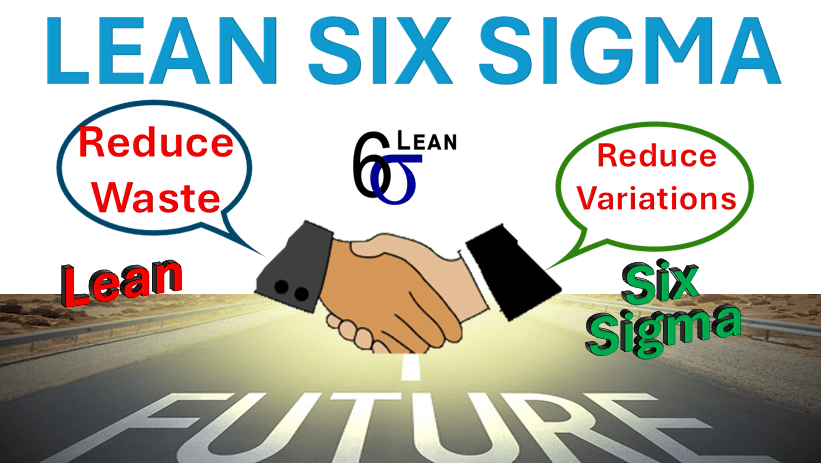
Lean focuses on speed and efficiency, while Six Sigma focuses on accuracy and quality. Lean eliminates waste, whereas Six Sigma reduces variation.
| Feature | Lean | Six Sigma |
|---|---|---|
| Focus | Waste reduction | Defect reduction |
| Approach | Speed & flow | Data & analysis |
| Tools | Visual tools (5S, VSM) | Statistical tools |
| Complexity | Easy to learn | More complex |
| Best for | Operations, startups | Quality, manufacturing |
💼 Career Comparison: Lean vs Six Sigma
✅ Lean career Opportunities
Lean professionals often work in operations, supply chain, manufacturing, and service industries. Roles include process improvement specialists, operations managers, and Lean consultants. Lean roles are ideal for those who enjoy improving workflows, optimizing processes, and reducing delays. Lean professionals work in fast-paced environments and focus on execution
Common roles:
- Operations Manager
- Lean Consultant
- Process Improvement Specialist
- Supply Chain Manager
Industries:
- Manufacturing
- Logistics
- Startups
- Retail
📌 Job roles:
- Lean Consultant
- Process Improvement Specialist
- Operations Manager
- Production Supervisor
✅ Industries:
- Manufacturing
- Logistics
- Retail
- Startups
✅ Six Sigma career Opportunities
Six Sigma professionals often work in quality roles, data analysis, and process improvement. Roles include Six Sigma Green Belt, Black Belt, quality engineer, and process excellence manager. Six Sigma professionals are more data-focused and analytical. These roles require analytical thinking and problem-solving skills.
📌 Job roles:
- Six Sigma Green Belt
- Six Sigma Black Belt
- Quality Analyst
- Business Analyst
- Continuous Improvement Manager
✅ Industries:
- IT
- Healthcare
- Finance
- Manufacturing
💰 Salary Comparison (Lean vs Six Sigma)
Now the most important part. 👇 Generally, Six Sigma professionals tend to earn higher salaries compared to Lean professionals. This is because Six Sigma requires deeper statistical knowledge and specialized skills. However, Lean professionals can also earn competitive salaries, especially in leadership roles.
Case Study
A manufacturing company faced issues with high defect rates and long production cycles. Initially, the company applied Lean techniques to reduce waste and streamline operations. This improved speed but did not fully address quality issues. Later, the company implemented Six Sigma tools to analyze defects. Root cause analysis helped identify process variations leading to defects. By combining Lean and Six Sigma, the company achieved faster production and higher quality, resulting in increased customer satisfaction and revenue
✅ Lean Salary
| Role | Average Salary (India) |
|---|---|
| Lean Analyst | ₹4–8 LPA |
| Operations Manager | ₹8–15 LPA |
| Lean Consultant | ₹10–20 LPA |
✅ Six Sigma Salary
| Role | Average Salary (India) |
|---|---|
| Green Belt | ₹5–10 LPA |
| Black Belt | ₹10–25 LPA |
| Master Black Belt | ₹20–40+ LPA |
🌍 Global salary (Trend)
| Role | US Salary |
|---|---|
| Lean Specialist | $70k–$100k |
| Six Sigma Black Belt | $90k–$130k |
📊 Lean vs Six Sigma: Which Pays More?
👉 Short Answer:
- Lean alone → Moderate salary growth
- Six Sigma → Higher salary potential
- Lean Six Sigma → BEST combination
🔥 Real-Life Example :
Suppose two engineers:
Engineer A (Lean only)
- Improves workflow
- Saves time
- Moderate impact
Engineer B (Six Sigma)
- Identifies root cause
- Reduces defects
- Saves millions
👉 Companies value measurable impact → higher salary
🧠 How to Decide: Lean vs Six Sigma
If your goal is quick career growth in operations, Lean is a good starting point. If you prefer data-driven roles and higher earning potential, Six Sigma is ideal. However, the best approach is to learn both, as modern organizations prefer professionals with combined skills
Choose Lean if:
✅ You like fast work
✅ You are into operations
✅ You prefer practical roles
Choose Six Sigma if:
✅ You like data
✅ You enjoy analysis
✅ You want higher salary roles
My suggestion: Choose Lean Six Sigma if: ✅ You want BEST career growth.
Frequently Asked Questions (FAQ)
- Is Lean easier than Six Sigma?
Yes, Lean is generally easier as it is less statistical. - Which certification is better?
Both are valuable; combined certifications provide maximum benefit. - Does Six Sigma guarantee higher salary?
Generally yes—Six Sigma professionals often earn slightly higher salaries due to advanced analytical and statistical skills. - Which is better for career growth: Lean or Six Sigma?
Both offer strong growth, but Six Sigma is often preferred for specialized, data-driven roles, while Lean suits operational roles. - Is Lean easier to learn than Six Sigma?
Yes—Lean is more practical and less statistical, making it easier for beginners compared to Six Sigma. - Which certification should I choose first: Lean or Six Sigma?
It depends on your goal—Lean is good for quick operational improvements, while Six Sigma builds strong problem-solving skills. - Is Lean Six Sigma better than choosing only one?
Yes—combining both gives a balanced skill set of efficiency and quality, which companies highly value. - What industries use Lean and Six Sigma??
Both are widely used across manufacturing, healthcare, IT, finance, and service industries.
Conclusion
Lean and Six Sigma are not competitors but complementary approaches. Lean improves speed, and Six Sigma improves quality. Together, they create powerful career opportunities.
I hope this blog helped in understanding the basic concept in a simplified manner, watch out for I hope this blog helped in understanding the basic concept in a simplified manner, watch out for more such stuff in the future.
📢📢 𝑺𝒐𝒄𝒊𝒂𝒍 𝑴𝒆𝒅𝒊𝒂 𝑳𝒊𝒏𝒌:
Thanks!!!
For questions please leave them in the comment box below and I’ll do my best to get back to those in a timely fashion. And remember to subscribe to Digital eLearning YouTube channel to have our latest videos sent to you while you sleep.
✍️ 𝓓𝓲𝓼𝓬𝓵𝓪𝓲𝓶𝓮𝓻: The content on this website is for educational and informational purposes only. Some materials may be used under “fair use” as per applicable copyright laws. We do not intend to infringe any copyrights or mislead users in any way. We aim to provide accurate and useful information, but no guarantees are made regarding completeness or applicability.
Published: May 10, 2026
Last Updated: June 24, 2026